
What does fact checked mean?
At SportsRec, we strive to deliver objective content that is accurate and up-to-date. Our team periodically reviews articles in order to ensure content quality. The sources cited below consist of evidence from peer-reviewed journals, prominent medical organizations, academic associations, and government data.
The information contained on this site is for informational purposes only, and should not be used as a substitute for the advice of a professional health care provider. Please check with the appropriate physician regarding health questions and concerns. Although we strive to deliver accurate and up-to-date information, no guarantee to that effect is made.
Tight Hamstrings and Posture
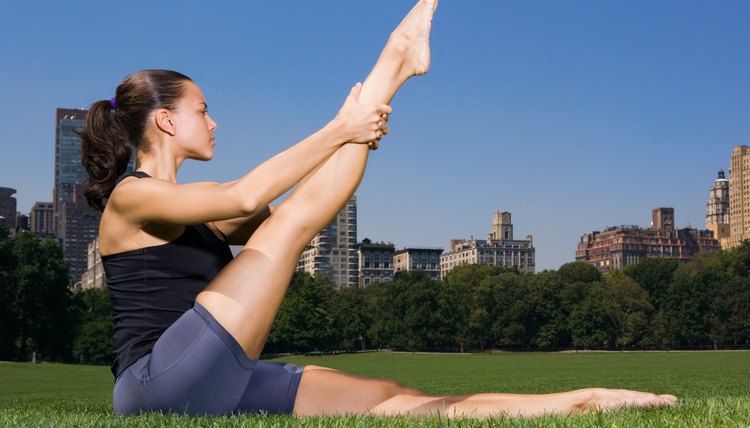
Posture is the position of your body when upright while standing, sitting, and lying down. Proper posture allows the body to perform activities in an aligned position, which puts the least strain on the body and allows the proper muscles, tendons, and ligaments to do their jobs correctly. Tight hamstrings can throw postural alignment off, creating imbalances that may lead to pain.
Hamstring Muscles
The hamstring muscles, which include three main muscles, the biceps femoris, semimembranosus, and semitendinosus, are primarily used to bend and flex the knee and extend the leg back from the hip. The hamstrings attach to the sitting bones at the ischial tuberosities, which connect to the back and spine.
Proper Postural Alignment of the Spine
When the body is in proper postural alignment, there is a slight curvature to the spine. Proper posture puts the least strain on the supporting muscles and ligaments surrounding the area. According to the Cleveland Clinic, it prevents the spine from becoming fixed in abnormal positions that can result in discomfort or pain.
Effects of Hamstrings on Posture
When the hamstrings are in a tightened position, it causes the pelvic area to tilt forward, called posterior pelvic tilt. In this position, there is little to no curvature to the spine, and the sitting bones are pulled under while the thighs and hips jut forward. This puts excessive strain on the lower back muscles. Tight abdominals can also contribute to pelvic tilt because they will pull up on the pubic bones, and combined with tight hamstrings, cause a more exaggerated tilt.
Causes of Tight Hamstrings
There are many reasons why you may suffer from tight hamstrings. One may be genetics: Some people are born with naturally short hamstrings while others are naturally more flexible. Lack of stretching may also cause hamstrings to become tight, because when the muscles are worked, they become excited and then contract. Without proper extension of these muscles through stretching exercises, they can remain in a more contracted state. Finally, pinching of the sciatic nerve, the nerve that runs down the leg, can cause the muscles in that area to tense up, causing tightness.
Ways to Improve Hamstring Flexibility
You don't have to be able to touch your toes to increase flexibility. Gentle stretching of the hamstring area can help increase flexibility in that area. Make sure you aren't too aggressive, as this can create more problems. Ease in and out of stretches and don't bounce in or out of the stretch. Getting a massage can also help to loosen tight muscles, and long, slow warm ups and cool downs before and after exercise can help to loosen tight muscles that have been activated during a workout.
References
- NASM Essentials of Personal Fitness Training; Ed. Clark, M.A., et al
- Sports Injury Clinic: Pulled Hamstring/Hamstring Strain
- Cleveland Clinic: Posture for a Healthy Back
- Yoga Journal: Ease on Back
Writer Bio
Chelsea Hanson began writing professionally in 2009. She is a personal trainer and running coach in Ann Arbor, Michigan, who has written for the website AnnArbor and worked in the health and fitness fields since 2002. Hanson has a Bachelor of Arts in English from the University of Michigan and a Master of Arts in psychology from Michigan School of Professional Psychology.