
How to Increase the Size of My Thighs

Many people want to decrease the size of their thighs. But people born with naturally slim legs are usually keen to do the opposite. To increase the size of your thighs, you need to gain some weight. But it is important to do this is a healthy way, not by eating lots of junk food. A new diet, combined with regular exercise, should get results reasonably quickly and should be easy to maintain.
kzenon/iStock/Getty Images
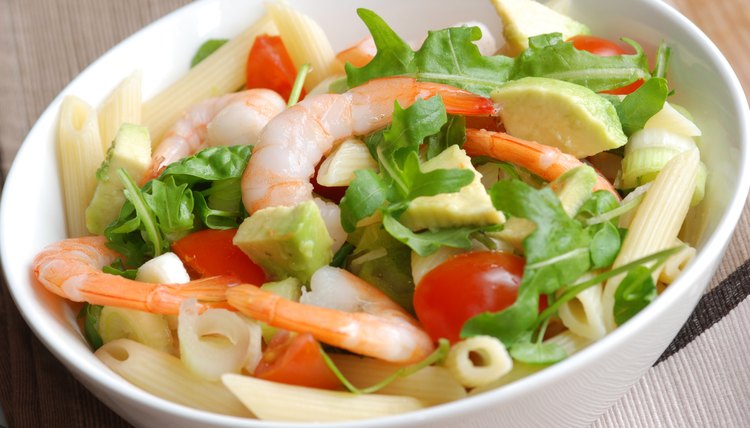
To gain weight, you need to eat more calories than you burn off. Eat healthy carbohydrates like brown rice and pasta, as well as foods full of good fats like avocado and oily fish.

kzenon/iStock/Getty Images
Do one-legged lunges to help build up your thigh muscles. Stand with your feet shoulder-width apart and step one foot forward. As you step forward, bend your back knee toward the floor. Hold for three seconds and then return to standing position. Do 15 times on each leg, and then repeat the whole process twice more. Try to do this every day.

kzenon/iStock/Getty Images
Incorporate squats into your exercise regime. Stand with your legs shoulder-width apart and bend your knees while sticking your butt backwards, like you are going to sit in a chair. Hold the squat position for three seconds and then raise yourself back up. Do three sets of 15 repetitions daily.

kzenon/iStock/Getty Images
Join a gym and ask a staff member to show you how to use the weight machines, especially those geared for legs, such as the leg extension bench.

kzenon/iStock/Getty Images
Drinking a protein shake every day will help build muscle. You can find protein whey at grocery and health food stores.
Writer Bio
Based just outside London, Holly Thompson has been writing news and features since 2008. She reported for the award-winning "Surrey Mirror" for two years during which she sourced stories for "The Sun." Thompson was the winner of the Sheffield Star prize for outstanding writing in 2008. She holds a first-class Bachelor of Arts in journalism studies from the University of Sheffield.