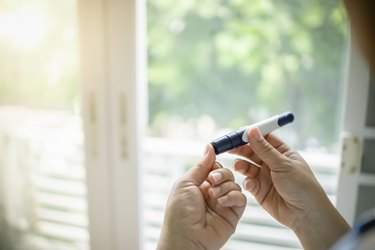
High blood sugar levels, or hyperglycemia, is a condition in which glucose concentration in the blood is too high. This condition is commonly found in individuals who have diabetes and is caused when the body does not produce enough of or is resistant to the effects of the hormone insulin.
When high blood sugar is left untreated, it can lead to organ and tissue damage, coma and death, according to the American Diabetes Association. Monitoring your blood sugar levels is a good way to address high sugar quickly, and there are several ways to lower sugar levels in the blood fast.
Video of the Day
Video of the Day
Exercise
Exercise can help lower your blood sugar level by using the excess sugar as fuel, according to the American Diabetes Association. If, however, your blood sugar level is over 240 mg/dL, use a urine test strip to check your urine for the presence of ketones. When ketones are being produced by the body, exercise can cause your blood sugar levels to rise, rather than decrease. Physical activity can have immediate benefit in lowering blood sugar and also long-term benefit by helping to stabilize blood sugar levels.
Consider Your Next Meal Carefully
People with diabetes often follow an eating plan devised with the help of a doctor. If you're experience hyperglycemia in diabetes, stick to your plan. Consider cutting back your portion sizes and avoiding snack food and sweetened drinks, according to the Mayo Clinic.
Read more: The Best Nuts for People With Diabetes
Talk to Your Doctor
If you're taking medication to control diabetes, take it as directed, suggests the Mayo Clinic. But talk to your doctor about whether a change in your medication dosage might also be appropriate. A medical professional can also help rule out other illnesses or infections that could be causing your blood sugar levels to rise.
Warning
Seek emergency medical care if your blood sugar remains over 240 mg/dL and there are ketones in your urine, according to the Mayo Clinic.
Was this article helpful?
150 Characters Max
0/150
Thank you for sharing!
Thank you for your feedback!
Is this an emergency? If you are experiencing serious medical symptoms, please see the National Library of Medicine’s list of signs you need emergency medical attention or call 911.