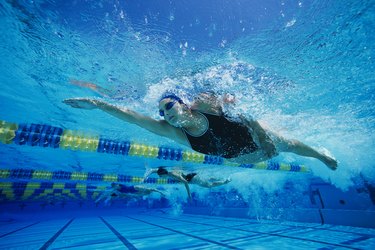
Swimming is an excellent exercise for cardiovascular fitness and weight maintenance. It is also one of the best activities around for cooling off on hot summer days. However, swimming is not the best exercise for improving bone strength, according to the National Institutes of Health (NIH).
Loss of Bone Strength
Video of the Day
Loss of bone strength often stems from osteoporosis, a condition in which bones become weak and vulnerable to fractures because of low bone density. It's estimated that about half of women older than 50 years of age will break a bone because of osteoporosis, reports the National Osteoporosis Foundation (NOF), and is diagnosed through taking a bone density test.
Video of the Day
The NOF indicates that 54 million Americans already have low bone density or osteoporosis and 34 million are at risk of developing the disease. The good news is that loss of bone strength from osteoporosis is largely preventable if you get enough exercise when you're young, stay active and develop other healthy habits as you age. But it has to be the right kind of exercise.
Swimming and Bone Strength
Swimming is not the best exercise for improving bone strength because it is not a weight-bearing activity. Harvard Health Publishing describes as weight bearing any activities that put stress on your bones. Examples of weight-bearing exercises are brisk walking, jogging, stair climbing and racquet sports. Swimming and bicycling are not weight-bearing exercises because your bones don't support your weight during the activity.
According to exercise physiologist Dr. Len Kravitz, writing for the University of New Mexico, some elite swimmers have been found to have lower bone density than nonexercisers, possibly because the buoyancy of swimming doesn't place any weight on the bones. To produce bone density, an exercise must overload the bone, the article notes. The bones respond by building more cells and becoming stronger.
Swimming's Other Benefits
Swimming has other benefits that can help prevent bone fractures. In addition to cardiovascular fitness, which can improve health and extend life, says the American Academy of Family Physicians, swimming helps build and maintain muscles and improve coordination, flexibility and balance.
Most fractures due to osteoporosis are caused by falls, partly because many older adults tend to have balance problems and weak muscles. Stronger muscles and better balance may prevent falls as you age. Swimming is also one of the best activities for joint health and is often recommended for people with arthritis who must avoid high-impact activities such as walking, jogging and jumping.
Read more: How to Start Swimming to Crush Your Fitness Goals
Add Weight-Bearing Activities
You don't have to give up swimming to strengthen your bones. Supplement swimming with weight-bearing activities. Try to speed-walk, run, climb stairs or play tennis or racquetball on the days you're not in the pool. Do some weight lifting too. Strength training with free weights or weight machines will slow bone loss and may even build bone strength, according to Harvard Health Publishing.
By combining swimming with weight-bearing activities, you'll improve your overall health. If you already have osteoporosis, the NIH osteoporosis research center advises asking your doctor which activities are safe for you. High-impact activities could actually cause a bone fracture in someone who already has osteoporosis, according to the NIH.
- National Osteoporosis Foundation: "Bone Health Basics: Get the Facts"
- University of New Mexico: "Exercise and Bone Strength"
- National Institutes of Health: "Exercise for Your Bone Health"
- American Academy of Family Physicians: "Exercise and Seniors"
- Harvard Health Publishing: "Strength Training Builds More Than Muscles"
- Harvard Health Publishing: "Slowing Bone Loss With Weight-Bearing Exercise"