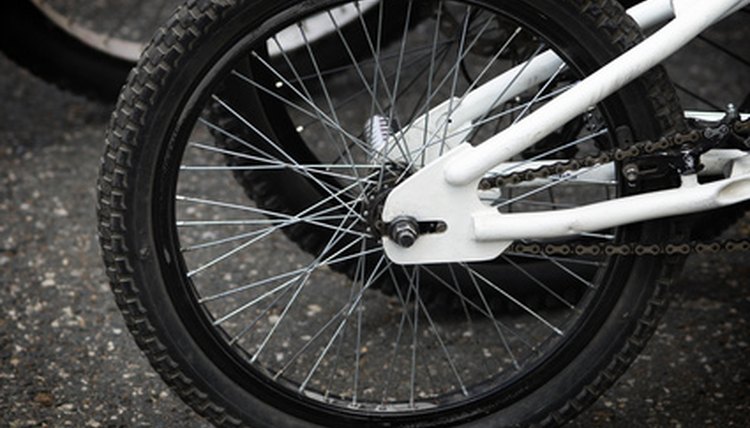
While bike riding is a fun and healthy activity for kids, it can be dangerous without proper gear and training. The Nemours Foundation states that approximately 300,000 kids end up in emergency rooms each year because of bike accidents, some of whom are seriously or fatally injured. In fact, more children aged 5 to 14 visit the emergency room for injuries due to bike riding than any other sport, according to the National Highway Traffic and Safety Administration. To reduce the risk of accident, injury and death, all children should undergo training in bike safety.
Helmets
A helmet is the most important piece of safety equipment for bike riders. According to the Nemours Foundation, helmets are so vital to bike safety that the U.S. government has strict safety standards in place that bike helmets must meet. The Nemours Foundation recommends using only those helmets that meet the standards set forth by the Consumer Product Safety Commission and wearing your helmet even for short rides around your neighborhood.
Any bike helmet you wear should cover your forehead, have adjustable straps, and be the right size for your head. Do not throw your helmet around, as a damaged helmet may be unable to protect you in the event of an accident.
Right Size Bike
Riding a bike that fits your body is an important factor in preventing accidents and keeping you safe. To determine if your bike is correctly sized for your height, the NHTSA recommends straddling the top of it with both feet on the ground. There should be a space of 1 to 2 inches between your body and the top bar of a road bike, and 3 to 4 inches between your body and the top of a mountain bike. The seat should be level and adjusted so that there is a slight bend at the knee when your legs are extended. The handlebar should be level with the seat. Do not ride bikes belonging to other people, as they may not fit you properly.
Dress Appropriately
Bright clothing will ensure motorists and other bikers can see you, and gloves will improve your grip on the handlebars. Avoid wearing loose pants, untied shoelaces, flip-flops, shoes with heels, and backpacks, as these may become caught in your bike chain and cause an accident or injury. Never wear headphones to ensure you can hear oncoming cars and horns.
Pay Attention
Most bike accidents result from running into stationary objects, such as poles, signs and benches. To ensure you do not collide with something or fall off your bike, keep your eyes on the road at all times. Watch out for large puddles, storm grates, curbs, changes in road height, wet leaves, gravel and hills. Also, look out for other bikers, strollers, small children and animals.
Rules of the Road
Bicycles are considered vehicles in most areas, and you must therefore follow the same rules when riding your bike that car drivers must obey when operating a motor vehicle. The Nemours Foundation suggests riding with both hands on the handlebars, stopping and checking for traffic when pulling onto a street, approaching a curb, or reaching a stop sign, and crossing only at intersections. Ride your bike in the same direction as traffic, use bike lanes when possible, obey traffic control devices (red lights, stop signs) and ride single file when accompanied by other riders. The Washington State Department of Transportation recommends against passing on the right and turning left from the right lane.
The Pedestrian and Bicycling Information Center warns that riding on the sidewalk poses a greater risk than riding on the road with traffic, as motorists are watching the road and may not see bicyclists to their left or right. However, the NHTSA recommends that kids less than 10 years old ride on the sidewalk when allowed by law.
Maintain Your Bike
Before every ride, carefully check your bike to ensure it is in proper working order. This means making sure the brakes are working, checking for loose parts, and confirming that your lights and reflectors are attached and clean. The American Academy of Family Physicians recommends taking your bicycle to a bike shop for a tune-up about every six months.
References
- National Highway Traffic Safety Administration: Kids and Bicycle Safety
- National Highway Traffic Safety Administration: Easy Steps to Properly Fit a Bicycle Helmet
- American Academy of Family Physicians: Bike Safety Tips
- Nemours Foundation: Bike Safety
- Washington State Department of Transportation: Bicycle Safety Tips


Member Comments