
100 Meter Dash Tips
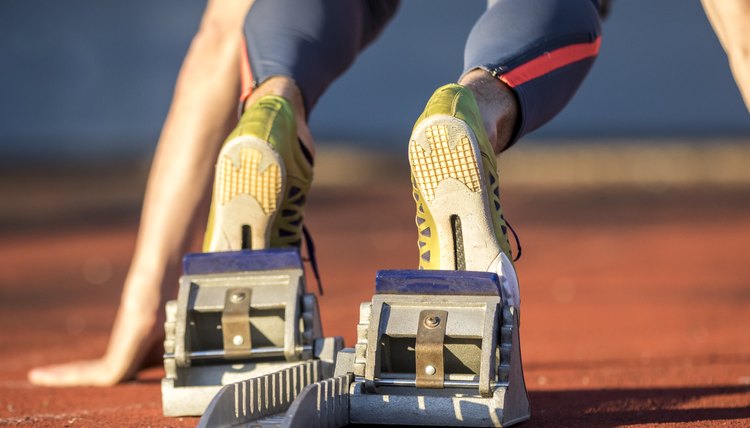
The 100-meter dash is one of the most high-profile events in track and field. The winner of the men's 100-meter dash at the Summer Olympics is declared the "world's fastest human." Running the 100-meter dash requires an athlete to get off to a quick start, sustain his speed, and have some explosion left near the finish of the race, in order to close strongly.
Fast Start
The start is one of the most important aspects in the 100-meter dash. The best way to practice is to do five consecutive starts, so you can get used to the sound of the starter's pistol, and to propelling your body into action. Do not get into the habit of anticipating the gun, because this can lead to false starts, and perhaps disqualification. Place your weight as forward as possible on your palms and toes, so you can get off the line as quickly as possible.
High Knees
Keeping the knees high during the run is crucial to a sprinter's repertoire. To replicate this during training, go to the track and sprint 25 meters; after you hit that mark, change your gait so your knees go up past hip level as you continue to run; continue 25 meters in this fashion, then stop, and repeat the drill. This will help you develop a full stride when sprinting.
Build Explosive Strength
The 100-meter dash requires explosive strength in your calf muscles, quads, and glutes. The calf muscles are the most important in getting off to a fast start; the glutes will help you sustain your speed. Weight training will help you get your leg muscles stronger. Work on the clean and jerk, snatch, squat, bench press, and dead lift to build lower-body strength. Lift weights three times per week to get your body strong enough to sprint effectively.
Arm Action
Sprinting is about more than just using your legs and lower body. The best sprinters get their upper body involved, pumping their arms with each stride. Keep your hands straight and your elbows at a 90-degree angle. Your fists should reach shoulder level as you pump.
References
Writer Bio
Steve Silverman is an award-winning writer, covering sports since 1980. Silverman authored The Minnesota Vikings: The Good, The Bad and The Ugly and Who's Better, Who's Best in Football -- The Top 60 Players of All-Time, among others, and placed in the Pro Football Writers of America awards three times. Silverman holds a Master of Science in journalism from the Medill School of Journalism.