simarik/iStock/Getty Images
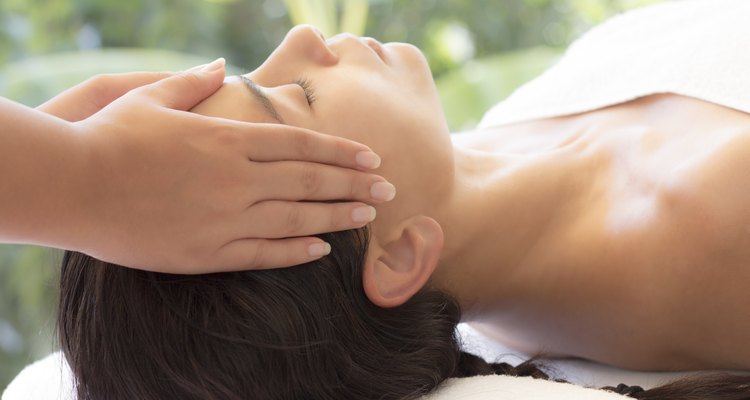
All facial massage treatments in a spa environment involve a combination of at least two basic manipulations. These movements are performed on the superficial muscles of the face as well as the neck, shoulders and sometimes the arms. These movements can achieve a variety of results, including relaxation, skin tightening, an increase in circulation or a healthy glow from the skin.
Effleurage Manipulations
Effleurage manipulations use light, continuous stroking with the fingers or the palms of the hand. These long, gentle stroking movements are commonly performed during Swedish massages. This method is very rhythmic and relaxing for the client; no pressure is used. Sometimes only the cushions of the fingertips touch the skin's surface in gentle strokes across the forehead, cheeks or under the eyes. Effleurage is usually used at both the beginning and very end of the massage session.
Petrissage Movements
Petrissage movements are considered more kneading movements. Between the thumb and fingers, the skin is lifted and then squeezed with a firm but light amount of pressure. The benefits of this type of manipulation include stimulation of muscles, glands and nerves. This type of manipulation can be performed on the cheeks with a light pinching of the fleshy areas as well as on the shoulders and down the arms. Any deeper-kneading movements should be limited to the back and shoulders.
Types of Friction Movements
Deep-rubbing movements utilizing the palms and fingers to apply pressure is known as the friction technique. Movements like chucking, rolling and wringing are all considered friction moves. Chucking involves a firm grasp in one hand, moving up and down the limb along the bone, while the other hand holds the limb steady. Wringing is a vigorous, downward motion here both hands apply a twisting motion in opposite directions. Rolling is when the tissues are being pressed and twisted back and forth.
The Tapotement Technique
The tapotement technique consists of short and fast tapping, hacking or slapping movements that are said to be the most stimulating of techniques. It helps to tone muscles and can give the treated area a healthy glow. According to the textbook "Milady's Standard Cosmetology," the person performing such movements should have strong but flexible fingers. These types of movements are performed by bringing the fingertips down lightly, but in a rapid succession.
Related Articles
Phototherapy Vs. Tanning Bed
What Is a Faradic Facial Treatment?

Elements of Effective Oral Communication
Hot Stone Therapy for the Face
How to Heal an Inflamed Bikini Area

The 5 Types of Gestures

How to Polish Boots With a Dremel
Anti-Aging Face Exercises
What Is Hand Salve?
Face Abrasion Treatment
Botox Vs. Dermal Fillers for Forehead ...
Can You Do Neck Exercises to Prevent ...
Lava Soap for Acne
What Is the Difference Between Cutting ...
How to Communicate With a Passive ...

How to Communicate With the Strong ...

What Is Verbal Communication?
Pulsar Chronograph Watch Instructions
Care Instructions for Voile Fabric
How to Use Microfiber Face Cloths
References
Writer Bio
Lyra Radford studied both film production and multimedia during her years as an undergrad and has since set her focus on psychology and anthropology in her graduate work at Florida Atlantic University. She has been writing professionally four years, contributing to Yahoo Shine, Yahoo Sports, Stack Media and more.
Photo Credits
simarik/iStock/Getty Images