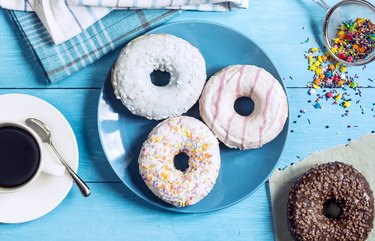
If you just couldn't keep your hands off the hors d'oeuvres at happy hour, polished off a pint of ice cream and a package of cookies after a stressful day, or ate far more than your fair share at Christmas dinner, you may feel pounds heavier. But don't stress -- it's unlikely you've gained fat following a one-time binge. You may weigh more after a food binge because of an excess of fluids and undigested food, but this weight will drop relatively quickly once you go back to a healthy eating and exercise routine.
What It Takes to Gain Weight
Video of the Day
A single event when you consume 1,000 or 2,000 extra calories is unlikely to lead to any substantial weight gain. A pound of fat is equal to 3,500 calories. You'd have to eat 6 1/2 cups of premium ice cream, almost 1 1/2 14-inch commercial cheese pizzas or 45 chocolate chip cookies in one sitting to take in the calories needed to gain even 1 pound.
Video of the Day
If you step on the scale immediately after eating a lot of food, you may weigh several pounds more than you did first thing in the morning, however. This type of daily weight fluctuation is normal. The higher weight is simply the mass of undigested food in your belly. Even if you wake up the morning after a binge and weigh more, realize that the excess salt in your binge food likely caused serious water retention -- which reflects as added pounds. Binges can also occur in conjunction with temporary weight gain from monthly hormonal changes.
To Lose Weight, Eat Healthy Foods
Avoid skipping meals to make up for the calories consumed during a binge -- you may just trigger another one. When you deny yourself food, you can become uncontrollably hungry and overeat again. Instead, eat wisely at your next meals. Focus on consuming whole, unprocessed foods, such as lean proteins, whole grains and fresh vegetables. The protein and fiber in these foods help fill you up -- so you'll feel full, helping deter future binges.
Watery, fibrous vegetables and fruits help keep your digestive system regular so you naturally excrete food waste with regular bowel movements, while flushing fluid through urination. Moderate portions keep calories in check, but prevent you from feeling too hungry. Aim for a palm-sized serving of protein, 1/2 cup of whole grains and a cup or two of fresh vegetables. Avoid highly processed foods that contain a lot of sodium -- this will cause you to hold onto water weight.
Exercise Normally, and Hydrate
You don't have to do hours of extra cardio to counter the calories you took in. This type of self-punishment could lead to injury, dehydration and an amped-up appetite that leads you to eat more again. If you have a regular gym routine, resume it after the binge. If you rarely exercise, a walk or light bike ride the day after a binge may help you feel less sluggish and bloated.
Drink plenty of water or herbal tea after a binge. Being fully hydrated discourages water retention. You need 90 to 125 ounces of water daily, depending on your size, age and activity level, but keep in mind that amount includes fluid from both foods and beverages.
Beware of Repetitive Bingeing
If you binge-eat as a habit, or compulsion, consider seeking medical attention. A binge-eating disorder is characterized by regular occurrences that drive you to eat beyond the point of discomfort. Frantic ingestion and eating even when you're not hungry are other signs. You may find yourself eating in private to hide your behavior. Uncontrollable bingeing may result from excessive dieting, depression or biochemical irregularities in the brain.
The calories from recurrent bingeing episodes can add up, leading to weight gain and an increased risk for the health problems associated with being overweight, including heart disease, type 2 diabetes and certain types of cancer. If you're worried about your eating habits, consult a health care professional to help determine if you need treatment.
- Women'sHealth.gov: Binge Eating Disorder
- Nestle: Does Your Weight Fluctuate From One Day to Another
- Healthaliciousness: Ice Cream, Pizza, Chocolate Chip Cookies
- MedlinePlus: Water in Diet
- Eating Disorder Hope: Hormones and Binge Eating Disorder
- Psychological Medicine: Ovarian Hormones and Binge Eating: Exploring Associations in Community Samples