
How to Teach Lacrosse Basics to Children
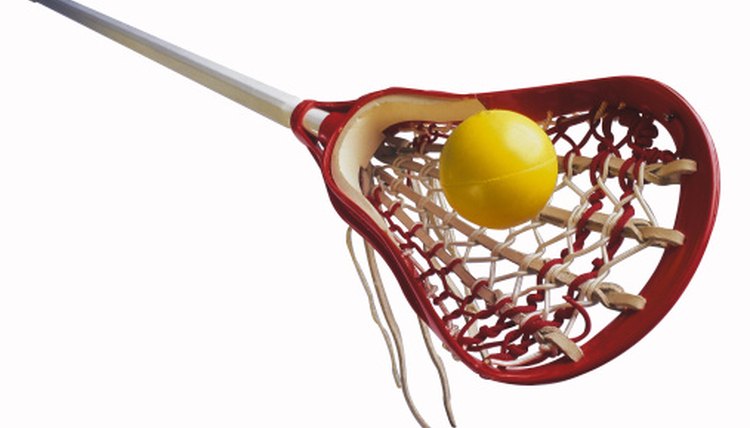
Lacrosse is a fast-paced game using netted sticks and a rubber ball to try to score in the opponent's goal. Players must know the basic skills, such as cradling, throwing, catching, scooping and shooting the ball. Teaching children these fundamentals gives them a strong foundation on which to build their skills, making the game more fun and possibly keeping them interested in the sport for many years.
Show children how to cradle the ball by putting their dominant hand on the top of the shaft of the lacrosse stick with their palm facing up and their other hand near the bottom with the palm facing toward their body. Teach them to hold the stick with fingertips and keep their bottom hand slightly open. Have them position the stick so the head is by their shoulders and have them to twist their wrists back and forth.
Teach kids how to do the overhand pass by keeping their dominant hand near the middle of the stick and their other hand near the bottom. Have them align their body with the sideline, but look at the goal. Bring the stick up to the outside of their shoulder, parallel to the ground. Have them turn so their hips are square with the goal. Push the stick away with their top hand and pull the stick toward them with their bottom hand.
Catch the ball by holding the stick near their ear with their top hand near their head and the bottom hand just below the middle of the shaft. Move in the direction of the person passing the ball. They should catch the ball softly in the mesh, pretending it's a water balloon that they don't want to pop.
Roll a ball to the children and have them run to it for instruction on scooping. When they get to the ball, have them place their dominant foot next to the ball. Have them get low to the ground by bending their knees. Their top hand should be near the head with the bottom hand at the bottom of the shaft, positioning the stick so it is parallel with the ground. Have them quickly move the head of the stick forward and scoop up the ball. When the ball has been scooped, they should bring the stick toward their chest.
Practice shooting the ball to learn proper technique. Have them stand facing the sideline with their upper hand near the head and their bottom hand just below the middle of the shaft. As they get ready to shoot, have them rotate their torso and upper hand forward to forcefully propel the ball into the goal using a low shot or bouncing in the ball.
Writer Bio
Nicole Waldo has been working in the fitness industry since 2003. She is certified as a personal trainer through the International Sports Science Association. Waldo graduated from the University of Montana, earning a Bachelor of Science in health and human performance with a concentration on health promotion.