
The Size of Skydiving Parachutes
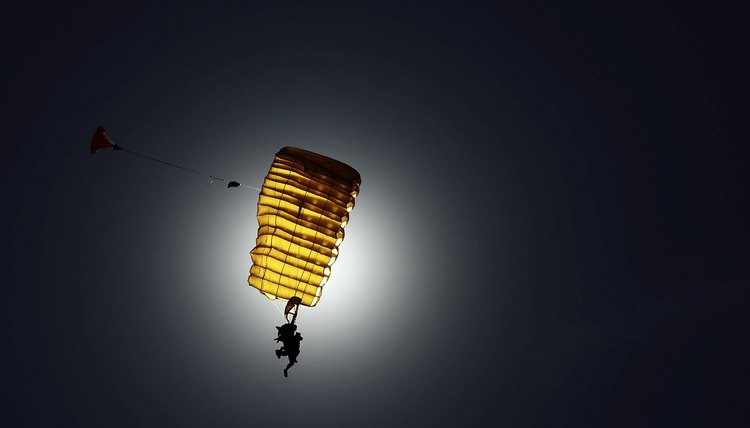
Skydiving is an equipment-intensive sport. You need a jumpsuit, helmet and -- of course -- a parachute. The canopy size of a skydiving parachute will largely determine how fast you descend once you jump from the airplane. In general, the larger the canopy, the slower you'll descend and the softer your landing will be.
Tandem
If you are learning to skydive, you'll likely use a tandem parachute that is designed for a student who is attached to an instructor. The instructor will have a main parachute and a reserve parachute, which are similar in size. Typically, a tandem chute has a surface area of 350 to 500 square feet. The parachute is rectangular in shape.
Solo
When you jump solo, the canopy size for your parachute is based on your exit weight, which is your weight plus the weight of your gear. This typically adds 20 to 25 pounds. However, there’s no standard formula for choosing a canopy size, and different manufacturers will have different recommendations for the maximum exit weight of their parachutes, even though they may be the same size. Manufacturer recommendations on size vary by the parachute design as well. It’s important to follow the manufacturer’s recommendation for the parachute’s maximum weight.
It’s equally important to consider your expertise level -- larger parachutes descend more slowly and are easier to make landings with, notes skydiving instructor Scott Miller in a 2001 Skydiving magazine article. As a general rule of thumb, when you downsize, go down one size at a time, and make numerous jumps with each new size before you progress. Also, don’t confuse maximum weight for a parachute canopy with recommended weight. A canopy with a maximum weight of 190 pounds, for example, can be used by a 130-pound person, but not a 200-pound person.
Experts
Equipment that expert skydivers use is often smaller and lighter than the gear that newer skydivers utilize. Expert skydivers use parachutes that range in size from 80 square feet to 200 square feet. Newbies and expert divers use parachute sizes that are based on weight. However, some experts use parachutes that are small for their weight to gain a faster descent.
Considerations
Canopy design will have an impact on how your parachute performs. Two parachutes with canopies of the same size will perform differently if they have trims, airfoils or other design elements that are dissimilar. The canopy shape will change performance as well, with semi-elliptical designs typically being more responsive than rectangular designs. Fabric type can also be a factor.
References
Writer Bio
Linda Tarr Kent is a reporter and editor with more than 20 years experience at Gannett Company Inc., The McClatchy Company, Sound Publishing Inc., Mach Publishing, MomFit The Movement and other companies. Her area of expertise is health and fitness. She is a Bosu fitness and stand-up paddle surfing instructor. Kent holds a bachelor's degree in journalism from Washington State University.