
Ballet Barre Exercises
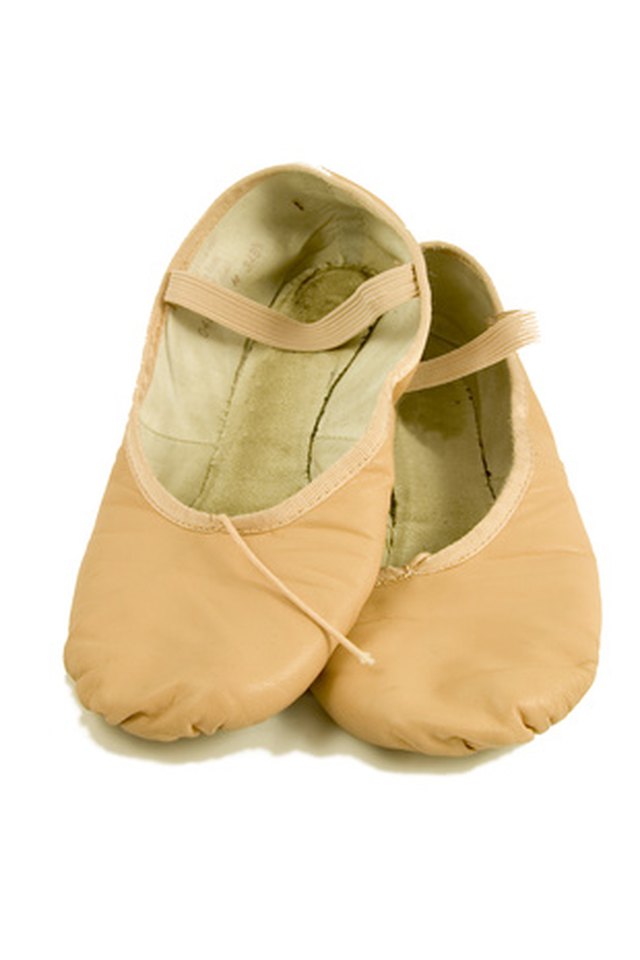
The barre in ballet is a fundamental element of every dancer's training. Each class will generally begin with a series of exercises utilizing the barre, a wooden railing attached to the studio wall. Barre exercises are used to warm-up the body, develop technique, prepare for more difficult and elaborate movements, and provide structure for the dancer to focus on strength, coordination and patterning.
Lessons learned at the barre are then translated into center work and choreography. Repetition of the same exercises or series of barre movements allows students to focus on the areas they may be struggling with in other aspects of their training, such as body alignment, flexibility, head positioning or balance.
Pliés
Barre work generally begins with a plié exercise. Plié means to bend and is a critical movement to master since most steps, especially jumps, begin and end with the feet turned out and the knees bent in a demi-plié position.
Plié exercises at the barre can include a combination of demi-pliés, or small bends, and grande-pliés, or large bends where the heels actually leave the ground. Younger dancers will not attempt grande-pliés until their muscles are strong enough for this large movement. Pliés are also done in varying positions of the feet, including first position with the feet turned out and touching at the heel and fifth position with the feet are turned out and one foot crossed over the other.
Tendus
Tendu, meaning to stretch, is done by stretching the leg with a pointed toe on the ground either to the front, side or back of the body. This movement can be done slowly or quickly and is used to warm up the feet. A tendu exercise at the barre can combine several different movements, including tendus and pliés. The movement generally starts and finishes with the feet in first or fifth position.
Dégagés
A dégagé, meaning to disengage, is similar to a tendu except that the toe comes off the ground. It's a sharp, quick movement and the toe is kept close to the ground so the movement does not become too big. Dégagé exercises are used to further warm up the feet and calves and to prepare a dancer's body for more intricate footwork later in the class or in choreography. Just like in a tendu exercise, dégagés start and finish with the feet in first or fifth and the leg can be extended to the front, side or back.
Rond de jambe a terre
Once the dancer's feet have been sufficiently warm-up, more complicated exercises can be done. Rond de jambe a terre, or round of the leg on the ground, utilizes the tendu movement to start and finish this motion. From first or fifth position of the feet, the movement begins by tenduing the foot to the front, then moved to the side and then to the back.
This movement has a number of variations that can be done in separate exercises or in combination depending on the level of the class. For example, moving the leg from the front, to the side and then to the back is an en dehors, or outward, movement; moving the leg from the back, to the side and then to the front is an en dedans, or inward, movement. The movement can also be done with the supporting leg in a plié position.
Frappés
A frappé, meaning to strike, is a sharp, quick movement used to prepare the foot and ankle for jumping. The frappé movement starts with the foot flexed and resting lightly against the supporting ankle. The actual movement comes from the foot extending into a dégagé position as the ball of the foot gently strikes the floor. The movement can be to the front, side or back.
Adage
An adage exercise is a slow, graceful set of movements that emphasizes balance, control, and strength by sustaining each position for several counts of the music. Coordinating the arms, head and legs are important to achieve a connected, graceful feeling to the exercise.
Movements used in an adage exercise can include pliés, rond de jambe en l'air (round of the leg in the air), développé (where the dancer draws the foot up the side of the leg and then extends it to the front, side or back at a 90 degree angle from the ground) and various standard positions of the body.
Grand battement
The barre work usually finishes with a grand battement, meaning big beat, to improve flexibility, strength and as a preparation for large jumps. This movement is similar to the dégagé, but the leg is tossed into the air as high as the dancer is able while maintaining proper body alignment. This is a large, swinging movement, but has an element of control. Grand battements are done to the front, side or back and start in first or fifth position of the feet.
Writer Bio
Elaine Wiltshire has been working as a journalist since 2006 and is now a freelance writer and editor. She trained in Cecchetti ballet for 20 years and is now a certified yoga instructor specializing in yoga for athletes. Wiltshire is also the publisher of Scrum, Ontario's rugby magazine.