
Acupressure for Reducing Swelling
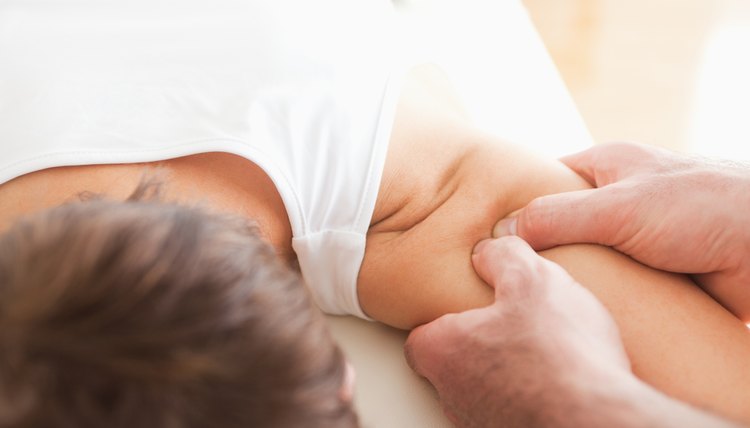
Acupressure is a holistic approach to treating a variety of conditions and diseases. It involves placing pressure on specific points on the body to improve the flow of energy and fluids throughout the body. As circulation increases, muscles relax, nutrients flow freely throughout the body and toxins are removed, practitioners believe. While acupressure should never be used in place of medically prescribed treatments, it can be used in combination with traditional therapy.
Below Belly Button
Two finger widths below the belly button and just above the pubic bone is an acupressure point called the Sea of Energy. It reduces abdominal swelling and pain associated with constipation, gas and sore abdominal muscles. It also helps strengthen the immune system.
Inner Shinbone
The inner shinbone, also known as the Three Yin Crossing, is a palm-width above the inner ankle close to the back of the shinbone. Although it reduces water retention and swelling, it should not be stimulated during pregnancy.
Arch of the Foot
The Blazing Valley is an acupressure point in the middle of the arch of the foot halfway between the outer tip of the big toe and the back of the heel. Applying pressure to this point relieves edema, particularly swollen feet.
Inside of Anklebone
The inner ankle has an acupressure point called Illuminated Sea. Located one thumb-width below the inside of the anklebone, it relieves water retention in the ankles that can cause painful swelling.
Inside Leg Below Knee
Shady Side of the Mountain is an acupressure point on the inner leg just below the knee. Applying pressure here relieves pain associated with tense legs, swollen and sore knees and leg cramps.
References
- Zhang WB, Wang GJ, Fuxe K. Classic and Modern Meridian Studies: A Review of Low Hydraulic Resistance Channels along Meridians and Their Relevance for Therapeutic Effects in Traditional Chinese Medicine. Evid Based Complement Alternat Med. 2015;2015:410979. doi:10.1155/2015/410979
- Mehta P, Dhapte V, Kadam S, Dhapte V. Contemporary acupressure therapy: Adroit cure for painless recovery of therapeutic ailments. J Tradit Complement Med. 2017;7(2):251-263. doi:10.1016/j.jtcme.2016.06.004
- Movahedi M, Ghafari S, Nazari F, Valiani M. The Effects of Acupressure on Pain Severity in Female Nurses with Chronic Low Back Pain. Iran J Nurs Midwifery Res. 2017;22(5):339-342. doi:+10.4103/ijnmr.IJNMR_108_16
- Mącznik AK, Schneiders AG, Athens J, Sullivan SJ. Does Acupressure Hit the Mark? A Three-Arm Randomized Placebo-Controlled Trial of Acupressure for Pain and Anxiety Relief in Athletes With Acute Musculoskeletal Sports Injuries. Clin J Sport Med. 2017;27(4):338-343. doi:10.1097/JSM.0000000000000378
- Greenlee H, Dupont-reyes MJ, Balneaves LG, et al. Clinical practice guidelines on the evidence-based use of integrative therapies during and after breast cancer treatment. CA Cancer J Clin. 2017;67(3):194-232. doi:+10.3322/caac.21397
- Smith CA, Armour M, Dahlen HG. Acupuncture or acupressure for induction of labour. Cochrane Database Syst Rev. 2017;10:CD002962. doi:10.1002/14651858.CD002962.pub4
- Memorial Sloan Kettering Cancer Center. Acupressure for nausea and vomiting. Updated October 24, 2019
- Greenlee H, DuPont-Reyes MJ, Balneaves LG, et al. Clinical practice guidelines on the evidence-based use of integrative therapies during and after breast cancer treatment. CA Cancer J Clin. 2017 May 6;67(3):194-232. doi:10.3322/caac.21397
- Mącznik AK, Schneiders AG, Athens J, Sullivan SJ. Does Acupressure Hit the Mark? A Three-Arm Randomized Placebo-Controlled Trial of Acupressure for Pain and Anxiety Relief in Athletes With Acute Musculoskeletal Sports Injuries. Clin J Sport Med. 2017 Jul;27(4):338-343. doi:10.1097/JSM.0000000000000378
- Smith CA, Armour M, Dahlen HG. Acupuncture or acupressure for induction of labour. Cochrane Database Syst Rev. 2017 Oct 17;10:CD002962. doi:10.1002/14651858.CD002962.pub4
Writer Bio
Jule Rizzardo has been a freelance writer for Business Marketing Matters since 2009, and published her first eBook for Smashwords.com on Internet and social-media marketing in December 2010. She holds a bachelor's degree in civil engineering from the University of California, Davis, and a master's degree in hydrogeology from the University of Nevada-Reno.