
The Best Back Exercise for Osteoporosis
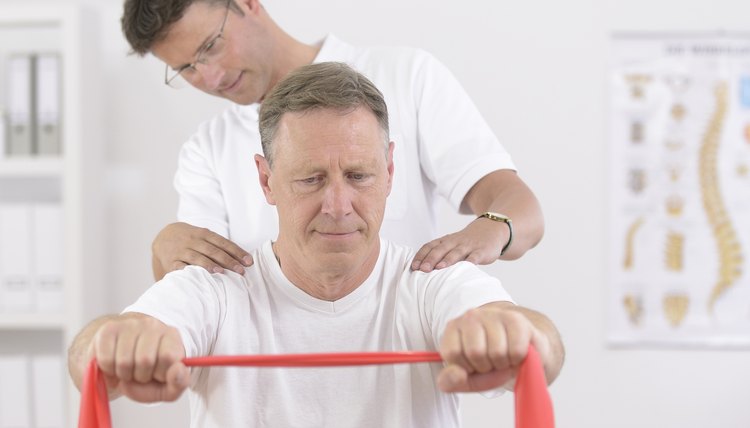
Osteoporosis is a disease of the bones that affects some nine million Americans. The condition occurs when an individual loses an excessive amount of bone mass or density, doesn’t produce bone mass, or both. This makes the bones extremely weak and sometimes prone to breaking. Even the most simple activities or movements can lead to broken bones.
Stregthening
mangostock/iStock/Getty Images
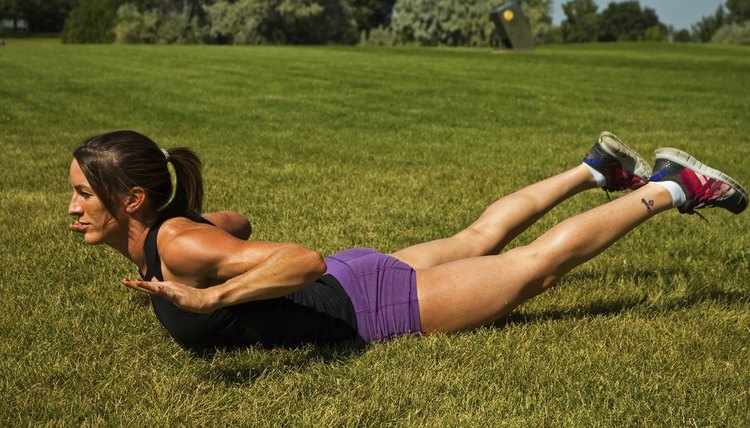
The spine, wrist and hips are regions prone to osteoporosis-related damage. The disease can lead to breakage in the spinal column, resulting in stooped posture. Despite the fragility of the bones, it is still possible for individuals living with the condition to stay safely active. Strength-training exercises for the back are often recommended for osteoporosis. One strengthening technique that could easily be done at home is the Back Extension. It involves lying face-down on the floor with arms extended above your head and legs straight. Lift the right leg and left arm off the ground while the head remains facing downward. Make sure to keep the neck, head and arms aligned. Hold this position for several seconds and return to the original position. Repeat this movement using the opposite arm and leg. Perform about six to eight repetitions, once a day, and gradually progress to twice a day. It should be done three to four times a week.
Resistance Training
mangostock/iStock/Getty Images
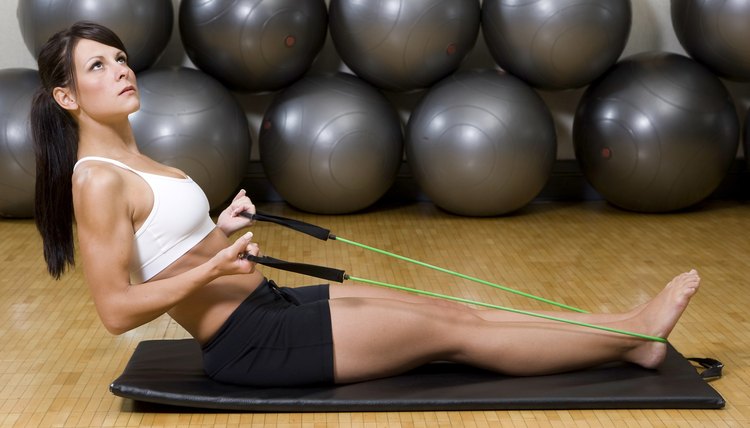
Resistance training promotes strengthened upper spine and arms and can help promote growth of bone tissue. Exercises for osteoporosis often incorporate weights and resistance bands. The Seated Row is a great technique that strengthens back muscles and requires a resistance band. Sit up right on the floor with feet extended in front of you. Place the resistance band behind the balls of the feet and secure each end of the band by wrapping them around the hands. Pull the band toward you while keeping the back straight. Hold for a second and then release the arms and repeat the movement for six to eight repetitions. Start by performing this exercise once a day and gradually increase the frequency to twice a day. You can also progress to a higher resistance band. Do this three to four times a week.
Stretching
mangostock/iStock/Getty Images
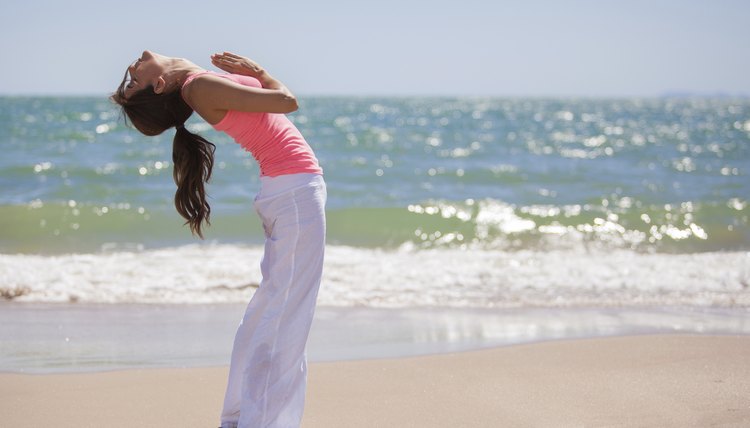
Muscle lengthening can help reduce back pain and improve upon posture. Effective and safe stretches include raising and rotating the shoulders, knee lifts and ankle movement that pulls feet toward the body. The Standing Back Bend technique is a great way to stretch the back and allows for improved flexibility. The exercise involves standing up right against a stable table or counter, with feet planted shoulder-width apart. With hands resting on the hips, retract the shoulder blades and lean back to a comfortable angle. Make sure to keep the head straight and the chin level to the floor. After about five seconds, return to your original upright position and repeat the movement for five repetitions. Perform this exercise about two to three times a day.
Exercises to Avoid

mangostock/iStock/Getty Images
High-impact movements such as running or jumping are not recommended for those with osteoporosis, as they can lead to fractures. Exercises that involve bending forward or twisting the waist are also blacklisted. While some yoga and Pilates movements are helpful, they can involve bending forward, so be cautious when doing them.
References
Writer Bio
Based in Los Angeles, Angela Melero has been a writer since 2008, contributing to various publications. She serves as an assistant editor for a beauty publication and enjoys writing about health, fitness and beauty trends. Melero received her bachelor's degree in journalism from California State University, Northridge.