















5 Things You Need to Know About Cures for Cold Sores

Text size:  |  Post a comment  |  Print  |   | 
Add to my favorites

1. Don't Do Anything

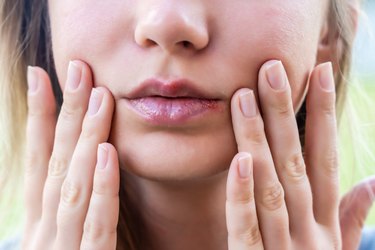
Cold sores, or herpes simplex virus type 1, are small, fluid-filled blisters around the mouth. They are painful and can make you miserable. Previously thought to be unrelated to genital herpes, also known as herpes simplex virus type 2, doctors now know either type can cause the sores to form either around the mouth or the genitals. The easiest treatment for cold sores is no treatment at all. Most cold sores will go away on their own without seven to 10 days without any treatment.

2. Stop the Pain; Stop the Itching

There are several non-prescription treatments you can try. Abreva is the most well-known over-the-counter medication available to help reduce the pain and itching. It has also been shown to shorten the life of the cold sore. You can also try petroleum jelly, cocoa butter and glycerin to keep the area moisturized and protect the area from irritants. Other lip balms containing substances such as lidocaine, menthol and benzocaine can help with pain and itching. You can also take ibuprofen and acetaminophen to help reduce the pain caused by cold sores. These non-prescription products work best when they're used at the first sign of a cold sore.

3. Need Something Stronger?

If your cold sores are severe, you can opt for prescription medication. Zovirax and Viroxyn are the most commonly used prescription treatments. Like non-prescription medications, they should be used at the first sign of a cold sore. Zovirax is an oral medication that comes in tablet form. It's an antiviral drug that works to keep herpes from spreading, so your body can better fight off the infection. Viroxyn is a single dose medicine that is applied directly to the cold sore to kill the virus. In some cases, patients will need a second dose.

4. Slow Down a Cold, and Cold Sores Too

Ever tried zinc to lessen the symptoms of a cold? Many people swear by zinc lozenges taken at the beginning of a cold to reduce the bothersome symptoms. Now scientists are saying zinc may also be effective at fighting cold sores. It stops the spread of the herpes simplex virus. You can find topical over-the-counter ointments containing zinc.

5. Eat Your Veggies

Mom always said to eat your broccoli, and once more, she's right. Researchers say there is evidence that suggests that a compound called indole-3-carbinol, found in broccoli and other cruciferous vegetables such as brussel sprouts and cabbage, may slow down or stop the herpes simplex virus.

About this Author

Jane Bayer has a journalism degree from Auburn University and has been a ghostwriter on health topics for more than 25 years. Her clients include hospitals, clinics and healthcare providers. Bayer also served as a branch director for the American Lung Association of Georgia for two years.

Last updated on: 11/18/09

Member Comments

+2 down up

by JackMcWilliams on December 1, 2008 at 9:28 AM

Have you ever noticed that your cold sores are linked to stress? I have been having them since the fourth grade and have had them at the most stressful (even though some were joyful!) times of my life...our wedding, Christmas, every time we've moved, etc. Some come even without any cold symptoms. Have used topical Zovirax for years and it really shortens the length of the breakout. Mine are on my nostril area as often as the lips. Now that I'm retired and stress is mostly a stranger in my life, I have few cold sores!

0 down up

by rjrj2007 on December 2, 2008 at 5:16 PM

I also experience cold sores, not usually related to "colds" at all. I typically get them at times with high stress levels, upon returning from vacation, about a month before vacations, during familiy emergencies, etc. I also experience sores in my nose and have had some spread from one side across the bridge and into the opposite nostril, it is very painful and seems much harder to get rid of. I also have used Zovirax ointment and occasionally use oral anti-virals. What I find to help the most...popping the blister as soon as it starts. This is not recommended but I have found if I get rid of the fluid and keep it pushed out they do not spread as badly. Might be in my head but that is what I think. J. Cartwright

0 down up

by hsvendblad on December 1, 2008 at 5:07 PM

My wife used to get these sores on her lips regularly 1/mo or ever other month. Someone suggested she try Lysine and for the last three years the outbreaks have become very infrequent 1 or 2/year. I highly recommend it. Has anyone else tried this, how has it helped?

0 down up

by simongreig on December 6, 2008 at 12:39 PM

I tend to agree with a few comments made, I too tend to get tem if I have been under stress. I tend to get one every 3-4 years, and recently have been revising for my professional charatership exams. Poor diet, little sleep, and reduced exercise, resulted in a cold sore.

What I have found that works well is tea-tree oil, on a cotton bud works well it cleared up in five days.

0 down up

by rnickell on January 9, 2009 at 11:41 AM

I have been getting cold sores since... Well, since I was too young to remember and I have tried everything under the sun and several saves or ointments I tried do help some. But a few years ago I found Valtrex. For me Valtrex is a true marvel of the modern age and the best thing since sliced bread. As soon as I feel a tingle I take a 1 gram (huge) pill and 1/2 a gram the next day and 1/2 a gram the third day after the tingle and no cold sore. The pills are expensive but well worth the cost.

I found that I was more susceptible to an outbreak if I got a sunburn, sick (cold or flu), or stressed. I believe that these situations tend to weaken your immune system and allow the virus to get the upper hand. My advice is to eat right, exercise and stock a supply of Valtrex.

Tools

Track your daily calories. See how many calories you burn and consume.

BMI is a measurement of body fat based on height and weight.

Map your local running, cycling, walking and hiking routes and track your calorie burn.

Find us on the web, receive emails and use our mobile app to keep you motivated.

This tool will help you to decide whether to treat at home or see a doctor.