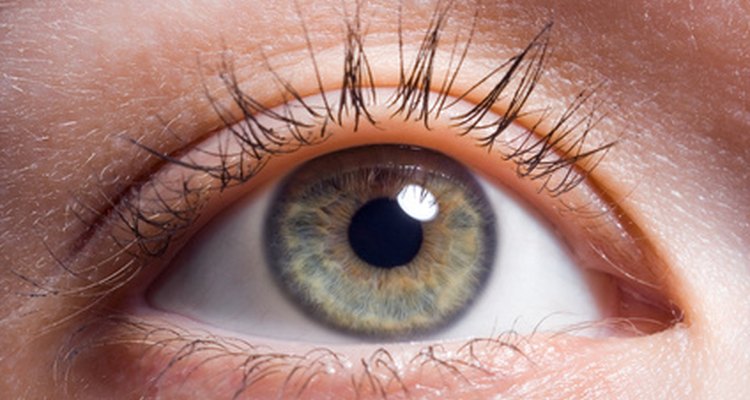
The human eye is a marvel of anatomy, providing us with the ability to see the world in all its textures, colors, and sizes. While dividing the eye into multiple layers can be done in a variety of ways, one way to think of layers of the eye is to consider the eyeball as being composed of three main layers: the cornea and sclera; the iris, choroid and ciliary body; and the retina.
The Cornea and Sclera
The cornea is the outermost layer of the eyeball and is itself made up of five layers of tissue. The average diameter of the cornea is just over one centimeter. This layer of the eye has two main purposes. First, because it has no blood vessels in it, the cornea is a perfectly transparent membrane and allows light to enter the pupil and hit the back of the eye (the retina), which is what enables us to have the sense of sight. Second, the cornea protects the iris and pupil from potential harm from both "large" particles (dust, dirt) and smaller, microscopic particles like bacteria. The sclera is the dense, white layer of tissue that coats the sides and back of the eyeball and acts, like the cornea, as a protective layer. It is a fibrous layer that is made up mainly of collagen and is what is often referred to as the "white of the eye."
The Uveal Tract: Iris, Choroid, and Ciliary Body
The uveal tract is the name given a group of three eye structures: the iris, the choroid, and the ciliary body. The iris is a muscular structure--actually three muscles working together--that controls the amount of light that passes through the lens of the eye; the pupil of the eye is simply the opening that is controlled by the muscles of the iris and allows light to pass through the lens to the retina at the back of the eye. The iris is also the colored part of the eye: whether eyes are blue, brown, hazel, green, or gray (or some combination of these) depends on the presence of pigment cells called melanocytes. The more melanocytes in the iris, the darker the eye color. The choroid is located between the sclera and the retina. It contains three layers of blood vessels that contribute to the blood supply of the retina. The ciliary body is a triangularly-shaped structure that extends from the front end of the choroid toward the iris. The ciliary body itself is composed of several structures, including ciliary processes, that form the clear liquid filling the eyeball, known as the aqueous.
The Retina
The retina is a complex, multilayered tissue at the back of the eye. It covers the back two-thirds of the inner eye and is composed 10 distinct layers Each layer is made up of different cell types and serves a different function. The nerve cell layer, for instance, contains parts of nerve cells (ganglion cell axons) that communicate with the optic nerve at the back of the eye. The photoreceptor layer contains special light-sensitive cells, called rods and cones because of their characteristic appearance. It is the photoreceptors that take light entering the eye through the pupil and begin the process of transforming this light into information that we interpret as images of the world around us. Other layers include the inner plexiform layer, the external limiting membrane, and the the retinal pigment epithelium.
Related Articles

Can Shining a Flash Light in Eyes ...

How do Solar Watches Work?

How Does Ultraviolet Light Affect ...

How to Whiten the Eye

The Best Eye Serums to Remove Puffiness

Colors of Mink Coats

Does a Rib Eye Have a Filet in It?
What Is a Roving Eye?

How to Describe Eyeglasses

What Color Clothes Makes Brown Eyes ...

What Is Crystal AB?

Font Styles for Headstones

What Is a Pink Amethyst?

Types of Valuable Crystals

What Are the Different Types of Gold ...

What Is Animal Rennet?

How Does the Zipper Work?

How Are Colored Pearls Made?

Physical Characteristics of the Ruby ...

Barriers to Effective Verbal ...
References
- "Vaughan & Asbury's General Ophthalmology"; Paul Riordan-Eva; 2007
- "DeGowin's Diagnostic Examination"; R. F. Le Blond et. al.; 2008
- "Goodman & Gilman's The Pharmacological Basis of Therapeutics"; L. L. Brunton et. al. ; 2005
Resources
Writer Bio
Shira Goldenholz has been writing since 2001. She has edited a neurosciences coursebook and co-authored an article published in the "Journal of Child Neurology." She has contributed to a report on children's mental health and has written for an autism website. She holds a medical degree from the University of Wisconsin-Madison and a Master in Public Health from Boston University.
Photo Credits
macro human eye image by Anatoly Tiplyashin from Fotolia.com