Group Activities for Autism
Cooperative games are an ideal way for autistic children to practice social skills in a fun, non-threatening environment. Cooperative group activities are most effective in teaching social skills when the activity is based on the children's preferred themes. If the children are strongly focused on art, a cooperative painting activity is ideal. For a group of children who share an interest in trains, a railroad-themed game will help them explore difficult skills in a comfortable and familiar way.
Creative Activities
While creative endeavors are often solitary activities, they can be the basis of group activities. The grab bag art game is a great way to encourage cooperation. This game is ideal for two to four children. Each child (or pair of children) has five minutes to gather materials from the art area, which they place in a paper bag. The children or teams exchange bags and have 30 to 45 minutes to create an art project using the materials they have been given. The children may trade materials, collaborate, or work together to create a larger joint project.
Theater improvisation games are also great group activities for autistic children, as one of the core principles of improvisation is a safe and supportive environment where everyone is free to take creative risks. Babble scenes, where actors act out a scene using only babble words—no understandable phrases allowed—is a fun way for autistic children to relax and participate without struggling with verbal skills 1.
- While creative endeavors are often solitary activities, they can be the basis of group activities.
- Theater improvisation games are also great group activities for autistic children, as one of the core principles of improvisation is a safe and supportive environment where everyone is free to take creative risks.
Ball Games
Mentoring Activities for Youth
Learn More
Ball games are a great way for autistic kids to practice basic motor skills while having fun and working on social skills 1. Pattern catch is a good group game. Several children are arranged in a geometric shape such as a square, triangle, or star, and pass a ball in a predefined pattern so that the ball outlines the shape.
Balance challenges can also be fun for kids with Autism Spectrum Disorders 1. Challenge two children to hold a ball off the ground without using their hands. They could stand back to back and hold the ball between their shoulderblades, or sit on the ground and use their feet to raise the ball. Encourage the children to brainstorm various strategies and decide cooperatively how to accomplish the task.
- Ball games are a great way for autistic kids to practice basic motor skills while having fun and working on social skills 1.
- Challenge two children to hold a ball off the ground without using their hands.
Outdoor Activities
Outdoor activities, such as hiking or planting a garden are great ways to encourage autistic kids to participate in group activities.
Before a hike, provide a trail map to the group and ask them to work together to devise the path they will travel in order to get to a predetermined destination. Along the trail, give each child an opportunity to lead the group and use the map to navigate.
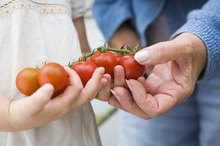
Planting a school or community garden is a great way for autistic children to work as a group to accomplish a long-term goal. Depending on their ability levels, they can be involved in planning the garden, planting, watering, weeding, and harvesting vegetables. This may also be a way to encourage those with very narrow eating habits to try a new food type.
- Outdoor activities, such as hiking or planting a garden are great ways to encourage autistic kids to participate in group activities.
- Planting a school or community garden is a great way for autistic children to work as a group to accomplish a long-term goal.
Related Articles

Mentoring Activities for Youth
Learn More

Activities for Adults With Developmental Disabilities
Learn More
Activities for Mentally Challenged Adults
Learn More

Handwashing Games for Kids
Learn More
The Importance of Sports & Recreation to Disabled Youth
Learn More
Preschool Activities on Fruits and Vegetables
Learn More

Cheerleading Team Building Activities
Learn More
Visual Perception Problems in Children
Learn More
Activities to Teach Kids About the Fruits of the Spirit
Learn More
Galloping Activities for Children
Learn More
References
Resources
Writer Bio
Tricia Ballad is a writer, author and project geek. She has written several books including two novels, teaches classes on goal setting and project planning for writers, and loves to cook in her spare time. She is living proof that you can earn a living with a degree in creative writing.