What Are the Causes of Brain Atrophy in Child?
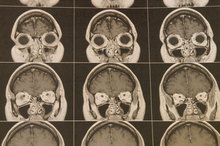
Cerebral atrophy, or brain atrophy, describes a loss of brain cells and damage to the connections between them, or “shrinkage” of brain tissue. Cerebral atrophy is commonly associated with many diseases that affect the brain, notes the National Institute of Neurological Disorders and Stroke, or NINDS 34. In general, brain atrophy can be caused by disease like cerebral palsy, stroke, dementia, multiple sclerosis, Huntington’s disease or AIDS. Were any of those conditions to strike a child, brain atrophy could also result. However, there are some other, lesser-known causes of cerebral atrophy in children.
Systemic Chemotherapy
Dr. Prassopoulos, a radiologist, and his colleagues at the University Hospital in Heraklion, Greece took CT scans of 69 children receiving systemic chemotherapy and measured their brains before, during and after chemotherapy treatment. They note that half of the children were found to have brain atrophy, which was still visible long after treatment was completed. Dr. Prassopoulous’ findings were reported in the Journal of Medical and Pediatric Oncology.
- Dr. Prassopoulos, a radiologist, and his colleagues at the University Hospital in Heraklion, Greece took CT scans of 69 children receiving systemic chemotherapy and measured their brains before, during and after chemotherapy treatment.
- They note that half of the children were found to have brain atrophy, which was still visible long after treatment was completed.
Depressed Parents or Grandparents
Diseases Similar to ALS
Learn More
In 2009, Dr. Peterson, a researcher in the department of child psychology at Columbia University, and colleagues reported that children who have a familial risk for depression, meaning a parent or grandparent with a history of depression, showed brain atrophy when compared to no-at-risk children. The cerebral atrophy in this study was only in the right hemisphere of the brain. When interviewed by the New York Times, Dr. Peterson explained that this region of the brain is responsible for the processing of emotional information and postulates that the brain atrophy observed may predispose these children to developing anxiety and depression themselves 2. Dr. Peterson’s findings were reported in the Proceedings of the National Academy of Science.
- In 2009, Dr. Peterson, a researcher in the department of child psychology at Columbia University, and colleagues reported that children who have a familial risk for depression, meaning a parent or grandparent with a history of depression, showed brain atrophy when compared to no-at-risk children.
- When interviewed by the New York Times, Dr. Peterson explained that this region of the brain is responsible for the processing of emotional information and postulates that the brain atrophy observed may predispose these children to developing anxiety and depression themselves 2.
Neuronal Ceroid Lipofuscinoses
Neuronal ceroid lipofuscinoses, or NCLs, make up a diverse group of inherited neurodegenerative disorders. One disease, called Battens disease, is usually fatal by the early 20s and usually manifests during childhood, notes the Battens Disease Support and Research Association, or BDSRA. Symptoms of Battens disease are linked to a buildup of substances called lipopigments in the body's tissues. Lipopigments are made up of fats and proteins. Neuron death and brain atrophy occur in Battens disease. Early signs of the disease include changes to personality and behavior, slow learning, vision loss and clumsiness. In children this disease usually presents between the ages of 5 and 8 and progresses to moderate cerebral atrophy and dementia.
- Neuronal ceroid lipofuscinoses, or NCLs, make up a diverse group of inherited neurodegenerative disorders.
- One disease, called Battens disease, is usually fatal by the early 20s and usually manifests during childhood, notes the Battens Disease Support and Research Association, or BDSRA.
Cushing's Syndrome
What Are the Causes of Brain Atrophy?
Learn More
Cushing’s syndrome is a rare hormonal disorder, especially rare in children, where the body is exposed to prolonged and high levels of the hormone cortisol, notes the National Endocrine and Metabolic Diseases Information Service, or NEMDIS. Dr. Merke, a research in the Pediatric and Reproductive Endocrinology branch of the National Institute of Health, and colleagues studied 11 children with Cushing's syndrome and compared them to 10 age- and sex-match healthy children. They found that the children with Cushing's syndrome had significantly smaller brain volumes but that there was a reversal of cerebral atrophy one year after surgical cure. Dr Merke reports these findings in Journal of Clinical Endocrinology and Metabolism and notes that although there is a rapid reversibility of the brain atrophy associated with the syndrome, significant decline in the cognitive function of these children remains one year after surgical cure.
- Cushing’s syndrome is a rare hormonal disorder, especially rare in children, where the body is exposed to prolonged and high levels of the hormone cortisol, notes the National Endocrine and Metabolic Diseases Information Service, or NEMDIS.
- Dr Merke reports these findings in Journal of Clinical Endocrinology and Metabolism and notes that although there is a rapid reversibility of the brain atrophy associated with the syndrome, significant decline in the cognitive function of these children remains one year after surgical cure.
Related Articles

Diseases Similar to ALS
Learn More
What Are the Causes of Brain Atrophy?
Learn More

Child With High Fever & Hyperactivity
Learn More

Symptoms of Tourette's in Babies
Learn More

How Malnutrition Affects the Brain
Learn More

Causes of Temporary Leg Paralysis
Learn More

Complications of Spinal Fusion With Harrington Rods
Learn More

Fatal Genetic Diseases
Learn More
What Are the Causes of Inflammation in the Frontal Lobe of the Brain?
Learn More

Causes of Clonus
Learn More
References
- "Medical and Pediatric Oncology"; Brain atrophy in children undergoing systemic chemotherapy for extracranial solid tumors; P. Prassopoulos, et al. ; March 1997
- "New York Times": Study Links Brain's Cortex to Depression
- Chabran E, Noblet V, Loureiro de sousa P, et al. Changes in gray matter volume and functional connectivity in dementia with Lewy bodies compared to Alzheimer's disease and normal aging: implications for fluctuations. Alzheimers Res Ther. 2020;12(1):9. doi.10.1186/s13195-019-0575-z
- Fjell AM, Sørensen Ø, Amlien IK, et al. Self-reported sleep relates to hippocampal atrophy across the adult lifespan - results from the Lifebrain consortium. Sleep. 2019: Nov 8. doi:10.1093/sleep/zsz280
- National Institute of Neurological Disorders and Stroke. Cerebral atrophy information page. Updated March 27, 2019.
- Unno K, Sumiyoshi A, Konishi T, et al. Theanine, the main amino acid in tea, prevents stress-induced brain atrophy by modifying early stress responses. Nutrients. 2020;12(1). doi.10.3390/nu12010174
Writer Bio
Seana Rossi is a research associate from Toronto who has been publishing and editing scientific abstracts and manuscripts since 2003. Her work has appeared in publications such as "The Society for Neuroscience," "The Canadian Psychological Association" and "The Journal of Surgical Oncology." Rossi obtained a Master of Science in neuroscience from York University.