
What Does Rollerblading Do for Your Body?
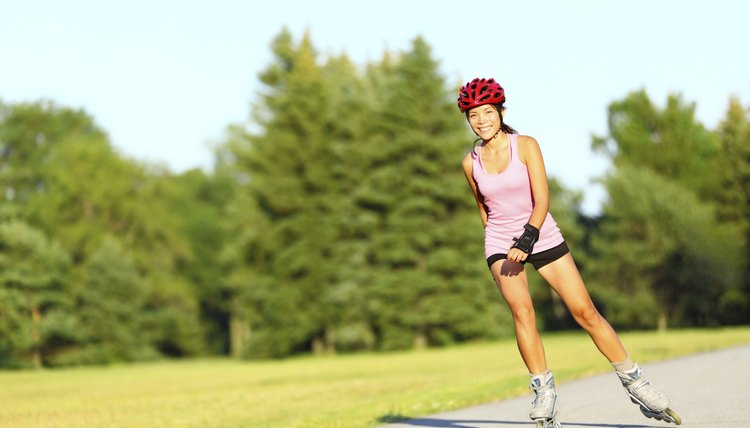
Rollerblading or inline skating experienced an increase in popularity during the 1990s. Rollerblading can be used as an alternative outdoor aerobic activity to cycling or jogging. Not only can use lose weight through regular rollerblading sessions, but you can also work the muscles in your lower body. Wear protective gear while rollerblading to prevent injury.
Improved Fitness Levels
Maximal oxygen consumption or VO2 max is significantly improved after regular sessions of inline skating. According to a 1996 study published in the Medicine & Science in Sports & Exercise, researchers found that both running and inline skating produced similar increases in VO2 max and maximum time spent on the treadmill. Study participants exercised for three days of week for a total of nine weeks. Each session lasted 20 to 40 minutes and at 80 percent to 90 percent of their maximum heart rate.
Weight Loss
Rollerblading is one of the top calorie-burning exercises you can participate in. If you weigh 160 lbs., you burn approximately 913 calories in a single hour of rollerblading. Because it takes 3,500 calories to lose one pound of fat, four one-hour rollerblading sessions per week could put you on track to your weight loss goals.
Shock Absorption
When you run or jog, your body must absorb the shock of your feet hitting the ground. Running or jogging sessions can result in a higher incidence of joint and muscle injury. According to a 1997 study published in Medicine & Science in Sports & Exercise, inline skating results in less impact than running. Researchers suggested that inline skating be considered as a replacement aerobic exercise for those who wish to reduce shock during exercise.
Muscle Toning
Rollerblading combines rhythmic concentric and eccentric contractions with prolonged isometric contractions, building incredible lower body strength. Using good form with your knees bent works your entire lower body complex, including your calves and shins. The abductor and adductor muscles of your outer and inner thighs provide power and stability to your stride. To work the muscles in your upper body as well, swing your arms to provide momentum and balance while skating. Light weights can also be used to target the arm muscles while rollerblading.
References
Writer Bio
Heather Topham Wood is a seasoned writer whose work has appeared in numerous publications, including USA Today, Gadgetell, Feel Rich and Step in Style. Heather is a published novelist with six Amazon bestsellers and a contract through Crescent Moon Press. She holds a bachelor's degree in English from TCNJ.