
How to Toughen Up Your Hands for Rowing
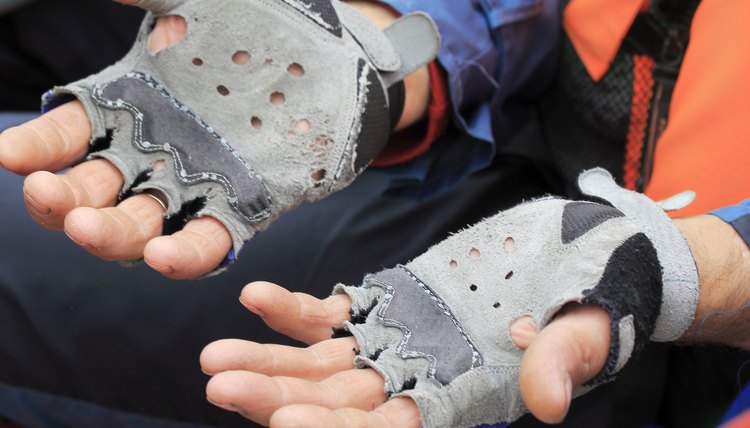
Rowing is a demanding sport that requires substantial upper body strength. Because it also requires repetitive hand movements while gripping the oars, it can wreak havoc on the hands. Blisters and cracked, bleeding skin are common, especially among novices and after a return to the sport. After several months of rowing, your hands will naturally become tougher and less prone to blisters. Because blisters are painful and can interfere with rowing, though, many participants opt to use methods that speed up the hand-toughening process and that reduce irritation.
Improving Grip Strength
Grip strength is a measure of your ability to tightly grip an object. By improving your grip strength, you reduce the likelihood that the oars will move in your hands and decrease your need to squeeze the oars, resulting in blisters. Crushing grip measures your ability to squeeze an object in your hand and is commonly used in rowing. The book "Mastery of Hand Strength" recommends using a squeezable crusher grip strengthener. These inexpensive training tools are available at most sports stores.
Topical Ointments
To properly toughen up your hands for rowing, you need to develop callouses. Both rubbing alcohol and witch hazel can help you develop callouses more quickly, according to the book "Rowing Faster." Simply rub these substances on your hands immediately after rowing. They can also help blisters heal faster and prevent infection. Some rowers also have success using diaper rash ointment on their hands. This ointment can help prevent chapping and cracking on the hands, which encourages the faster development of callouses.
Physical Barriers
While rowing gloves can help you avoid developing blisters and pain, they will not strengthen your hands, and many rowers find that it's difficult to grip an oar while using them. Instead, apply waterproof tape to blistered areas before rowing. To secure the tape, run a strip of tape between each of your fingers. Then, cover the ends of these strips by wrapping the tape once around your wrist.
Rowing Style
The way you row can dramatically affect the strength of your hands. Many novice rowers grip their oars very tightly, which increases blister development and does not toughen up the skin on the hands, according to "Rowing Faster." Moisturizing your hands prior to rowing will also increase pain and decrease strength. Choose a smooth wooden oar if possible. These oars encourage you to develop grip strength and are less likely to cause blisters during the process of developing callouses.
References
- Mastery of Hand Strength; John Brookfield
- Rowing Faster; Volkner Nolte
- First Aid: Pocket Guide, 4th Edition; Christopher Van Tilburg
Writer Bio
Brenna Davis is a professional writer who covers parenting, pets, health and legal topics. Her articles have appeared in a variety of newspapers and magazines as well as on websites. She is a court-appointed special advocate and is certified in crisis counseling and child and infant nutrition. She holds degrees in developmental psychology and philosophy from Georgia State University.