tycoon751/iStock/Getty Images
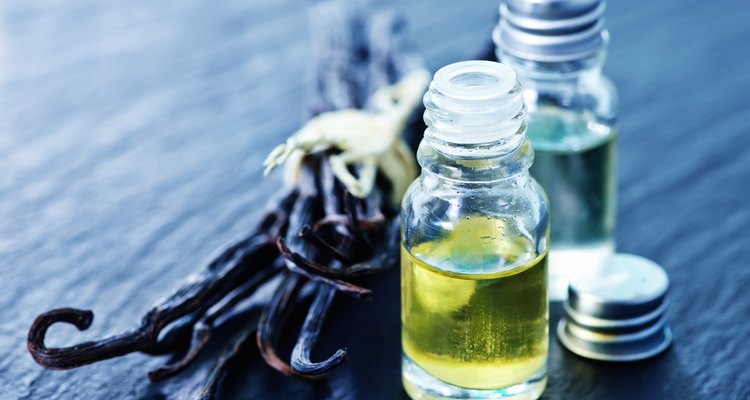
Aromatherapy is the practice of using aromatic essential oils from plants to achieve physical and psychological benefits. You can enjoy the aromas of essential oils by warming them in fragrance diffusers, or add them to gels or lotions and apply them to the skin. Do not apply undiluted essential oils to the skin as this can cause irritation.
Calming Effects
In 1991, the Sloan-Kettering Cancer Center in New York tested the effects of five fragrances on 85 patients undergoing a magnetic resonance imaging, or MRI, scan. Of the fragrances tested, a vanilla-like aroma, heliotropin, was rated the most relaxing. Patients exposed to the heliotropin reported 63 percent less anxiety and claustrophobia than those were not exposed to fragrance. The study prompted Sloan-Kettering to include vanilla fragrances as a standard part of MRI scans. A study at Tubingen University in Germany also revealed that vanilla reduced the startle reflex in both humans and animals. Because of its relaxing properties, vanilla scents are commonly used in bath products and candles to help promote restful sleep.
Aphrodisiacal Effects
According to “Chemistry of Spices,” vanilla has been considered an aphrodisiac since the time of the Aztecs. In 1762, a study in Germany found that a medication containing vanilla cured male impotence. A study by the Smell and Taste Treatment and Research Foundation found that vanilla, as well as other odors such as lavender, pumpkin pie and black licorice, produced an increase in penile blood flow in male volunteers. Vanilla was especially effective in older men.
Respiratory Effects
Researchers at the National Center for Scientific Research in Strasbourg, France, found that the smell of vanilla eased breathing problems and sleep apnea in premature infants. Dr. Luc Marlier and his associates added 15 drops of a vanillin solution to the pillows of 15 premature infants in the intensive care unit and monitored their respiratory rates for three consecutive days. Episodes of sleep apnea decreased by 36 percent on the first day the babies were exposed to the vanilla scent. The scientists hypothesized that the vanilla helped the infants in two ways: by directly affecting the respiratory centers in the brain, and by helping the infants adapt to stress.
Related Articles
Madagascar Vs. Tahitian Vanilla Beans

How to Keep Intimacy Alive in a ...

Olive Leaf Extract for Skin Problems

Polyphenols & the Skin

Ingredients in Curel Lotion

Stimulants in Chocolate That Are not ...

Nutrition Information For a 16-Ounce ...
Popular Colognes of the 1960s
Jojoba Oil Benefits
What Is the Purpose of Cologne?
Aloe Ferox Benefits
What Are the Benefits of Ashwagandha in ...

Difference Between Women's Rogaine & ...
Acai Berry & Acne
How do I Speed Up the Reversal of Face ...
What Foods Provide Calcium D-Glucarate?
Traditional Uses of Cuscuta

Chamomile & Aloe Skin Care

Chasteberry for Acne

Herbs For Melasma
References
- New York Times: Everything’s Coming Up Vanilla
- “Chemistry of Spices”; V. A. Parthasarathy, B. Chempakam, T. John Zachariah; 2008
- University of Washington: Smell of Vanilla Reduces Breathing Problems in Premature Infants
Writer Bio
Karen Eisenbraun has a Bachelor of Arts in English from Knox College and has been writing professionally since 2004. She is the content director for several health-related websites and a certified holistic nutrition consultant.
Photo Credits
tycoon751/iStock/Getty Images