How to Get Rid of an Allergic Reaction Rash
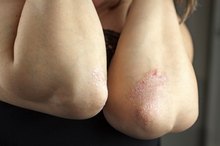
Allergic reactions occur when the body's immune system reacts abnormally to a drug, food, or other substance called an allergen. Skin rashes are a common allergy symptom, and may appear on the skin as blisters, welts or blotches. A rash may be local, where the skin came in contact with the allergen, or generalized, related to an allergy that has spread throughout the body. While some allergic reactions are life-threatening and require immediate medical attention, minor allergic rashes can often be treated at home -- and typically resolve within a few days.
If you are experiencing serious medical symptoms, seek emergency treatment immediately.
Assess
It's important to learn what's triggering your rash, to help prevent future reactions. A wide variety of substances can lead to allergic skin rashes, including latex, nickel, poison ivy, certain foods or medications, bee venom, or the chemicals in cosmetics. If your reaction was mild and the source obvious -- such as a new makeup or lotion -- a simple fix is to avoid this product in the future. However, it's important to discuss any allergic reactions with your doctor, particularly if the rash is severe, persistent, or if the cause is unknown, so you can do your best to avoid and treat it.
Medicate
Skin Rashes and Allergies to Soy
Learn More
Your doctor can guide you on medications that can help treat your rash 5. Over-the-counter antihistamines, available in pills, lotions and ointments, are commonly recommended because they block the effects of histamine, an immune system compound responsible for allergy symptoms. Corticosteroid cream or ointments, which reduce inflammation, or moisturizing lotions may also improve skin rash symptoms. If you have a severe rash, prescription-strength antihistamines or steroids are among the medications that your doctor may prescribe.
Soothe
Rashes can be itchy and uncomfortable, and may take few days or more to resolve, so there are some steps you can take to improve comfort as your rash heals. For instance, it can be helpful to apply a cool compress to the affected area to ease symptoms and provide relief. Soak a clean washcloth in cool water, then apply to the rash area for up to 10 minutes. Rinsing the affected area with warm or cool water can also help. Avoid scratching or rubbing the rash as this can aggravate your symptoms and delay healing.
Avoid
How to Get Rid of Welts
Learn More
The best way to prevent the allergic rash from coming back is to avoid the allergen or irritant. If your rash is caused by latex, a drug or food allergy, or a cosmetic or metal, ask your doctor for guidance on how to ensure you can avoid future contact with this substance. If you aren't sure what caused your allergy symptoms, have your doctor or dermatologist evaluate your rash.
Tips
Not all rashes are caused by allergies. For instance, contact dermatitis -- a rash that occurs after contact with a substance -- can be caused by irritants, such as excessive water exposure or diaper rash, or by allergens. Some rashes are caused by medications or a medical condition, so see your doctor if you have an unexplained, severe or ongoing rash.
Warnings
Seek immediate medical attention if you have a rash that is all over your body, if the rash appears and spreads suddenly, or if you have a fever that accompanies the rash. Also see a doctor right away if the rash is painful, blistering or if you have any signs of infection, such as oozing pus, warmth in the rash area, or there is a red streak coming from the rash.
Reviewed by Kay Peck, MPH RD
Related Articles

Skin Rashes and Allergies to Soy
Learn More

How to Get Rid of Welts
Learn More
Allergy & Itchy Hands and Feet
Learn More

Can Flax Oil Cause Rash?
Learn More

Allergies to Hairspray
Learn More
How to Use Cornstarch to Relieve an Itchy Skin Rash
Learn More

Can Milk Thistle Cause Skin Rashes?
Learn More
Puffy and Itchy Face from Allergies
Learn More
What Are the Treatments for a Skin Rash From Mineral Oil?
Learn More
Food Allergies With a Skin Rash Resembling Scratches
Learn More
References
- American Academy of Dermatology: Rash 101 in Adults: When to Seek Treatment
- American Academy of Allergy, Asthma & Immunology: Skin Allergy Treatment and Management
- Emergency Medical Journal: Management of Allergy, Rashes and Itching
- American Academy of Dermatology: Contact Dermatitis: Diagnosis and Treatment
- Merck Manual: Overview of Allergic Reactions
- Schaefer P. Acute and Chronic Urticaria: Evaluation and Treatment. Am Fam Physician. 2017 Jun 1;95(11):717-724.
- Handa S, De D, Mahajan R. Airborne contact dermatitis—Current perspectives in etiopathogenesis and management. Indian J Dermatol. 2011 Nov-Dec; 56(6): 700–706. doi:10.4103/0019-5154.91832
- Hives. MedlinePlus. U.S. National Library of Medicine. Updated May 2, 2017.
- Cabanillas B, Brehler AC, Novak N. Atopic dermatitis phenotypes and the need for personalized medicine. Curr Opin Allergy Clin Immunol. 2017 Aug;17(4):309-315. doi:10.1097/ACI.0000000000000376
- Jenerowicz D, Silny W, Dańczak-Pazdrowska A, Polańska A, Osmola-Mańkowska A, Olek-Hrab K. Environmental factors and allergic diseases. Ann Agric Environ Med. 2012;19(3):475-81.
- Mowad CM, Anderson B, Scheinman P, Pootongkam S, Nedorost S, Brod B. Allergic contact dermatitis: Patient management and education. J Am Acad Dermatol. 2016 Jun;74(6):1043-54. doi:10.1016/j.jaad.2015.02.1144
- Wallach D, Taïeb A. Atopic dermatitis/atopic eczema. Chem Immunol Allergy. 2104;100:81-96. doi:10.1159/000358606
Writer Bio
Holly Case has written professionally since 2000. She is a former contributing editor for "ePregnancy" magazine and a current editor for a natural food magazine. She has extensive experience writing about nutrition, pregnancy, infertility, alternative medicine, children's health and women's health issues. Case holds a Bachelor of Arts in sociology and professional writing from Saginaw Valley State University.