
Tandem Kayak Vs. Canoe
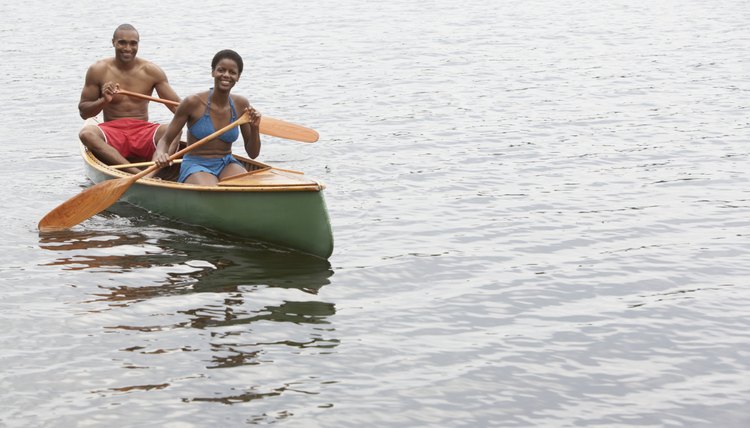
Canoes and kayaks are small, narrow boats designed for one or two people. Typically, these boats use paddles to move through water. The paddlers face in the direction of travel. Despite the similarities, beginners should note that canoes and kayaks are different boats. Each offers benefits and features that make each better suited to a different range of activities. Here are the key differences between a canoe vs kayak.
What are Canoes?
Canoes have an open top and are an uncovered boat, typically 12 to 18 feet long. They are shaped to come to a point at the bow (front) and stern (back), with flat, rounded, shallow arc or shallow "V" shaped hull bottoms. The shape of the hull determines the stability and maneuverability of the canoe. Canoes are constructed from fiberglass, aluminum or a variety of other materials. Paddlers can sit on low benches or seats, or kneel in the bottom of the canoe. The width of the canoe can also determine the length of your paddle. Canoe paddles come in wood, fiberglass or aluminum. Recreational canoes are better for long distances due to their ease of use. Some types of canoes like whitewater canoes can be utilized for more extreme activity but they are more expensive.
What are Kayaks?
There are two basic designs for recreational kayaks. The traditional tandem kayak has a closed and covered hull, with two openings called a "cockpit," for each paddler. Once seated in the cockpit, the paddlers' are inside the craft. Waterproof spray skirts cover the cockpits, protecting the interior from splashing water from coming over the sides of the boats. The sit-on-top kayak or paddleboard provides different seating and is an uncovered shallow craft with molded or attached seats.
Kayaks are shaped to come to a point at the bow and stern but are shallower and narrower than canoes. Tandem models typically range 13 to 20 feet long. You have a lot of choice when it comes to kayak paddles. They can be long or short, symmetrical or asymmetrical or spooned. You can even choose between a single bladed paddle or double bladed paddle.
Is a Kayak or Canoe better in bad weather or rough water?
Canoes and sit-on-top kayaks are open, providing no protection from water or rain. This is because canoes have an open cockpit and sit-on-top kayaks have open decks. Traditional kayaks are designed for paddling through river rapids, where turbulent water and the tipping of the kayak causes water to come up and over the top of the craft. In windy conditions, a canoe's high sides catch the wind, pulling the craft off course and making it difficult to handle as opposed to in flat water.
Does a kayak or canoe have better handling?
Kayaks, particularly traditional kayaks, are more maneuverable than canoes. But some of the maneuvering advantage is lost in a tandem kayak over the shorter one-person models. The narrow, low profile design provides more stability and less water resistance, giving paddlers better handling and more speed. The shallower draft of kayaks allows them to be used in shallow, calm waters and are easier to beach. When a traditional kayak capsizes, the paddlers typically stay in the craft, allowing them to right the craft and continue paddling. Racing Kayaks are sleeker and built for speed in olympic level competition. While white water kayaks can be used in places like the Amazon where water is rough.
Convenience and Comfort
Canoes allow paddlers to sit or kneel. There is only one way to sit in a kayak, which may become uncomfortable after a long period of time. Canoes provide more dry storage space for easier access to gear and equipment. Kayaks require the use of dry bags which can be more expensive. A canoe can be paddled by one person, and a longer canoe can carry three or four people. Tandem kayaks allow for only two paddlers, and may require both to be in the craft and know how to paddle for proper balance and handling. Canoes are easier to enter and exit than kayaks. This is why many canoeists choose the canoe for its comfort.
What considerations should you have when choosing a boat?
The primary consideration when choosing between the types of boats is the planned use. Kayaks are better suited to fast-flowing water with rapids, referred to as whitewater, and even sea kayaking with a proper trolling motor. There are specially built types of kayaks like fishing kayaks, touring kayaks, whitewater kayaks, and inflatable kayaks but these can be expensive. Canoes provide greater comfort, versatility, and convenience for touring and activities on slow-moving rivers requiring access to gear such as fishing, camping gear storage, and photography. Sit-on-top kayaks are best suited for warm weather, calmer waters, day trips and certain activities such as scuba diving. At the end of the day, it all comes down to what your personal preference is.
References
Writer Bio
Deborah Lee Soltesz is a web developer who has been creating websites, promotional materials and information products since 1992. Soltesz has a Bachelor of Science in computer science and engineering. She worked in earth and space science research writing for scientific and general audiences for more than a decade.