
Is there anything worse than an itchy, swollen bug bite? They're not pretty to look at, that's for sure. And did we mention they're itchy?
"Mosquito bites are probably the most common bug bites, but, unfortunately, there are also bedbug bites, which we see most commonly after traveling," Katy Burris, MD, a board-certified dermatologist in the Department of Dermatology at Columbia University Medical Center in New York City, tells LIVESTRONG.com. "Gnats and chiggers can also bite people, and those tend to appear when people have been walking outside or at the beach."
Video of the Day
Video of the Day
There are plenty of over-the-counter drugs you can take to relieve symptoms such as itching and inflammation, but if you're not a big fan of pharmaceutical drugs (or can't get to the store), there are also some natural remedies for bug bites that you probably already have in your home.
It should be noted that many of these remedies don't have strong clinical trials to back them up, but they are recommended by doctors and many people swear by them.
So if you're wondering how to heal bug bites fast, here are the remedies to try.
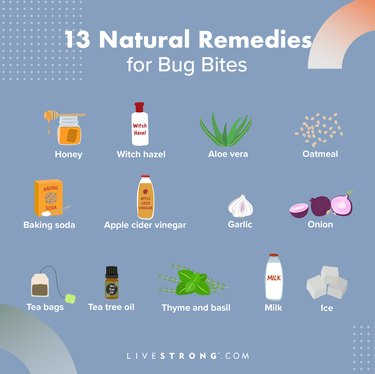
1. Honey
"Honey has antibacterial and anti-inflammatory properties," says Kemunto Mokaya, MD, a board-certified dermatologist based in Houston, Texas. Bringing down inflammation helps soothe swelling, and keeping bacteria at bay reduced the chance that the bite will become infected.
Indeed, an April 2017 systematic review in Pharmacognosy Research found that honey's antioxidant, antimicrobial and anti-inflammatory effects make it useful in the treating wounds.
How to Use It
Simply apply a small amount on the affected areas, Dr. Mokaya says.
In addition to being a great insect bite swelling treatment, "the stickiness will reduce your temptation to scratch, because doing so will be messy," Dr. Mokaya says. And that's a good thing, because scratching can lead to infection.
2. Witch Hazel

"Witch hazel has anti-inflammatory properties and can soothe skin," Dr. Mokaya says.
Although the research on this is limited, one June 2013 study in Advances in Dermatology and Allergology did show that witch hazel had an anti-inflammatory effect in mice. (Mice aren't humans, though, of course.)
How to Use It
Witch hazel is a plant, but you can find it online or at your local pharmacy as an astringent. Try Dickinson's Witch Hazel Astringent ($6.93, Amazon).
"Apply a small amount of it to a cotton ball, and then gently dab it onto the bite and allow it to dry," Dr. Mokaya says.
3. Aloe Vera
"The gel from aloe vera has anti-inflammatory properties," Dr. Mokaya says, which is why it's so often touted as a remedy for sunburns.
A January 2019 review in the Iranian Journal of Medical Sciences found that aloe vera was effective in treating many types of skin rashes and wounds, including psoriasis, so it should also help with the itching.
How to Use It
Dr. Mokaya recommends cutting a small part of the plant to obtain the gel, then applying it to the irritated areas for bug bite relief. You can also buy the gel at your local store or online. Try Fruit of the Earth 100% Aloe Vera Gel ($4.73, Amazon).
4. Oatmeal

"Oatmeal has anti-inflammatory and soothing properties," Dr. Mokaya says. For these reasons, it's also suggested as a natural remedy for eczema.
How to Use It
"If you have a few inflamed areas, make an oatmeal paste and apply it on the area to soothe it," she suggests.
To make the paste, simply grind the oatmeal into a powder using a food processor. Then, mix equal amounts of oatmeal and water in a bowl. Place a spoon of the paste onto a washcloth, and hold it, paste-side down, on the irritated skin for about 10 minutes before wiping the area clean.
If you have many bites, she recommends taking an oatmeal bath by sprinkling a cup of ground oats into a bathtub full of warm water and soaking in it for 15 to 20 minutes, rubbing some of the clumps of oatmeal gently into your skin.
Instead of grinding your own oats, you could buy a box of colloidal oatmeal, such as Aveeno Soothing Bath Treatment ($6.62, Amazon).
5. Baking Soda
When you use it to create a DIY ointment, baking soda can provide relief from a bite, Dr. Mokaya says.
How to Use It
"Mix one teaspoon of baking soda with just enough water to create a paste. Apply it on the affected areas for about 10 minutes before washing it away," she suggests.
Dr. Mokaya cautions that you should stop the treatment if skin irritation occurs, though.
The Mayo Clinic similarly recommends applying a baking soda paste to the affected area "several times daily until your symptoms go away." If that doesn't do the trick, they note that the best ointments for insect bites (and the itch that comes with them is available over-the-counter: Either 0.5 or 1 percent hydrocortisone cream or calamine lotion. Both are available at your local pharmacy.
6. Apple Cider Vinegar

Although it's not the cure-all many people make it out to be, apple cider vinegar has anti-inflammatory properties, Dr. Mokaya says, so it might help if you have it handy.
How to Use It
If you have many bites, she recommends taking a cold bath and pouring two cups of the apple cider vinegar into half a tub of water.
7. Garlic
"Garlic can help bring down swelling, Dr. Mokaya says, but you shouldn't apply it directly to your skin.
How to Use It
"Mince up fresh garlic and mix it with room temperature coconut oil," she suggests.
Apply the mixture to the affected area for 10 minutes, then rinse it off.
As a note, Dr. Mokaya says that the coconut oil can be used without the garlic, too, because it has antibacterial and soothing effects on its own.
8. Onion
"The anti-inflammatory effects of onion are potent," Dr. Mokaya says. "Unlike garlic, which has to be mixed with oil to prevent it from irritating the skin, onion can be applied directly on the bug bite."
How to Use It
Cut a slice from an onion and apply it directly to the bite for five to 10 minutes. Then use a gentle cleanser to wash it off.
9. Tea Bags

Just like the other remedies listed above, tea — and especially chamomile tea — has anti-inflammatory properties, Dr. Mokaya says.
How to Use It
Brew up some chamomile tea, take out the teabag, let it cool and then apply it to the affected area to help stop bug bites from itching naturally.
The best part is that you've got options.
"Although chamomile is best known for its soothing effects, you can use green tea, black tea, rooibos and tea bags from other teas to do the job," Dr. Mokaya says.
10. Tea Tree Oil
Dr. Mokaya says this essential oil has antibacterial and anti-inflammatory properties as well, so it may help heal bug bites.
How to Use It
It's safe to apply tea tree oil directly to your skin, according to Michigan Medicine, but if you have sensitive skin, you may want to dilute it a bit with some almond, olive or vegetable oil.
Warning
Some people may develop a rash from tea tree oil, so try it on a small patch of skin before applying it anywhere else.
11. Thyme and Basil

Both of these herbs can help fight inflammation, Dr. Mokaya says.
How to Use Them
She recommends finely mincing up some fresh thyme or basil leaves, then applying them directly to the bite for 10 minutes.
You can also try pouring some boiled water over a few sprigs of thyme. Once the mixture has cooled, dip a washcloth into the liquid and apply it to the affected area.
12. Milk
Bet you didn't think a natural remedy for bug bites could come straight from your fridge. But it's true: "Milk has soothing effects and can help your bug bite," Dr. Mokaya says.
How to Use It
"Mix equal parts of milk and water, then dip a cotton ball or thin cloth into the mixture and dab it on your skin. Leave for 10 minutes and then rinse off.
Just be sure to use cold or cool milk so you don't accidentally burn yourself.
13. Ice
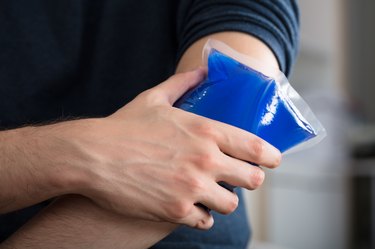
"If you don't have any of the above remedies, I'm sure you have access to ice," Dr. Mokaya says. This kind of cold therapy can freeze out swelling and itching.
How to Use It
"Place crushed ice in a washcloth or kitchen towel and then put it over the skin to reduce inflammation," Dr. Mokaya says.
Do not leave it on the skin for more than four minutes, she cautions, because it can damage the skin and cause a burning sensation known as an "ice burn." If your symptoms crop up again after 10- or 15-minutes, go ahead and do another round with the ice.
The American Academy of Dermatology Association similarly suggests applying an ice pack to help reduce the itching and swelling of a bug bite.
When to See a Doctor for Bug Bites
1. You Were Bitten by a Tick
"Tick bites are something that you definitely should see a dermatologist about in order to be assessed for tick-borne illnesses such as Lyme disease," Dr. Burris says.
If you find one of these bugs burrowed into your skin, it's important you remove the tick the proper way and save it in an airtight bag so it can be examined by your doctor. Different types of ticks can carry different diseases, so knowing which kind bit you can help your doctor determine how best to screen and treat you.
2. The Bite Is Infected
But even with a regular bug bite, "if the surrounding area starts to get tender and red and hot, and there's concern for an infection," that warrants medical attention, Dr. Burris says.
Your doctor will almost never prescribe antibiotics for insect bites unless the bite becomes infected, per the Cleveland Clinic. This might happen if you scratch the bite, which can break your skin and introduce bacteria. Signs of an infection include red, swollen skin and a fever; you should see your doctor ASAP if you have these symptoms.
3. The Itch Is Out of Control
Dr. Burris also says that if the itch goes beyond the control of natural remedies and you need a topical steroid or antihistamine, you would need to see a dermatologist to get a prescription for that.
- Pharmacognosy Research: "Honey and Health: A Review of Recent Clinical Research"
- Advances in Dermatology and Allergology: "Medicinal plants used in treatment of inflammatory skin diseases"
- Iranian Journal of Medical Sciences: "The Effect of Aloe Vera Clinical Trials on Prevention and Healing of Skin Wound: A Systematic Review"
- Mayo Clinic: "Insect Bites and Stings: First Aid"
- American Academy of Dermatology Association: "Tips to Prevent and Treat Bug Bites"
- Michigan Medicine: "Tea Tree Oil (Melaleuca Alternifolia)"
- Cleveland Clinic: "Cellulitis From a Bug Bite"
Is this an emergency? If you are experiencing serious medical symptoms, please see the National Library of Medicine’s list of signs you need emergency medical attention or call 911.