How to Remove Nicotine Stains From Lips
Cigarette smoking takes a toll on the body, accelerating the aging process by causing early wrinkles and discoloring the teeth, hair and skin. Nicotine also breaks down collagen and causes unsightly brown stains on the lips, resulting in a kisser that is anything but kissable. Quitting smoking is the only way to return nicotine-stained lips to their normal appearance. However, you can minimize the brown stains and improve the appearance of your lips until you are ready to break the habit for good.
Exfoliate your lips with a mild scrub once every week 12. Although you can use a commercial scrub, you can make a scrub at home by mixing brown or white sugar, almond oil and honey.
How to Make Homemade Lip Scrub
Learn More
Apply a lip balm or lipstick containing sunscreen every time you go outdoors. Look for products with an SPF factor of at least 15. Use fresh, high-quality lipstick, and discard old, outdated products.
Smooth a moisturizer such as petroleum jelly, vitamin E oil or lip balm on your lips every night.
Uses of Jojoba Oil for Lips
Learn More
Make a paste of lemon or lime juice, honey, and plain, full-fat yogurt. Smooth the paste on your lips and leave it for 30 minutes, then rinse 1. Apply as needed to soften and lighten the lips.
Drink at least eight glasses of water daily to keep your lips hydrated 2.
Tips
Minimize your consumption of coffee and tea, which often stains the lips.
Plain petroleum jelly is an effective scrub. Apply the jelly to the lips gently with a soft baby toothbrush.
Related Articles
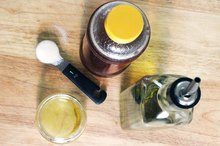
How to Make Homemade Lip Scrub
Learn More
Uses of Jojoba Oil for Lips
Learn More
How to Get Rid of Dry Skin on Lips
Learn More
Vitamin E & Chapped Lips
Learn More

What Makes a Person's Lips Go Black & Chapped?
Learn More
How to Heal Sun Poisoning on Your Lips
Learn More
How to Use Coconut Oil for Chapped Lips
Learn More
How to Treat Discoloration & Brown Spots With Glycolic Acid
Learn More

How to Get Nicotine Off Your Tongue
Learn More
How to Get Rid of Freckles With Vitamin C
Learn More
References
Writer Bio
M.H. Dyer began her writing career as a staff writer at a community newspaper and is now a full-time commercial writer. She writes about a variety of topics, with a focus on sustainable, pesticide- and herbicide-free gardening. She is an Oregon State University Master Gardener and Master Naturalist and holds a Master of Fine Arts in creative nonfiction writing.