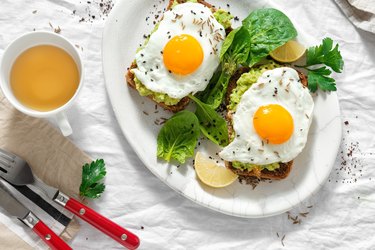
A cardiac diet is important when you have high cholesterol or heart disease. Food on this diet should be low in sodium, saturated fat, trans fat and cholesterol. Read labels to identify heart-healthy foods.
Aim for less than 2,000 milligrams of sodium per day. Low-sodium foods should have 140 milligrams or less of sodium per serving. Reduce fat to 25 to 35 percent of total calories, with 7 percent from saturated fat and 1 percent or less from trans fat. Low-fat foods contain less than 3 grams of fat per serving.
Video of the Day
Video of the Day
Limit high cholesterol foods and keep intake to 300 milligrams or less per day. If you have heart disease or high cholesterol, reduce daily cholesterol even further, to 200 milligrams per day. Low-cholesterol choices are foods with 20 milligrams or less of cholesterol and 2 grams or less of saturated fat per serving. Careful grocery shopping and meal planning can help you create a cardiac diet full of flavor and different foods.
Breakfast Ideas for Heart Health
Eating a balanced breakfast is a good way to fuel yourself properly for the day. Breakfast foods can be high in salt, fat and cholesterol, so it's important for you to control portions. Healthy cardiac breakfast choices include cooked oatmeal or cream of wheat, whole-grain toast, low-fat yogurt or milk, fresh fruit, a vegetable omelette made with egg whites, and low-sodium turkey bacon or sausage.
Use margarine or butter spreads sparingly; avoid those that include the word "hydrogenated" with the first ingredient and those that contain trans fat. You should also eliminate high-fat bacon and sausage, high-fat muffins and doughnuts, whole milk and foods fried in butter.
Lunch Selections for Heart Health
Choose a healthy lunch that is low in sodium, fat and cholesterol as part of your cardiac diet. Packing a lunch or planning ahead can help you resist the urge to opt for fast food. If you like sandwiches, choose whole-grain bread, topped with low-sodium luncheon meat and vegetables such as lettuce, tomato and red onion. Salads are another quick option. Add lean chicken and your favorite fruits and veggies.
Read the label on your salad dressing to limit fat and sodium. Fat-free, low-sodium dressing should contain less than 0.5 grams of fat and no more than 140 milligrams of sodium per serving. If you go out for lunch, look at the nutrition information for the menu ahead of time.
Dinner Menu for Heart Health
Cooking at home will help you control the salt, fat and cholesterol in your diet. Stick with fresh beef or pork, skinless poultry or fish. Soy, textured protein and beans without added salt can be good nonmeat protein sources for dinner.
Whole grains — brown rice, whole-grain pasta or quinoa — are good additions to your meal. Enjoy freshly steamed vegetables such as carrots, broccoli or asparagus as healthy side dishes. If you like milk with your dinner, choose skim to reduce your fat intake. Avoid adding salt during cooking or while eating.
Snack Suggestions for Heart Health
Healthy snacks can also be part of your cardiac diet. Choose fresh fruit dipped in low-fat yogurt for a sweet treat. Add hummus to a snack of fresh veggies for flavor. Select whole-grain crackers and unsalted nuts if you are craving something crunchy.