Design Pics/Ray Laskowitz/Design Pics/Getty Images
Molluscum contagiosum is a benign, viral disease of the skin that causes small eruptions to form in clusters, mostly on the torso. The bumps are like tiny pearls with a center that can be expressed and is filled with a white, gooey material. An outbreak generally lasts six to 12 months, and is self-limiting, disappearing of its own accord. There are a few natural treatments you can use that can encourage molluscum to disappear faster.
Garlic
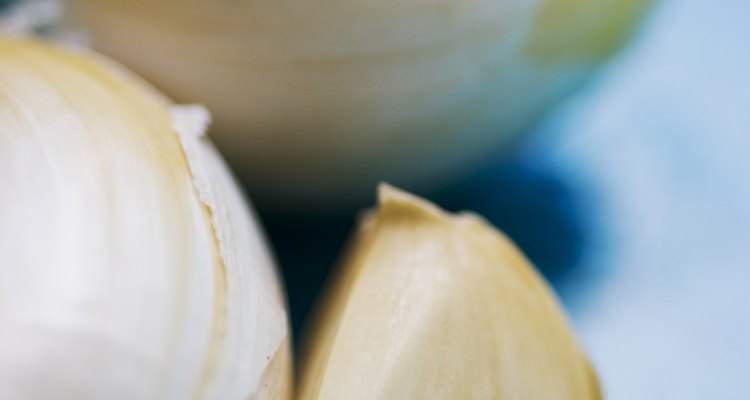
Molluscum is viral and caused by a pox virus, according to the Centers for Disease Control. Eating raw garlic might help the body’s immune system fight off the underlying virus, helping the eruptions to disappear more rapidly than ordinarily. Garlic has anti-viral and anti-fungal properties in its active ingredient allicin, which work to destroy viruses both internally and on the skin.
Turmeric
Turmeric, with its potent active ingredient curcumin, has properties that are reported to be anti-viral, anti-microbial and anti-inflammatory, making it an excellent natural remedy to boost the immune system, and one that might have potent effects on the mollusucm virus, hastening its demise in the body. Because turmeric has strong anti-inflammatory properties, it can not only be taken orally but the powered turmeric applied to the skin as a poltice, according to MotherNature.com.
Apple Cider Vinegar (ACV)
EarthClinic.com suggests using apple cider vinegar to treat cases of molluscum contagiosum. ACV is an acid that usually promotes alkaline in the body, according to Dr. Theodore A. Baroody. He explains in his book, “Alkalize or Die,” that the body prefers to be slightly alkaline and that diseases, bacterium and viruses can't survive in an alkaline state. Drinking 2 tbsp. of apple cider vinegar mixed with 8 oz. of water twice will help to bring the body into a more alkaline state and could help reduce the molluscum outbreak. Applying ACV to the eruptions has also shown some positive after-effects on the eruptions.
Thuja Occidentalis
The homeopathic remedy, thuja occidentalis, is used to treat warts of all kinds and other skin eruptions of a viral nature and is reported to be an effective treatment for molluscum by William Boericke in his homeopathic book, “Materia Medica and Repertory.” A qualified homeopath should be consulted for treatment for molluscum.
Related Articles
Does It Help to Treat a Scar With Honey ...
Vitamin C & Boils

Can Borage Oil Help Acne?
Plants That Heal Wounds
Epsom Salt for Bruises
How to Treat Hematoma & Swelling After ...
What Are the Benefits of Ashwagandha in ...
Arnica for Acne

Tea Tree Oil Cure for Halitosis
How to Stop Stubble Itch

How Exercise Increases Hair Growth
Aloe Vera Gel As a Wrinkle Reducer
Peeling the Spiny Chayote Squash
Review of New-Skin Scar Therapy
L-Lysine for Hair Growth
Does Milk Thistle Help Skin?
Black Pepper Oil for Vitiligo
Bromelain & Bruising

Pycnogenol and Acne
How to Use Rubbing Alcohol on Red Bumps ...
References
- “Alkalize or Die”, Dr. Theodore A. Baroody, 1991
- “Materia Medica and Repertory”, William Boericke, 1987 Indian edition
- Centers for Disease Control (CDC): Clinical Information: Molluscum Contagiosum
Resources
Writer Bio
Susan Kaye writes about alternative health care, the medicinal value of foods and natural remedies for healing body, mind and spirit. She is currently retired from an active classical homeopathy practice and enjoys sharing her passion for alternative medicine in her writing with those seeking health care freedom.
Photo Credits
Design Pics/Ray Laskowitz/Design Pics/Getty Images