What does fact checked mean?
At Healthfully, we strive to deliver objective content that is accurate and up-to-date. Our team periodically reviews articles in order to ensure content quality. The sources cited below consist of evidence from peer-reviewed journals, prominent medical organizations, academic associations, and government data.
- National Institute of Neurological Disorders and Stroke; NINDS Cerebral Hypoxia Information Page; October 2010
- Neurochemical Research; Iron-Deficiency Anemia is Associated with Altered Characteristics of Sleep Spindles in NREM Sleep in Infancy; Patricio Peirano, et al.; May 2005
- Neurochemical Research; Iron-Deficiency Anemia is Associated with Altered Characteristics of Sleep Spindles in NREM Sleep in Infancy; Patricio Peirano, et al.; May 2005
The information contained on this site is for informational purposes only, and should not be used as a substitute for the advice of a professional health care provider. Please check with the appropriate physician regarding health questions and concerns. Although we strive to deliver accurate and up-to-date information, no guarantee to that effect is made.
Low iron in your blood generally refers to iron deficiency anemia 2. Iron is an important component of your blood and contributes to the protein, or hemoglobin, present in the blood. This iron is responsible for proper oxygen supply achieved by the circulating blood.
Consequences of Low Iron
Low iron in your blood essentially means that your body parts and cells have poor oxygen supply. This can lead to improper functioning of your cells, inadequate removal of waste from your cells and inadequate repair and rejuvenation of cells.
Importance of Oxygen to the Brain
Causes of Low Blood Oxygen Levels
Learn More
Oxygen is very important for you brain to function in an optimal manner. Brain cells are sensitive to even small durations of oxygen deprivation, and five minutes is the maximum time that these cells can survive without oxygen. Your brain reacts to extreme lack of oxygen by causing convulsions, coma and even death.
Sleep Apnea and Muscle Tone
Sleep apnea is a disorder in which the patient takes several short pauses in breathing during sleep. A variety of factors can cause sleep apnea, but primarily it is because of a collapse of your airway tract. The tract has respiratory and pharyngeal muscles, and its collapse comes about due to reduced tone of these muscles. People suffer from apnea mostly during REM sleep because of physiological changes in the body during this phase of sleep. During REM sleep, the resistance of upper airway tract muscles increases, simultaneously reducing your ability to breathe in air. This leads to snoring sounds and breathing pauses. Repeated pauses translate to repeated bouts of oxygen deprivation, which affects the brain. Your brain reacts to this oxygen deprivation by reducing the coordination between brain and respiratory muscles, and your brain cannot stimulate normal breathing.
- Sleep apnea is a disorder in which the patient takes several short pauses in breathing during sleep.
- During REM sleep, the resistance of upper airway tract muscles increases, simultaneously reducing your ability to breathe in air.
Relation Between Low Iron and Sleep Apnea
What Are the Dangers of Low Ferritin?
Learn More
Low iron in blood aggravates sleep apnea and may even cause it. A person with low blood iron and anemia experiences reduced coordination of brain and respiratory muscles and reduced muscle tone of pharyngeal and respiratory muscles. This leads to sleep apnea and aggravates the problem if the person was already suffering from low iron prior to developing anemia.
Related Articles
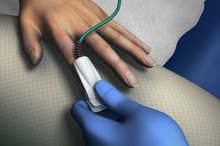
Causes of Low Blood Oxygen Levels
Learn More

What Are the Dangers of Low Ferritin?
Learn More

What Are the Causes of Decreased Saturation of Oxygen?
Learn More

Low O2 Saturation When Exercising
Learn More

How Long Does Iron Stay in Your System?
Learn More

Why Oxygen With CPAP?
Learn More

Normal Oxygen Saturation for Infants
Learn More

What Are the Causes of Low Iron Levels in a Low Blood Count & Weight Loss?
Learn More

What Vitamins & Minerals Can Upset Your Stomach?
Learn More

How Does Exercise Affect Breathing?
Learn More
References
- Clinical Neurophysiology; Upper Airway Muscles and Physiopathology of Obstructive Sleep Apnea Syndrome; C. Gaultier; 1994
- Neurochemical Research; Iron-Deficiency Anemia is Associated with Altered Characteristics of Sleep Spindles in NREM Sleep in Infancy; Patricio Peirano, et al.; May 2005
- Muza RT. Central sleep apnoea-a clinical review. J Thorac Dis. 2015;7(5):930–937. doi:10.3978/j.issn.2072-1439.2015.04.45
- Duning T, Deppe M, Brand E, et al. Brainstem involvement as a cause of central sleep apnea: pattern of microstructural cerebral damage in patients with cerebral microangiopathy. PLoS One. 2013;8(4):e60304. doi:10.1371/journal.pone.0060304
- Wang J, Wang Y, Feng J, Chen BY, Cao J. Complex sleep apnea syndrome. Patient Prefer Adherence. 2013;7:633–641. doi:10.2147/PPA.S46626
- Medical Advisory Secretariat. Polysomnography in patients with obstructive sleep apnea: an evidence-based analysis. Ont Health Technol Assess Ser. 2006;6(13):1–38.
- John Hopkins Medicine. BiPap.
- Mowzoon, N et al. "Neurology of Sleep Disorders." Neurology Board Review: An Illustrated Guide. 2007; 726.
Writer Bio
Lacretia Hardy is a health coach and has been a published writer since 1992. Her work has appeared in several publications, including "Patient In Charge," and on various websites. Hardy holds a Bachelor of Science in health science, as well as certificates in food and nutrition education and holistic health counseling.