Knee pain is a common reason that people visit their doctors. The knee is the largest weight-bearing joint in the body and takes significant stress when an individual walks, runs, or plays sports. The knee has obvious actions, including flexion and extension or bending and straightening. But the knee also can slide and pivot slightly. Pain with bending the knee is a sign of injury or damage within the joint.
Arthritis
Video of the Day
Several types of arthritis can affect the knee. Doctors at Mayo Clinic believe that osteoarthritis is the most common type of arthritis affecting large joints, such as the knee. Other types that can potentially affect the knee include septic arthritis, rheumatoid arthritis and gout, also a form of arthritis. Individuals with arthritis experience varying degrees of pain when standing or walking, swelling, stiffness and loss of flexibility, including difficulty and pain with flexion. (Reference 1)
Video of the Day
Patellar Tendinitis
Tendinitis is an irritation or inflammation of one or more tendons that support a joint. Often it is a result of overtraining or over use. According to Mayo Clinic, athletes are more prone to patellar tendinitis. The tendon connects the quadriceps muscle in the front of the thigh to the lower leg bone. Runners, skiers and cyclists depend upon this action to support their athletic performance, making them more at risk for over use. Sufferers experience pain with flexion, with or without weight bearing. (Reference 1)
Patellarfemoral Pain Syndrome
Individuals with this condition have pain under or around the kneecap. The pain is worse with flexion or after sitting for a long period of time. The American Academy of Family Physicians recommends that individuals who are experiencing this overuse injury take a break from their activities, ice the knee several times per day and evaluate the type of footwear they use. Exercises can also help to strengthen the muscles around the kneecap and relieve the pain. (Reference 2)
Bursitis
This is an inflammation of the small sac of fluid that cushions the outside of the knee joint. According to Mayo Clinic, bursitis causes considerable pain with flexion while weight bearing, such as going up or down stairs. Individuals with bursitis may also experience redness, swelling, warmth or fever. (Reference 1)
Osgood-Schlatter Disease
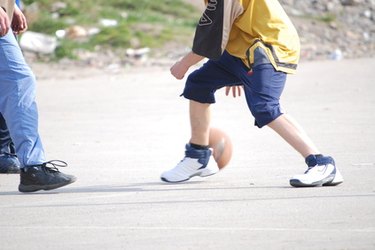
Osgood-Schlatter disease is an inflammation of the bone, cartilage and tendon at the top of the shinbone. According to Kids Health, only one knee is usually affected and adolescents who are active are more prone to the condition. It usually strikes during a growth spurt and more often to adolescents who play sports that involve twisting, running or jumping. The pain can be mild to severe and constant. It gets worse with exercise and flexion. (Reference 3)
Baker's Cyst
This cyst is an accumulation of fluid that forms behind the knee. It can be caused by herniation of knee joint capsule or the tearing of the meniscal cartilage of the knee. The U.S. National Library of Medicine recommends that a ruptured Baker's cyst is quickly differentiated from a blood clot that can cause the same pain with flexion of the knee. A blood clot can represent imminent danger and requires immediate medical attention. (Reference 4)
Is this an emergency? If you are experiencing serious medical symptoms, please see the National Library of Medicine’s list of signs you need emergency medical attention or call 911.