
Four Types of Archery Bows
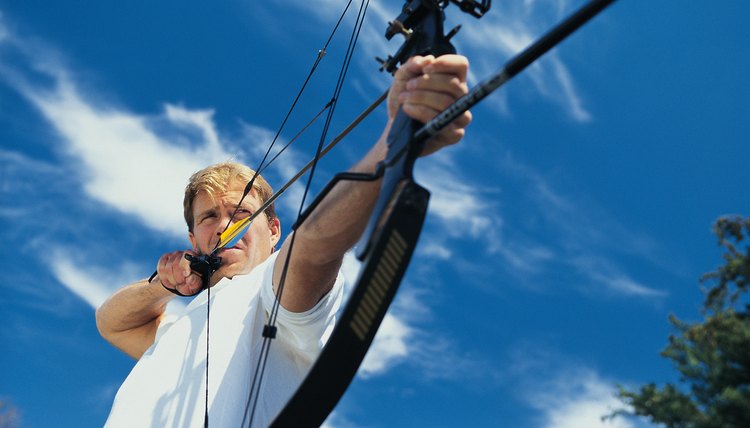
Archery bows have existed in various forms throughout history. Bows have evolved through the ages, and many are now made with components such as fiberglass and carbon fiber, and some have advanced shooting mechanisms. Different types of bows available include recurve bows, long bows, compound bows and crossbows, giving experienced and new archers many options.
Recurve Bow
Comstock/Stockbyte/Getty Images
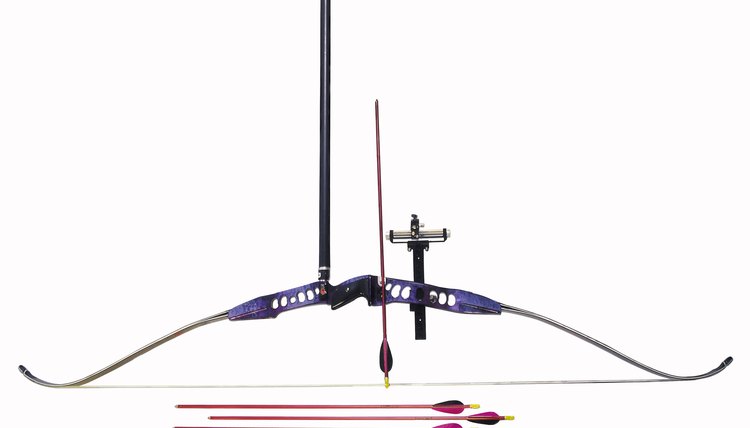
Recurve bows were historically used by horsemen, and modern versions of the bow are used in Olympic events. These bows are named for their distinct shape: the central parts of the limbs curve toward the archer, and the tips of the limbs curve away from the archer. This configuration gives the bow more power, and less strength is needed to use the bow. Recurve bows are used to teach archery, and beginners often start with a barebow recurve, which only has a string, an arrow rest, bow limbs and a riser to help balance the bow. Components such as sights, pressure buttons, clickers and stabilizers are added to the bow as the archery student becomes more skilled.
Compound Bow
Comstock/Stockbyte/Getty Images
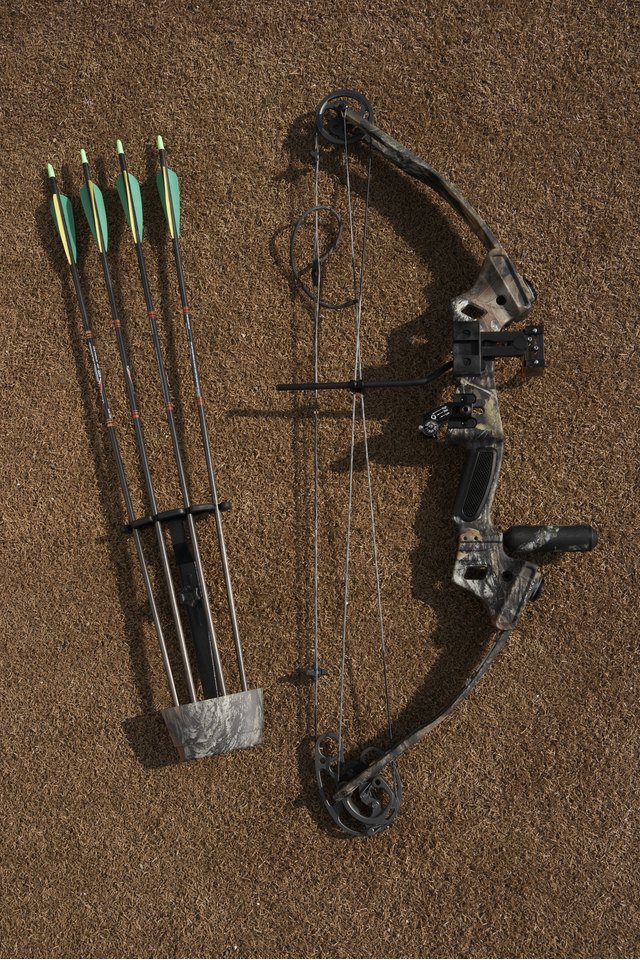
Compound bows were first produced in the 1960s and involve an innovative system of cables, pulleys and eccentric cams that assist the archer in holding a heavy draw weight at full draw. This system gives archers time to aim a powerful bow without causing excessive muscle fatigue. However, a good deal of strength is needed to initially draw the bow. Compound bows are less affected by changes in temperature and humidity than bows made of natural materials, which gives them better accuracy, distance and arrow velocity. Compound bows are typically not used by beginners because of their inherent complexity.
Longbow
Comstock/Stockbyte/Getty Images
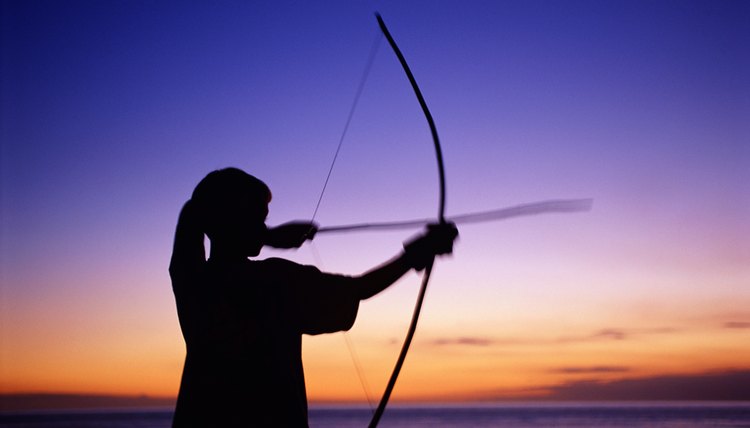
Longbows were first recorded in use during battle in 1298 and were a dominant weapon on the battle field until the mid-16th century. The bows are characterized by their simplicity: they consist of a long, slightly curved piece of wood the same height as the archer and do not have arrow rests or sights. Longbows are much more difficult to aim than other modern bows and do not have nearly the same velocity as compound or recurve bows. The longbow requires more practice and patience to master, but many archers enjoy the challenge of learning to effectively use longbows.
Crossbows
Comstock/Stockbyte/Getty Images
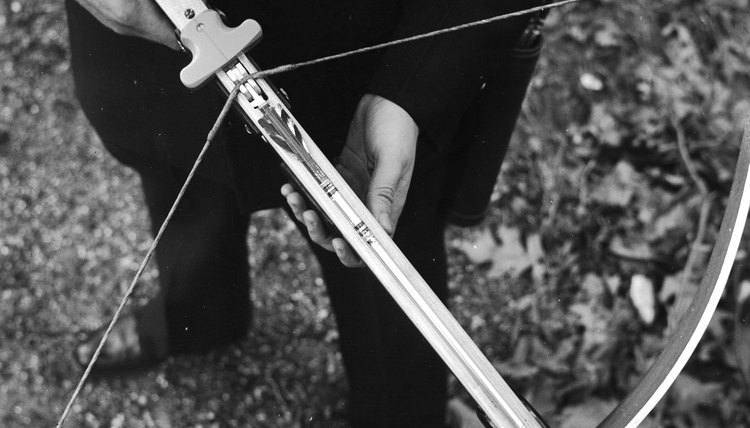
Crossbows are believed to have originated in China and were commonly used in battle in the Greco-Roman and Medieval ages. In appearance, modern crossbows are fairly similar to firearms but have a short bow horizontally attached to the muzzle. The bows are drawn by way of a crank mechanism; the string is then attached to the trigger mechanism and locked in place until the archer fires. Crossbows have short firing ranges and need heavier draw weights to perform on the same level as compound and recurve bows. These bows are frequently used for target archery, but be advised that regulations on crossbows can be quite strict and vary between states.
References
Writer Bio
Kristen Unger is a Doctor of Physical Therapy student specializing in geriatric physical therapy. Before entering physical therapy school, she attended Virginia Tech, majoring in human nutrition, foods and exercise. She also completed a handful of graduate-level courses addressing various topics in biomedical engineering while at Virginia Tech. Her writing addresses health and fitness concerns for a wide range of medical conditions.