
What does fact checked mean?
At SportsRec, we strive to deliver objective content that is accurate and up-to-date. Our team periodically reviews articles in order to ensure content quality. The sources cited below consist of evidence from peer-reviewed journals, prominent medical organizations, academic associations, and government data.
The information contained on this site is for informational purposes only, and should not be used as a substitute for the advice of a professional health care provider. Please check with the appropriate physician regarding health questions and concerns. Although we strive to deliver accurate and up-to-date information, no guarantee to that effect is made.
Lying Down Leg Strength Exercises

Just because you're off your feet doesn’t mean you’re unable to exercise. Whether your mobility is restricted overall or you’re limited to lying down after a recent injury or operation, you can still get a comprehensive lower body workout. Try these exercises to strengthen the many different muscle groups in your legs while lying on your back, stomach or side.
Straight Leg Raises
This exercise targets the quadriceps, a group of four muscles in the front of the thigh that assists with walking, standing and stair negotiation
How To: Lie on your back with your left knee bent and your left foot planted on the ground. Then, contract the muscle in your right thigh and lift the leg eight to 12 inches in the air without allowing your knee to bend. After a 1 to 2 second hold, slowly lower the leg back to the ground. Try not to arch your back as you do this. After 10 repetitions on the right leg, repeat the exercise with the left.
Clam Shells
Clam shells target the muscles on the outside of your hip which provide your pelvis with support while you walk.
How to: Lie on your side with your hips and knees bent and one leg stacked on top of the other. Lift your top knee in the air while keeping your feet together. When you're unable to lift the leg any further without your trunk rolling backwards, hold it here for 1 to 2 seconds before lowering it back down again. After completing your desired repetitions, roll over and perform the exercise with the other leg.
Lying Down Leg Strength Exercises
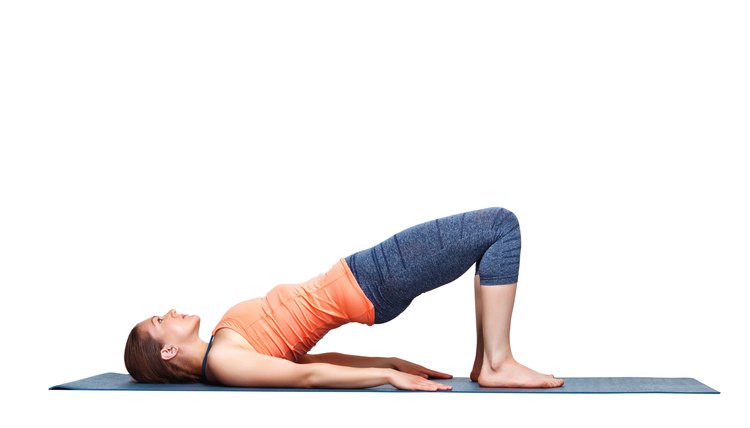
Bridge
Bridges are an easy way to activate the gluteus maximus muscle while lying down.
How To: Lie on your back with your knees bent to 90 degree angles and your feet planted on the ground. After squeezing your stomach muscles, lift your butt in the air and hold it here for 10 seconds before lowering back down again. If this exercise becomes easy, it can be progressed by extending the knee of one leg and holding that leg in the air while you lift your buttocks off the ground with the other one.
Side-lying Hip Adduction
This exercise focuses on the adductor muscle group on the inside of your thigh. These muscles are important stabilizers of both the knees and hips.
How To: Lie on your left side with your right knee bent and your right foot placed on the ground in front of your left leg. Keeping the left leg straight, lift it six to eight inches in the air without allowing your body to rock backwards. Hold the leg here for a second or two and then lower it down again. Following a set of 10 repetitions, roll over and repeat the leg raises with the right side.
Prone Hamstring Curls
Use a resistance band to do this exercise that targets the hamstring muscles in the back of the thigh that help you flex your knee.
How To: Lie on your stomach with your right leg slightly bent. Secure a resistance band around your right ankle and fasten the other end in a door or around a bed post. Without lifting your pelvis off the ground, slowly bend your knee as far as you can. Maintain this position for a second or two and then slowly straighten the knee again. Complete the exercise on both legs.
Lying Down Leg Strength Exercises
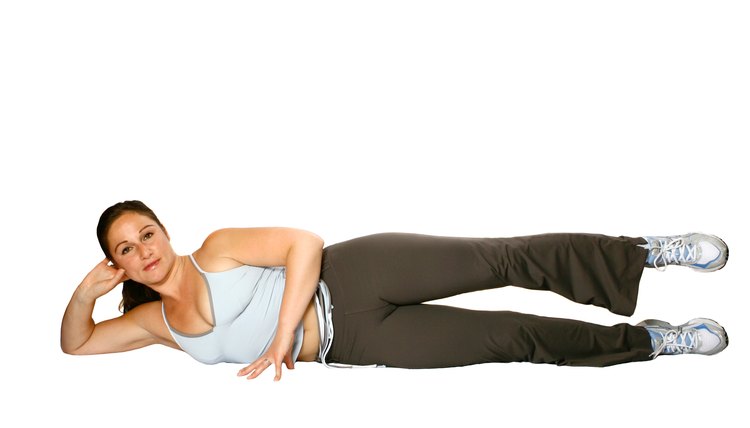
Side-lying Leg Raise
This version of a leg raise activates the gluteus medius muscle on the outside of your hip joint.
How to: Lie on your side with your knees straight and one leg stacked on the other. Contract your stomach muscles and lift your top leg eight to 12 inches in the air. Avoid letting your body roll backwards as you do this. After a 1 to 2 second hold, lower the leg down again. After a set of 10 reps, repeat the lifts with the other leg.
Guidelines and Precautions
For an effective strengthening regimen while lying down, perform two sets of 10 repetitions of each exercise daily. It's best to speak to your doctor about beginning a strengthening program, especially after a recent injury or operation. In addition, be sure to stop any exercise if it causes increased pain.
References
Writer Bio
Tim Petrie is a sports medicine physical therapist and a certified orthopedic specialist practicing in Milwaukee, WI. In addition to treating patients of all ages, he is passionate about writing about health and wellness topics. In his free time, Tim loves to run and travel with his wife and three kids.