
Therapy for a Torn Ligament in the Upper Arm
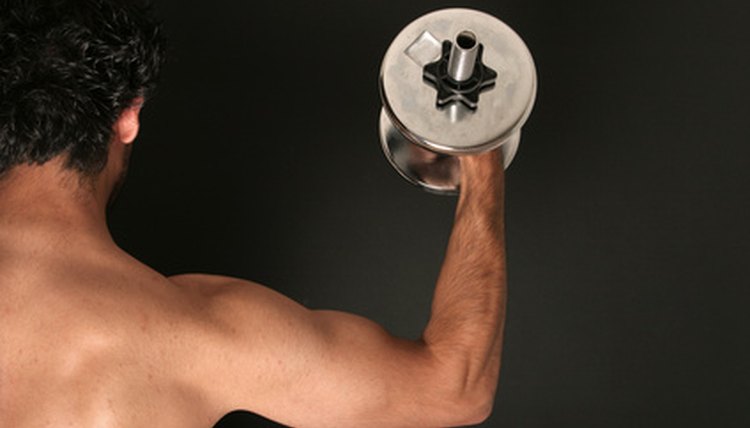
The shoulder is made up of the humerus, clavicle, sternum and scapula bones. The shoulder girdle is then made up of four joints with the primary one called the glenohumeral joint. This joint supported by several ligaments has a wide range of mobility. This allows for reaching in multiple directions, carrying, lifting, push/pull and arm swing which is an important component of walking. This freedom of movement also makes it vulnerable to injury.
Ligament Tears
In 2006, nearly 1.5 million in the United States visited an emergency room for shoulder injuries, according to the Centers for Disease Control and Prevention. Ligament tears can happen from repetitive motions especially with overheard activities. Sports such as tennis, swimming and throwing motions can begin to stretch the ligaments increasing the vulnerability to injury. Aging increases the risk for tears to occur. Medical professionals can utilize special testing and medical imaging to determine the severity of ligament tears.
Shoulder Joint Instability
Severe injury, or trauma often causes an initial shoulder dislocation. The ligaments in the front of the shoulder are often injured. The torn ligament in the front of the shoulder is commonly called a Bankart lesion, according to the American Academy of Orthopaedic Surgeons. The use of a sling, rest, cold packs and anti-inflammatory medication are used to reduce pain and swelling. Restoring pain free motion, protected strengthening exercises, and coordination activities is the progression for recovery.
Strengthening Exercises
When the arm is in motion the stability of the shoulder is dependent on contracting muscles to provide stability of the shoulder joint. With loose or torn ligaments from injuries it is important to strengthen the rotator cuff and biceps muscles. These muscles work to keep the humerus and scapula bones in alignment. They also help to reduce strain on the joint capsule and ligaments especially with any weight in held in the hand.
Importance of Coordination Exercises
Following a shoulder injury an individual needs to learn what is formally called proprioception exercises. Proprioception refers to the sensation of movement and position of the arm. This involves information carried out by nerves in the muscles, joints and tendons. Proprioception influences muscle tone, reflexes and muscle memory patterns of movement. Without retraining this system muscles contract improperly and joints and ligaments can be susceptible to reinjury. Rehabilitation specialists work with patients to retrain this system.
Considerations
A torn ligament in the upper arm can heal often without surgery. With proper rest, reduction of swelling and inflammation the tissue will develop scar tissue and pain will diminish. Health care professionals can work to develop individualized rehabilitation programs. A progressive program consists of restoring full range of motion of the joint, coordination exercises, progressive strengthening and endurance training. Posture retraining and techniques to improves sports or work activities is also important.
References
Resources
Writer Bio
Gary Maguire has been writing since 1998 and provides medical reviews for Research Review Services. As a physical therapist for 19 years, he has also served as an expert witness, corporate speaker and taught continuing medical education. Maguire holds a Master of Science and a Bachelor of Science in physical therapy from D'Youville College and a Bachelor of Science in biology from Washington State University.