Activities That Promote Physical, Cognitive & Creative Development
From birth, children are developing skills that will help them participate in, understand and respond to their environment, as well as interact with their parents, caregivers and peers.
Children make physical, cognitive and creative developmental progress mostly through play. Even though activities might be associated more closely with one area of development, most play-centered activities contribute to the overall healthy development of children.
Physical Development
When your infant is awake and active, place her on her tummy in a safe area on the floor.
Get down on her level and talk to your baby to encourage her to raise her head and chest off the floor. Add to this activity as your baby grows by placing colorful toys just out of reach to encourage scooting and crawling.
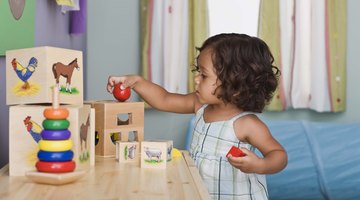
Activities for 1-year old children include block play, filling and emptying containers, hide-and-seek and rolling and catching a ball, according to the National Network for Child Care. Play music and dance with your child to encourage movement.
Your 2-year-old needs opportunities to challenge and build upon his gross and fine motor skills.
Sand and water play helps toddlers develop hand/eye coordination and encourage fine motor development. Clapping games such as pat-a-cake also promote coordination. Activities that involves running, jumping or climbing are appropriate for toddlers.
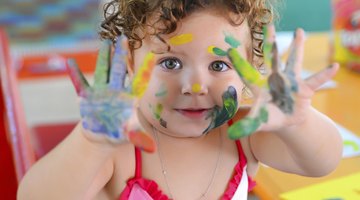
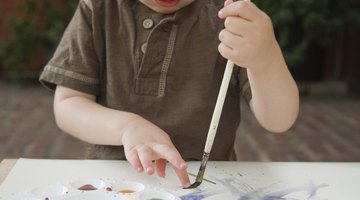
Preschoolers develop fine motor skills through art activities using crayons, glue, scissors and/or paint, and through dress-up activities.
Riding toys, swings and climbing structures help children gain strength, dexterity and coordination. Walking a chalk line or playing hopscotch helps preschoolers develop balance and coordination.
Cognitive Development

The Importance of Physical Play in Child Development
Learn More
Activities that engage children in problem-solving, sorting, classifying, understanding and using information promote cognitive development, according to Child Care Help. Playing peek-a-boo with your infant encourages intellectual development as he begins to understand how you disappear and reappear. Shape-sorters help toddlers and older infants to develop problem-solving skills. Age-appropriate puzzles, matching games, sorting games and block play engage toddlers and preschoolers in activity that requires them to work intellectually through a problem.
Creative Development
Creative development thrives in an environment where children can safely express their curiosity, explore and play. Open-ended art, music, movement and dance activities breed creative expression. To encourage and foster creative development, you must allow children to explore and express their own ideas. Give infants opportunities to make choices, and to listen and move to music. Provide age-appropriate art materials such as scissors, glue, crayons, markers, paper, paint and sponges for older children, and allow them to create freely. Invite children to make up a story, use instruments and move freely to music to help them develop confidence in their own ideas and expression.
Related Articles

The Importance of Physical Play in Child Development
Learn More

Activities for Infants Physical Development
Learn More

Baby Leg Development
Learn More
Toys for a Toddler's Sensorimotor Development
Learn More

How Does a Baby Rattle Help With Cognitive Development?
Learn More
Physical Child Development Activities for 3- to 5-Year-Olds
Learn More

Fine & Gross Motor Skills Activities
Learn More
Toddlers & Painting for Fine Motor Development
Learn More
Learning Activities for Toddlers With Down Syndrome
Learn More

How Does Play Affect the Growth & Development of Children?
Learn More

Pam Murphy is a writer specializing in fitness, childcare and business-related topics. She is a member of the National Association for Family Child Care and contributes to various websites. Murphy is a licensed childcare professional and holds a Bachelor of Arts in English from the University of West Georgia.
