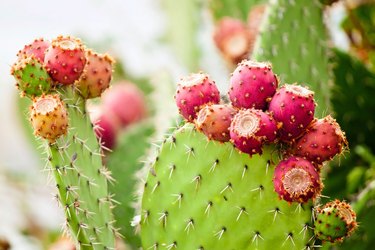
The name might not immediately ring a bell, but you've probably seen nopal cactus (AKA prickly pear cactus) if you've ever been to the desert-studded southwest — or the produce section of your local Whole Foods.
While it might be having more of a moment recently, the cactus and its refreshingly sweet pink fruits have long been used medicinally by the indigenous people of the Americas thanks to its long list of nutrients and health benefits.
Video of the Day
Video of the Day
Even better is its versatility in the kitchen. As long as you've got thick gloves or a towel for hand protection, cooking nopal cactus is surprisingly simple — and delicious!
Read more: What Are the Benefits of Cactus Fruit?
One of the many things that makes this cactus special is that it has two main edible parts: nopal cactus pads (known as nopales) and the prickly pear fruit. Both parts boast antioxidants, including numerous flavonoids and polyphenols, a February 2016 study in the International Journal of Food Properties found.
However, each plant part boasts a unique nutritional profile that offers potential disease prevention and treatment properties. (They're prepared and enjoyed differently, too.) Due to their health benefits and plant-based culinary appeal, both parts of the cactus are gaining popularity in the U.S.
Nutritional Profile of Nopales and Prickly Pears
Nopales are classified as vegetables and are rich in plant nutrients and low in calories. According to Vandana Sheth, RDN, author of My Indian Table: Quick & Tasty Vegetarian Recipes and spokesperson for the Academy of Nutrition and Dietetics, some of its key nutrients include vitamins A, C and K, plus plant-based calcium.
Specifically, one cup of sliced nopales provides 14 calories, about 3 grams of carbohydrates, 2 grams of dietary fiber, 1 gram of protein and a trace amount of fat, along with 8 milligrams of vitamin C, 393 IU of vitamin A, 4.6 micrograms of vitamin K, 141 milligrams of calcium and 221 milligrams of potassium. One of its nutrient highlights is soluble fiber.
Prickly pears are classified as fruits and are an excellent source of vitamin C. Specifically, one cup of prickly pear fruit provides about 61 calories, 14 grams of carbohydrate, 5 grams of dietary fiber, 1 gram of protein, and less than a gram of fat, along with 21 milligrams of vitamin C, 64 IU of vitamin A, 83 milligrams of calcium, and 328 milligrams of potassium. Plus, they're packed with antioxidants. Two of the fruit's key antioxidant phytonutrients are kaempferol and quercetin. The purple variety, in particular, is very high in betanin (those are pigments!), according to an April 2015 study in Antioxidants.
Health Benefits of Nopal Cactus
Anti-Inflammatory Effects
Although human studies highlighting health benefits of nopales are limited, the anti-inflammation benefits have been confirmed, says Sheth. A September 2014 study in Molecules found that the nopal cactus, in general, is known for being rich in polyphenols that offer anti-inflammatory properties.
Plus, an October 2014 study in Natural Products Chemistry & Research suggests a link between a diet rich in the cactus and a reduced risk of diseases associated with oxidative stress, such as cardiovascular disease, diabetes and cancer. Since inflammation can be triggered by oxidative stress, eating nopales may be helpful.
A growing number of studies find that prickly pear fruit also offers anti-inflammatory effects. And its antioxidant content has a lot to do with it. "Antioxidants and phytonutrients, especially kaempferol and quercetin, both provide anti-inflammatory benefits. The red-purple (or purple) prickly pear variety provides the most antioxidants," says Sheth.
An August 2004 study in the American Journal of Clinical Nutrition shows that the fruit may significantly decrease oxidative damage. A small, randomized study of 28 healthy volunteers, published in August 2018 in Food & Nutrition Research, found that eating about seven ounces of cactus pear fruit pulp twice a day for two weeks resulted in anti-inflammatory activity.
Plus, findings published in a July 2015 study in the British Journal of Nutrition suggest that a dietary pigment called indicaxanthin found in prickly pear fruit may potentially curb inflammatory processes in the intestine and prevent clogged arteries in people with high blood cholesterol.
Anti-Diabetic Effects
Nopal looks promising in studies of its effects on blood sugar levels. "A small study showed a significant drop in blood sugar and insulin levels after a meal in those who ate nopales," says Sheth.
The May 2007 study, published in Diabetes Care, concludes that adding nopales to a traditional high-carbohydrate Mexican breakfast among patients with type 2 diabetes can induce a reduction in blood glucose after eating breakfast thanks to the nopales' low glycemic index and fiber content. The study also suggests that adding nopales to other meals rich in carbs may potentially help improve metabolic control for people with diabetes.
What's more, a 2014 study published in the Journal of the Academy of Nutrition and Dietetics found that consuming the plant may reduce post-meal serum insulin and blood glucose levels while boosting antioxidant activity in people with or without type 2 diabetes.
Cancer and Heart-Protective Benefits
The anti-cancer and heart-health benefits of prickly pear fruit need to be further studied in humans, but there are some positive findings so far. "Some epidemiological studies link kaempferol to reduced risks of developing multiple cardiovascular diseases and cancer," says Michele Redmond, RDN, chef, dietitian and director of The Taste Workshop, citing a June 2013 study in Food Chemistry.
Since prickly pear is a notable source of kaempferol, enjoying prickly pear fruit may be beneficial in protecting against these diseases. What's more, the fruit is rich in betanin, which a study in Molecular Nutrition & Food Research found to prevent DNA damage and LDL oxidation. Additionally, it's also worth noting that a September 2005 animal study in Nutrition Journal found that the cactus pear effectively inhibited cancer cell growth.
Soluble fiber is one of the reasons this unique vegetable offers potential heart health benefits. "Nopales are rich in pectins, a type of dietary soluble fiber connected to blood-cholesterol lowering effects; however, there is limited research on cholesterol-lowering effects outside of animal studies," says Redmond. A December 2011 study in the European Journal of Clinical Nutrition found that pectin does, in fact, help lower blood cholesterol in people whose cholesterol is high.
Read more: List of Foods High in Soluble Fiber
Hangover Prevention
The best way to prevent a hangover is to take it easy on the alcoholic beverages, of course. But if you plan to throw a few back, here's some juicy news to consider: A June 2004 study in the Archives of Internal Medicine found that consuming a prickly pear fruit extract before you drink alcohol may potentially cut your risk of getting a severe hangover in half.
Researchers chalk up this effect to the cactus' anti-inflammatory properties. The trick is that the prickly pear extract needs to ingested before the alcoholic beverages, so sipping on a glass of prickly pear juice before going out for a night of debauchery might be a smart move.
Where to Find Nopales
While nopales are not always easily found throughout the country, the cactus pads are becoming more available, partly due to demand. "Nopales can be found at farmers' markets and some grocery stores," says Sheth. In the southwest, Redmond buys nopales in various forms at markets or grocery stores.
"The whole cactus pads have tiny glochids or thorns that need to be scraped off before cooking. But the cut-up version, called nopalitos, are often conveniently available already cleaned, chopped up and bagged or bottled in jars," says Redmond. Look for them in canned and dried forms too, adds Sheth.
How to Cook Nopales

If you've ordered cactus tacos on a menu featuring regional Mexican cuisine, you've likely experienced nopales in the form of nopalitos. They're fun to cook with, too. Redmond treats them like a vegetable that has a texture of green beans crossed with okra.
"Like green beans, they taste great broiled or roasted but have a delightful, sour taste from malic acid," says Redmond. Similar to okra, nopales release a sticky, mucilaginous liquid which can be minimized by using a dry cooking method, such as grilling or cooking at high heat in a dry, stick-resistant pan, and then finishing by sautéing in a touch of oil to improve flavors, Redmond adds.
"Because of their slightly chewy texture and vegetal, tangy flavors, they work well in bean or grain salads especially paired with something crunchy like diced jicama or cucumber," says Redmond. Sheth enjoys them diced and mixed with onions, jalapeños and lime juice as a salad. She also suggests sautéing them with olive oil and onions to use in fajitas — or adding them to soups or stews. "Cooked nopalitos also work well in egg dishes and as taco fillings," says Redmond.
There are a couple of caveats, though. To avoid low blood sugar reactions if you have diabetes and take diabetes medications, it's important to closely monitor your blood sugar after meals where you have eaten nopales, says Sheth. And if offered fresh (unpasteurized) nopal cactus juice when traveling abroad, know that the cactus is likely rinsed with tap water, which can result in the juice containing E. coli or other microorganisms associated with foodborne illness.
Where to Find Prickly Pear Fruit
Prickly pear fruits have another name — a quirky one, too! In Mexico, they're referred to as "tunas." And no, there's absolutely no connection to the fish. While you may more readily find the juice, look for the small, colorful, fresh whole fruits in grocery stores that carry specialty produce.
How to Cook Prickly Pear Cactus Fruits
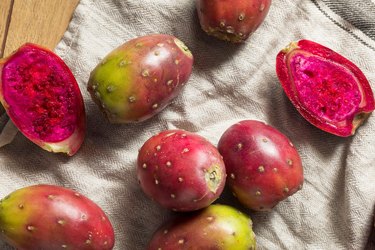
Prickly pear fruit can be enjoyed peeled and raw, says Sheth. "They also contain small, black seeds that can be strained or discarded," she adds. Prickly pear fruit makes an awesome sauce or syrup, too.
"When they're in season in the southwest, I use tongs and a scrub brush to remove thorns, rinse them well and blend them with some water. After straining with a cheesecloth afterward, and tasting for sweetness, I may add some honey or sugar to create a delicious syrup," says Redmond.
Sheth offers some cautionary advice: "Traditionally, the juice is often mixed with other fruit juices, and this can quickly cause a blood sugar spike in someone with diabetes. It's best to enjoy the fruit [which also includes blood-sugar-stabilizing fiber] rather than the juice."
- Taylor & Francis Online: "Phytochemical Composition and in Vitro Analysis of Nopal (O. Ficus-Indica) Cladodes at Different Stages of Maturity"
- USDA National Nutrient Database: "Basic Report: 11963, Nopales, Raw"
- NCBI: "Nopal Cactus (Opuntia ficus-indica) as a Source of Bioactive Compounds for Nutrition, Health and Disease"
- American Diabetes Association: "Lowering Effect on Postprandial Glycemic Response of Nopales Added to Mexican Breakfasts"
- NCBI: "Cactus Stem (Opuntia Ficus-Indica Mill): Anatomy, Physiology and Chemical Composition With Emphasis on Its Biofunctional Properties"
- MDPI: "Microbiological Quality of Fresh Nopal Juice"
- USDA National Nutrient Database: "Basic Report: 09287, Prickly Pears, Raw"
- NCBI: "Betalains, Phenols and Antioxidant Capacity in Cactus Pear [Opuntia ficus-indica (L.) Mill.] Fruits from Apulia (South Italy) Genotypes"
- NCBI: "Short-Term Cactus Pear [Opuntia Ficus-Indica (L.) Mill] Fruit Supplementation Ameliorates the Inflammatory Profile and is Associated With Improved Antioxidant Status Among Healthy Humans"
- NCBI: "Indicaxanthin Inhibits NADPH Oxidase (NOX)-1 Activation and NF-κB-Dependent Release of Inflammatory Mediators and Prevents the Increase of Epithelial Permeability in Il-1β-Exposed Caco-2 Cells"
- Research Gate: "Dietary Indicaxanthin From Cactus Pear (Opuntia Ficus-Indical. Mill) Fruit Prevents Eryptosis Induced by Oxysterols in a Hypercholesterolaemia-Relevant Proportion and Adhesion of Human Erythrocytes to Endothelialcell Layers"
- Wiley Online Library: "Betanin—A Food Colorant With Biological Activity"
- NCBI: "Supplementation With Cactus Pear (Opuntia Ficus-Indica) Fruit Decreases Oxidative Stress in Healthy Humans: A Comparative Study With Vitamin C"
- NCBI: "Cactus Pear: A Natural Product in Cancer Chemoprevention"
- Natural Products Chemistry & Research: "Cactus (Opuntia Ficus-Indica): A Review on its Antioxidants Properties and Potential Pharmacological Use in Chronic Diseases"
- The Taste Workshop: "Michele Redmond – Chef Dietitian Nutritionist"
- Vandana Sheth, RDN, CDE: "About"
- NCBI: "Effect of Opuntia Ficus Indica on Symptoms of the Alcohol Hangover"
- Cholesterol-lowering properties of different pectin types in mildly hyper-cholesterolemic men and women
- A review of the dietary flavonoid, kaempferol on human health and cancer chemoprevention