Long-Term Effects of Herpes Simplex 2
Herpes Simplex 2 (HSV-2) is the virus that causes genital herpes 3. According to the Centers for Disease Control and Prevention, one in five American adults is infected with genital herpes. There is no cure for herpes. Infected individuals will experience episodic recurrence for the rest of their lives. The HSV-2 virus has several long-term effects.
If you are experiencing serious medical symptoms, seek emergency treatment immediately.
Risk of HIV and Sexually Transmitted Infections
The relationship between HSV-2 and the risk of acquiring other sexually transmitted infections (STIs) has long been recognized. Skin lesions as a result of herpes provide an ideal portal of entry for the HIV virus, treponema pallidum--the spirochete bacterium which causes syphilis--and other STIs. Being infected with HSV-2 gives a two to fourfold increase in the risk of acquiring HIV, according to a study done by the University of Washington. In addition, HSV-2 also increases the risk of transmitting HIV to sexual partners and appears to accelerate the progression of HIV to AIDS. In turn, suppressive treatment of HSV-2 with valacyclovir appears to reduce HIV-1 RNA levels, although the mechanism remains undefined. Also, while syphilis and other STIs have traditionally been considered to be far less serious, mainly due to the availability of inexpensive curative treatments, this is changing with the emergence of drug-resistant strains of syphilis.
- The relationship between HSV-2 and the risk of acquiring other sexually transmitted infections (STIs) has long been recognized.
- Being infected with HSV-2 gives a two to fourfold increase in the risk of acquiring HIV, according to a study done by the University of Washington.
Aseptic Meningitis
Symptoms of Herpes of the Spine
Learn More
People with HSV-2 have a greater lifetime risk of aseptic meningitic, or HSV infection of the connective tissue lining the central nervous system. The term “aseptic” refers to the absence of bacteria, although HSV-2 virus will be detected on laboratory tests. Symptoms of meningitis include headache, stiff neck and low-grade fever. Meningitis due to HSV-2 may be accompanied by back, buttock, perineal and lower extremity pain, urinary retention and constipation. The latter symptoms reflect localization of HSV-2 within the sacral nerve roots, which also serve as the virus’ conduit into the central nervous system. Most people who develop aseptic meningitis do so during their first episode of herpes; however there are exceptions, especially in patients who subsequently become immunocompromised due to cancer or HIV infection. Headaches occur in as many as 15 percent of patients with recurrent genital herpes and are believed to reflect subacute infection of the meninges by HSV-2. Both recurrent aseptic meningitis and HSV-2 headaches may be prevented by treatment with suppressive antiviral medications.
- People with HSV-2 have a greater lifetime risk of aseptic meningitic, or HSV infection of the connective tissue lining the central nervous system.
- The term “aseptic” refers to the absence of bacteria, although HSV-2 virus will be detected on laboratory tests.
Nervous System Effects
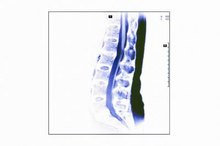
**As reported in the May 2008 edition of the "Archives of Neurology," HSV-2 virus has been found in 40 percent of sacral nerve roots 2. The term “radiculopathy” refers generally to problems with the nerves. Its defining feature is that symptoms track or “radiate” along the distribution of the affected nerve. Radiculopathy caused by HSV-2 typically affects lumbar or sacral nerve roots. Symptoms of sacral and lumbar radiculopathy include dull or tingling pain in the lower back, buttocks or anogenital area, shooting pain down the buttocks and thighs (sciatica), weakness of the leg muscles and inability to walk on the tip toes. In severe cases, symptoms may cause urinary retention, constipation and transient paralysis. Symptoms should coincide with the outbreak of genital lesions, although many patients fail to make the correlation.
Pregnancy Problems
Can Shingles Be on Your Penis?
Learn More
Neonatal herpes simplex encephalitis (NHSE) is a devastating, potentially fatal complication of transmission of herpes between a mother and her unborn child, also called vertical transmission. NHSE and vertical transmission is more common when a woman acquires HSV-2 during pregnancy, but infection may still occur in women with a long history of the disease. The presence of genital lesions is an accepted indication for Cesarean section. However, James and colleagues reported in the September 2009 issue of "Antiviral Research" that only 70 percent of affected neonates are born to mothers who were asymptomatic at the time of delivery.
- Neonatal herpes simplex encephalitis (NHSE) is a devastating, potentially fatal complication of transmission of herpes between a mother and her unborn child, also called vertical transmission.
- NHSE and vertical transmission is more common when a woman acquires HSV-2 during pregnancy, but infection may still occur in women with a long history of the disease.
Related Articles
Symptoms of Herpes of the Spine
Learn More

Can Shingles Be on Your Penis?
Learn More
How Long Does an Outbreak of Genital Warts Last?
Learn More

Shingles on the Feet
Learn More

Anal Herpes Symptoms
Learn More
Urinary Tract Infections Vs. Herpes
Learn More
Signs of Herpes on the Penis
Learn More
CRV Infections
Learn More

Magnesium & Herpes
Learn More

Can Certain Foods Help Fight HPV?
Learn More
References
- "Antiviral Research;" Antiviral Therapy for Herpes Virus Central Nervous System Infections: Neonatal Herpes Simplex Virus Infection, Herpes Simplex Encephalitis and Congenital Cytomegalovirus Infection; S.H. James, D.W. Kimberlin , R.J.Whitley; Sept. 2009
- "Archives of Neurology;" Neurological Complications of Herpes Simplex Virus Type 2 Infection. J.R. Berger, S. Houff; May 2008
- "Journal of Acquired Immune Deficiency Syndrome;" The Effects of Herpes Simplex Virus-2 on HIV-1 Acquisition and Transmission: A Review of Two Overlapping Epidemics; L. Corey, A. Wald, C.L Celum, T.C. Quinn; May 2004
- McQuillan G, Kruszon-Moran D, Flagg EW, Paulose-Ram R. Prevalence of herpes simplex virus type 1 and type 2 in persons aged 14–49: United States, 2015–2016. NCHS Data Brief. 2018;304.
- Tronstein E. Genital Shedding of Herpes Simplex Virus Among Symptomatic and Asymptomatic Persons With HSV-2 Infection. JAMA. 2011;305(14):1441. doi:10.1001/jama.2011.420
- World Health Organization (WHO). Herpes simplex virus. Updated January 31, 2017.
- Centers for Disease Control and Prevention. Genital Herpes - CDC Fact Sheet (Detailed). Updated January 31, 2017
- Centers for Disease Control and Prevention. Genital Herpes - CDC Fact Sheet. Updated August 28, 2017.
- Chun H, Carpenter R, Macalino G, Crum-Cianflone NF. The role of sexually transmitted infections in HIV-1 progression: A comprehensive review of the literature. Journal of Sexually Transmitted Diseases. 2012;2013(176459):1-15. doi:10.1155/2013/176459
- Heslop R, Roberts H, Flower D, Jordan V. Interventions for men and women with their first episode of genital herpes. Cochrane Database Syst Rev. 2016 Aug 30;(8):CD010684. doi:10.1002/14651858.CD010684.pub2
- Jin F, Prestage GP, Mao L, Kippax SC, Pell CM, et al. Transmission of herpes simplex virus types 1 and 2 in a prospective cohort of HIV-negative gay men: the health in men study. J Infect Dis. 2006 Sep 1;194(5):561-70.
- Schulte JM, Bellamy AR, Hook EW 3rd, Bernstein DI, Levin MJ, et al. HSV-1 and HSV-2 seroprevalence in the united states among asymptomatic women unaware of any herpes simplex virus infection (Herpevac Trial for Women). South Med J. 2014 Feb;107(2):79-84. doi:10.1097/SMJ.0000000000000062
Resources
Writer Bio
Heather Gloria began writing professionally in 1990. Her work has appeared in several professional and peer-reviewed publications including "Nutrition in Clinical Practice." Gloria earned both a Bachelor of Science in food science and human nutrition from the University of Illinois. She also maintains the "registered dietitian" credential and her professional interests include therapeutic nutrition, preventive medicine and women's health.