How to Remove Tooth Tartar at Home
Tips
Use a lighted mirror to see the front and rear teeth while scraping.
Floss every day to help prevent the buildup of tartar.
Warnings
If you have advanced tartar buildup, visit a dentist as you may require more advanced tartar removal treatments, which are you will be unable to perform at home.
Tartar is mineral deposits found on the teeth. Over time, the amount of tartar can build up and, if not controlled, can lead to periodontal disease, according to World Dental, Dental Health Magazine. While the most effective way to remove tooth tartar is to visit a dentist for a professional cleaning, you can take some steps at home to help remove or reduce the amount of tooth tartar.
Mix 1 tablespoon of baking soda with 1/2 teaspoon of salt into a small cup. Wet your toothbrush with warm water, and dip the brush into this solution.
How to Make Your Own Tooth Caps
Learn More
Vigorously scrub the teeth with this mixture. Spit periodically and dip the toothbrush into the mixture; continue to scrub your teeth for five minutes.
Mix a cap full of hydrogen peroxide with 1/2 cup of warm water. Gargle with this solution for one minute, then spit and rinse with 1/2 cup of cool water.
How to Use Dental Tools at Home to Remove Plaque
Learn More
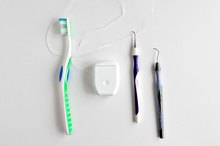
Scrape the yellow tartar from the teeth with a professional-grade dental pick 1. Do not scrape the gums, as this will cause irritation and possible damage. The aforementioned steps will soften tartar, allowing it to be easily removed from a tooth.
Rinse with an antiseptic cleanser, and repeat every other day to control tartar buildup.
Related Articles
How to Make Your Own Tooth Caps
Learn More
How to Use Dental Tools at Home to Remove Plaque
Learn More

How to Remove Gum Line Stains
Learn More

How to Care for Your Flipper
Learn More
How to Fix a Chipped Tooth Without Going to the Dentist
Learn More
How to Use Peroxide in My Waterpik
Learn More

How to Get Stains Off the Tongue
Learn More

How to Use a Dental Scaler
Learn More
How to Remove Calcium From Dentures
Learn More

How to Remove Dental Cement From Teeth
Learn More
Resources
Writer Bio
Jonathan McLelland has been a professional writer since 2005. He has worked as a story writer and editor for the international sitcom, “Completing Kaden,” as well as a proposal writer for various production companies. McLelland studied communication and theater at St. Louis Community College.