Breast Cancer and Diet
Cancer is the No. 2 killer in the United States. Is there something you can do to help prevent cancer? You bet there is. It is estimated that one-third of cancers are linked to diet, and that 3 to 4 million cancer cases could be prevented each year simply by making dietary changes! Now that is wonderful news. The choices you make today can affect your quality of living tomorrow.
It is a known fact that populations with higher rates of cancer have different dietary habits than those with lower rates. Several different nutrition issues are related specifically to breast cancer, but for the most part, the same dietary recommendations that help reduce the risk of other cancers, heart disease and osteoporosis apply to breast cancer risk reduction.
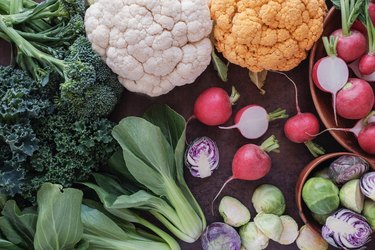
Research has shown that women who eat their fair share of fruits and vegetables have much lower rates of breast cancer. The minimum recommendation is to eat 5 servings per day; 10 servings is optimal.
Specific nutrients naturally found in fruits and vegetables seem to play a role in reducing risk. Some of these nutrients include vitamins C and E, and phytochemicals such as pycnogenols and carotenoids. The most popular carotenoid is beta carotene. A word of caution: If you want to boost your intake of specific nutrients by taking supplements, beta carotene is not one that has not shown favorable results in studies. Taking an isolated amount of any one carotenoid can throw the natural balance that you obtain through your diet out of whack. It is far better to eat a handful of baby carrots to get a boost of carotenoids the way mother nature intended. As far as vitamins C and E, if you wish to supplement your diet, these are both relatively safe and effective supplements, but don't exceed 500 mg of vitamin C per day in supplement form, or more than 400 IU of vitamin E per day.
Another nutritional element that may help reduce breast cancer risk is fiber. Some of the fiber in your diet binds to estrogen. High exposure to estrogen throughout one's life is one of the high risk factors for breast cancer. Fiber intake can be increased by eating more fruits, vegetables and whole grains.
Carrying around extra baggage is a strong risk factor for developing breast cancer, especially if it is added during your adult years. Some health experts used to think there was no harm in packing on a few extra pounds with each passing year. It is now believed that even a 10 to 20 lb. increase in weight over an adult's life span can increase the risk of developing breast cancer. Why? Possibly because increased body weight seems to result in increased circulating estrogen levels.
Effects of Fat
Unfortunately, research on the role of total fat consumption is inconsistent. There has not been a lot of good research due to the fact that people who eat high-fat diets are typically overweight. Even if future research was not able to find an association between total fat intake and breast cancer risk, consuming a diet low in fat makes it much easier to maintain a lean body weight.
The standard advice is to consume no more than 30 percent of your calories from fat. Some health professionals say it is better to limit fat calories to 20 percent of your food intake. To calculate the maximum number of grams of fat you can eat per day, then, multiply your daily caloric intake by 30 percent (or .30). For example, if you typically eat 1800 calories a day, multiply 1800 by .30 to get a maximum of 540 total fat calories you can have per day.
There are 9 calories per every 1 g of fat, so to calculate your maximum number of grams of fat per day, divide 540 by 9 to get a daily maximum of 60 grams of fat. If you have no clue how many calories you eat each day, you might want to have your nutritional intake analyzed.
There is evidence that saturated fats may increase breast cancer risk. Sources of saturated fat include foods from animal origin, coconut oil, palm oil, palm kernel oil and cocoa butter. Monounsaturated fats from sources such as olive oil, canola oil and peanut oil may actually help decrease breast cancer risk.
Of particular interest is olive oil. Aside from being a monounsaturated fat, olive oil contains important phytochemicals and a significant amount of vitamin E. Phytochemicals and vitamin E possess antioxidant activity, meaning they help protect against oxidation, a process by which cancer can develop. Greek women typically consume 42 percent of their calories from fat , while American women average 35 percent of their calories from fat. Yet Greek women have substantially lower rates of mortality due to breast cancer when compared to American women. How can that be? Unlike the typical American diet, most of the fat in the Greek diet comes from olive oil or fish. Fish has promising benefits, too. Studies involving the use of fish oils seem to indicate that fish oils can help reduce the risk of developing breast cancer.
Keep in mind that the speculations associated with olive oil are fairly new. There is no reason to start taking olive oil by the the spoonful. Because it is a beneficial fat, there is absolutely no harm to include it in your diet. Just keep in mind that it is a fat and fats provide a significant amount of calories. The biggest key is to keep your weight under control.
Effects of Alcohol
Three out of four Americans say there is too much conflicting information when it comes to eating a healthy diet. This can be particularly true when it comes to alcohol. Some say a drink a day can provide health benefits, some say not so. So what are the facts?
Strong evidence suggests that consuming more than 3 to 4 drinks per week increases your risk of breast cancer. One drink is equal to 12 oz. beer, 5 oz. wine or 1.5 oz liquor. If you have included red wine to your diet to help reduce heart disease risk, why not eat red grapes or drink purple, 100 percent natural grape juice? The protective phytochemicals are found in the grapes, not the alcohol. Tea and onions are another source of these protective phytochemicals.
However, there is no denying that alcohol in moderation is associated with a lower risk of heart disease. A large body of evidence supports this. But, there is convincing evidence that moderate alcohol consumption may lead to modest increases in breast cancer risk.
In 1994 experts reviewed 38 case-controlled studies involving alcohol and breast cancer. Their findings indicated that 1 drink per day resulted in a 10 percent increase in breast cancer. More recently, a pooled analysis of data published in 1998 showed that for every 10 g per day of alcohol consumption, breast cancer risk increased 9 percent. Did it matter what type of alcoholic beverage was being consumed? No. In addition, this pooled analysis showed that women who drank two to five drinks per day had a 41 percent higher risk--ouch!
What is my advice? If you are a woman who is at high risk for developing cancer, I would advise that you limit your consumption to less than one alcoholic drink per day.
Because heart disease is the leading cause of death among men and women, I cannot advise you to eliminate alcohol altogether. There is a greater chance you will develop heart disease than breast cancer. A consistent finding in studies shows the lowest risk of death from heart disease is among moderate drinkers. So weigh your risks. Discuss them with your doctor. Then hopefully you can make an educated decision about whether or not you should include alcohol as part of your "healthy" diet regimen.
Effects of Meat Consumption
Evidence that meat consumption increases breast cancer risk is growing. Two culprits are speculated to be the saturated fat and the type of animal protein in meat. Red meat consumption has conclusively been linked to colon cancer. The conclusive evidence is not as strong for breast cancer. Nonetheless, I would recommend limiting red meat to no more than two servings per week (2 to 3 oz. per serving, or about the size of a deck of cards).
The third culprit comes when meat, including beef, poultry and fish, is exposed to high temperatures and harmful substances called heterocyclic amines (HCAs) are formed. HCAs are known to be harmful to the pancreas, colon and prostate. Recently the Iowa Women's Health Study published a report stating that women who consistently ate their red meat cooked well done had almost five times the risk of breast cancer as those who ate their meats rare or medium. However, you shouldn't just start to eat your meat cooked rare, as it is well known that undercooked meat carries its own health concerns, namely exposure to harmful bacteria.
In addition to limiting the amount of red meat you consume, follow these precautions:
(1) Trim fat from meat before grilling;
(2) Avoid foods that have been charred (black);
(3) Before grilling, marinate meat and microwave it for 3 to 5 minutes to cut down on carcinogens (substances that cause cancer). [This step is important because it limits the meat's exposure to high-temperatures.]
Effects of Soy
You might have heard that soy can help reduce your risk of cancer. Interest in soy's role in preventing breast cancer developed after scientists observed that women living in Asia have significantly lower rates of breast cancer than women in the U.S. Asian women typically consume a diet rich in soy products while women in the U.S. typically do not.
Experts are not ready to make strong claims concerning soy and its ability to prevent cancer. However, there is substantial data that links soy to the prevention of breast, prostate, lung and colon cancers. A recent study in England found a strong association between a high intake of soy phytoestrogens and a lower risk of breast cancer. Even still, experts will not say with certainty that soy does reduce the risk of developing breast cancer, but there is a large amount of evidence suggesting that soy is beneficial and should be incorporated into your diet.
So, what are phytoestrogens? Phytoestrogens are plant hormones that are similar to human estrogens. Of importance is the fact that phytoestrogens are weaker than human estrogen. Phytoestrogens are believed to be among the key substances in soy that help reduce the risk of breast and prostate cancers. As weaker versions of estrogen, phytoestrogens seem to play a dual role: When there is too much estrogen, the phytoestrogens actually block estrogen's harmful effects, and when there is not enough estrogen, phytoestrogens make up for the difference. In addition, phytoestrogens seem to act as antioxidants, thus further protecting cells.
Other foods besides soy products contain phytoestrogens, but the best source without a doubt is soy. Flaxseed is a strong second. Studies are lacking in support for getting your phytoestrogens from a pill, though, so food sources are absolutely your best bet.
How can you start incorporating soy into your diet? Do not look to soy sauce or soybean oil for the benefits associated with breast cancer risk reduction. These products may be made from soy, but they contain none of the beneficial phytoestrogens and no soy protein. Below is a list of soy products and the amount in milligrams (mg) of the beneficial phytoestrogens contained per each serving size listed. To reap soy's benefits, try to include 30 to 60 mg per day.
1/2 cup fresh or frozen soybeans (70 mg)
1 cup soy milk (20 mg)
1/4 cup soy nuts, roasted (84 mg)
4 oz. tofu (38 mg)
1/4 cup soy powder (60 mg)
Fresh or frozen edamame, are mild, sweet-tasting green soybeans. Boil them for 15 to 20 minutes and get ready for a real treat! Soy nuts are dried soybeans that have been roasted and usually salted. They make a good alternative to peanuts with half the fat and a lower price tag.
If you don't like soy milk straight, try a strawberry-banana shake:
In a blender, place 1 ripe banana, 1/2 cup frozen strawberries, 1 cup soy milk, 1/3 cup soy protein powder and 1 tbs. honey.
Blend until thick and creamy. [100 mg phytoestrogens]
To put everything into perspective, here is a list identifying "cancer protectors":
Fruits and Vegetables, especially those dark in color; aim for five to nine servings per day.
Fiber, especially for colon cancer; aim for 25 to 35 g per day.
Antioxidants, such as carotenes and vitamins C & E (and get carotenes through your diet, not a pill).
Selenium, especially for prostate cancer; do not take more than 800 mcg/day as a supplement.
Calcium; aim for 1200 to 1500 mg per day.
Omega-3 fatty acids (from fish oil); try to include fish in your diet at least once or twice per week.
Soy; aim for one to two servings of soy products per day.
Tea (black or green); aim for three to five servings per day.
Exercise; aim for 30 minutes most days of the week .
Here is a list identifying cancer promoters:
Overweight; limit weight gain in adulthood to 10 lbs. or less.
Dietary fat; try to use canola and olive oil in cooking.
Red meat, especially colon cancer; limit to one to two times per week in 3 oz. serving sizes.
Burned food; avoid charred foods when possible.
Nitrates and nitrites; avoid cured meats.
Alcohol: men should limit intake to two drinks or less per day, while women should have one or less drinks per day.
"The Best Overall Anticancer Diet" (Source: Environmental Nutrition/vol.22/no.10):
Eat a diet that is largely vegetarian (certainly low in red meats), centering on legumes, whole grains, fruits and vegetables.
Eat fish once or twice a week.
Eat five to nine servings a day of fruits and vegetables. Include citrus fruits or other foods rich in vitamin C, dark leafy greens, high-fiber produce and cruciferous vegetables.
Limit fat intake to mostly monounsaturated and omega-3 fats (from olive oil, canola oil, nuts and seeds).
Choose whole grains (whole wheat, oatmeal, brown rice) over refined grains.
Include a source of calcium (from diet or supplement).
Include soy and flaxseed in your diet.
Relax with a few cups of tea a day.
Exercise regularly.
Exercise
What role does exercise play in fighting cancer? Regular exercise (30 minutes or more on most days of the week) helps protect against colon cancer and possibly breast and lung cancers. In addition, exercise helps reduce the cancer risk associated with obesity by helping you achieve and maintain a healthy body weight.
There is an easy solution if you are too busy to fit in a good workout on most days. Squeezing in what has been coined as "fit bits" of physical activity (activity for short as a minute or two spread throughout the day) can keep you healthy and fit. The Cooper Institute for Aerobics Research in Dallas demonstrated that subjects who performed this type of lifestyle fitness lost as much weight as a group doing a 20 to 60 minute aerobic session three to five times per week. They also increased their aerobic endurance, although not as much as the control group.
So, what does that mean? When you've got a minute, do something physical. Below is a list to help gauge calories burned per activity. The amount you burn will vary, but this serves as a guide. The calories shown are based on a 140 lb. woman.
Sweep for 5 minutes = 20 calories
Push a stroller 1/2 mile in 10 minutes = 50 calories
Garden for 15 minutes = 55 calories
Play ACTIVELY with the children for 15 minutes = 60 calories
Park in far corner of the parking lot at work and walk 5 minutes briskly to desk = 25 calories
Walk briskly back to car, when leaving work, in 5 minutes = 25 calories
Four flights of stairs both ways = 40 calories
Walk briskly to the store and then back in 8 minutes = 35 calories
Jump rope for 15 minutes = 150 calories!


Member Comments
by rica11 on July 21, 2009 at 4:23 AM
I really like this article about how to avoid breast cancer through diet and exercise. You don't have to do any research of what foods to eat and how much of it to take. This I highly recommend all to read.
hattiesburg oncologist
by ikkiichiyuu on September 18, 2009 at 9:11 PM
Thanks! Awesome article. But I have a question: is it really safe to drink so much tea? I have heard increasingly bad news about tea over the years and that it has caffeine. What kind of tea? What about normal commonplace tea like Lipton?