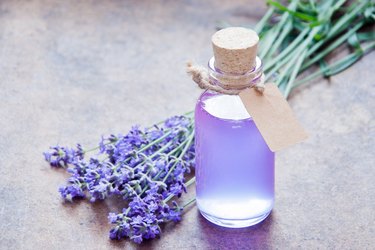
Lavender oil has emerged as a natural remedy for pain, anxiety, inflammation, acne and other common health complaints. Thanks to its therapeutic properties, it's widely used in aromatherapy and skincare. Like everything else, though, this natural cure has its risks. The dangers of lavender essential oil include nausea, vomiting and allergic skin reactions, among other side effects.
Tip
A lavender overdose may cause poisoning and severe adverse reactions. To stay safe, use the lowest effective dose and only increase it if necessary.
Video of the Day
How Is Lavender Oil Used?
This essential oil is distilled from the flowers or spikes of Lavandula vera, L. spica, L. officinalis and other lavender species. It's rich in volatile oils and has a strong, fragrant aroma. People have been using it since ancient times to treat digestive disorders, relieve stress and anxiety, ward off fatigue and fight depression.
Video of the Day
Lavender oil use varies from one region to another. In France, this natural remedy was prized for its ability to treat burns, sores, bruises and wounds when applied topically. In the UK, it was once considered an excellent cure for fatigue, mental exhaustion and memory problems; it was mixed with cardamon, nutmeg and other spices, and then ingested along with milk or water. Some of its potential benefits are confirmed by science.
According to a 2017 review published in The Mental Health Clinician, ingesting lavender oil may relieve anxiety and promote relaxation. This essential oil has been shown to reduce anxiety levels before surgery and during times of stress.
Researchers attribute these benefits to its ability to regulate certain receptors in the brain. Another study, which appeared in the Iranian Journal of Pharmaceutical Research in 2017, has found that inhaling lavender oil essence may lower blood pressure and heart rate in patients undergoing surgery for cardiovascular problems.
Lavender Oil Side Effects
As Drugs.com points out, lavender oil is safe for most people. However, it may cause hives, breathing problems and other allergic reactions (when ingested) in some individuals. When applied topically, it may irritate the skin. Furthermore, it can interact with certain medications, including:
- Sedatives
- Benzodiazepines
- Antihypertensives drugs
- Cholesterol-lowering drugs
- Blood-thinning drugs
Due to its sedative properties, this oil may enhance the action of sleeping pills and central nervous system depressants. Lavender overdose may cause nausea and vomiting. If you're under medical treatment, ask your doctor before taking lavender pills and using lavender oil. These products can interact with OTC drugs, prescription drugs and even herbal supplements.
According to Examine.com, lavender oil may worsen contact dermatitis when used topically. The oil distilled from Lavandula stoechas may lead to miscarriage when ingested. Other varieties, though, appear to reduce labor pain. Its effects on pregnant people have not been widely studied, so it's best to avoid using it if you are or plan to become pregnant.
How Much Is Too Much?
When used in large doses, lavender oil can be toxic. WebMD notes that most studies conducted on its anxiolytic effects have used 80 to 160 milligrams per day for six to 10 weeks. If you apply it topically for canker sores, try not to exceed 36 milligrams (two drops). Dr. Lise Alschuler, ND, FABNO, recommends starting at 80 milligrams and increasing the dosage if necessary.
To stay safe, use the lowest effective dose. Watch out for any signs of lavender oil poisoning, such as burning pain in the throat, rashes, diarrhea, confusion and blurred vision. According to MedlinePlus, these symptoms are typically due to linalool and linalyl acetate, two naturally occurring chemicals in lavender oil.
Warning
Ingesting even small amounts of lavender oil can cause severe toxicity in children.
The same source states that lavender oil is likely safe when ingested in small amounts or inhaled. Children, though, may experience adverse reactions even when ingesting low doses. In case of lavender overdose or poisoning, it's recommended to drink milk or water immediately and seek emergency medical care.
- Drugs.com: Lavender
- Botanical.com: Lavenders
- College of Psychiatric and Neurologic Pharmacists: Essential Oil of Lavender in Anxiety Disorders: Ready for Prime Time?
- NCBI: Iranian Journal of Phramaceutical Research: Effect of Inhalation of Lavender Essential Oil on Vital Signs in Open Heart Surgery ICU
- Drugs.com: Lavender Side Effects
- Examine.com: Contact Dermatitis
- WebMD: Lavender
- Dr. Kara Fitzgerald: Oral Lavender Supplement Dosing Considerations: 80mg vs. 160mg
- MedlinePlus: Lavender Oil