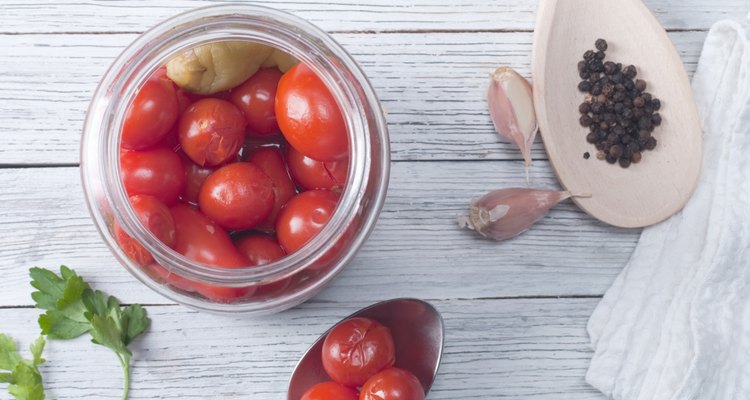
aaboikis/iStock/Getty Images
Many people think that tomatoes are a vegetable. They are actually classified as a fruit, even though they do not taste quite as sweet as other fruits. Tomatoes can be used in a variety of different ways -- on sandwiches, in salads or pasta, and even eaten plain or with salt. Tomatoes can be eaten fresh, or purchased canned, year-round. The nutrition varies slightly between the two different types.
Calories
Tomatoes are low in calories and perfect for those who are watching their weight. One medium-sized, fresh tomato has about 22 calories, according to the USDA National Nutrient Database. A 3.5-ounce can of tomatoes has just slightly more calories, with 32 calories. There are slightly more calories in canned tomatoes because they are more densely packed and contain less water content.
Carbohydrates
Dietary carbohydrates are an essential part of any person's diet; they provide the body with energy. Yet eating too many calories can lead to weight gain, no matter where they come from. In a fresh tomato, there are 4.8 grams of carbohydrates in a fresh tomato and about 7.6 grams carbohydrates in a 3.5-ounce can of tomatoes. Regular canned tomatoes don't have any additives, but stewed tomatoes sometimes have additives like sugar, which can increase the carbohydrate count even more.
Sodium
There are only 6 milligrams of dietary sodium in a medium-sized tomato, according to the USDA National Nutrient Database. Tomatoes are naturally low in sodium. Yet canned foods often use sodium, or salt, as a preservative and flavoring agent. The USDA National Nutrient Database states there are 243 milligrams of sodium in 3.5 ounces of canned tomatoes, and 564 milligrams of sodium in 1 cup of stewed tomatoes. The American Heart Association states that the average American eats around 3,436 milligrams of sodium every day, when he should be consuming 1,500 milligrams or less, to protect heart health.
Antioxidants
Antioxidants are cancer-fighting compounds that are naturally present in fruits and vegetables. Lycopene is the strongest antioxidant in tomatoes. According to the November-December issue of "Natural Product Radiance," eating whole fresh tomatoes, skin, pulp and small seeds included, delivers more antioxidants than tomatoes that are cooked down and processed without the skins. This is because much of the lycopene content is present in the skin of the tomato, which is most often removed during the canning process. However, the lycopene in cooked tomato products can be absorbed easier by the body, which may make these products more beneficial if you are looking to increase your lycopene intake. According to the Pennington Biomedical Research Center, 1 raw tomato contains 4,631 micrograms of lycopene while 1 cup of tomato puree contains 54,385 micrograms.
Safety
Canned tomatoes, and other canned goods, sometimes are contaminated with harmful agents such as botulism. The USDA Food Safety and Inspection Service advises that you never buy cans that are dented or bulging, as this could be a sign the product is contaminated, and you should always wash the tops of a can before opening them to prevent contamination from any bacteria that may be on lid. Fresh tomatoes may also become contaminated and it is usually with the salmonella or E-coli bacteria. When you select fresh tomatoes, store them unwashed. Before use, wash your hands and any area the tomato will touch, then wash the tomato under warm, running water. Gently rub the tomato skin with your hand but do not use detergents. The Texas Cooperative Extension explains that you should cut the green vine end off the tomato, as this is where bacteria like to hide.
Related Articles

How to Know When a Tomato Goes Bad

Tomato, Cooked or Raw, & Lycopene

Fruits That Contain Salicylic Acid

Should I Peel Cucumbers?

How to Make Tomato Juice From Fresh ...

How to Soften Tomatoes

How to Boil Tomatoes

What Makes Pico de Gallo Taste Bitter?

Alternatives to Green Soap

How to Get Rid of Blackheads With ...

How to Store Tomatoes

How to Skin Cherry Tomatoes
How to Juice a Daikon Radish

How to Preserve Shredded Lettuce

How to Store Lemons & Limes

Fuji Apples Health Benefits

Health Benefits of Organic Foods Vs. ...

Do English Cucumbers Have to Be Peeled ...

What Are the Benefits of Persimmons?

What Is the Shelf Life of Sun-Dried ...
References
- USDA National Nutrient Database: Tomatoes, Fresh, Raw
- USDA National Nutrient Database: Tomatoes, Red, Ripe, Canned Packed in Juice
- American Heart Association: Sodium
- Centers for Disease Control and Prevention: Healthy Weight -- Balancing Calories
- Tomatoes, Red, Ripe, Canned, Stewed
- Natural Product Radiance: Antioxidant Activity of Tomato Skin, Seeds and Pulp
- Pennington Biomedical Research Center: Lycopene
- USDA Food and Safety Inspection Service: Food Safety and Security: What Consumers Need to Know
- Texas Cooperative Extension: Safe Handling of Fresh Tomatoes
Writer Bio
Sarah Davis has worked in nutrition in the clinical setting and currently works as a licensed Realtor in California. Davis began writing about nutrition in 2006 and had two chapters published in "The Grocery Store Diet" book in 2009. She enjoys writing about nutrition and real estate and managing her website, RealtorSD.com. She earned her bachelor's degree in nutrition from San Diego State University.
Photo Credits
aaboikis/iStock/Getty Images