
Ideas and Plans for Basketball Tryouts Drills & Skills
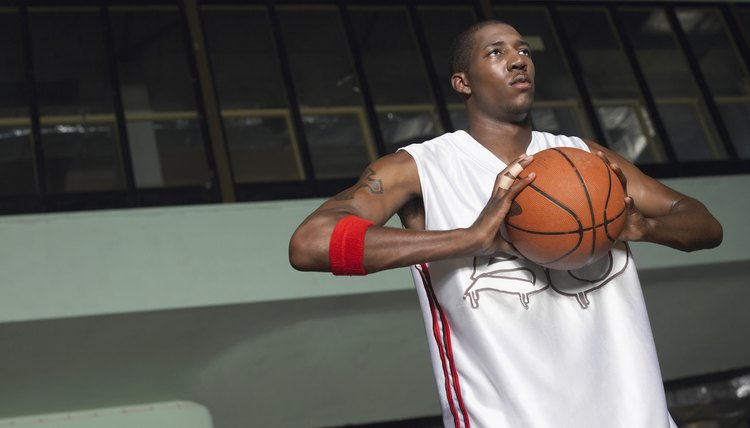
Basketball tryouts will allow you to evaluate which players coming out for your team will work the hardest and have the most talent. Tryouts also allow you the opportunity to gauge a player's attitude toward the coaching staff and teammates and see who makes a good fit for the team. Develop a tryout plan that covers all the offensive and defensive fundamentals over the course of a few days to give each player a fair opportunity to show you his or her ability before you make cuts and build your final roster.
Defense Wins Championships
The shell drill is one of the most effective team defense drills as it teaches players correct rotation and proper help defense positioning. Place four offensive players on the outside of the three point line and assign a defensive player to each. Allow the offense to pass the ball while the defense shifts into position on each pass. Once your players have the basic movements down, allow the offense to cut to the basket and move without the ball. For individual defense purposes, pair players up and have them play one-on-one to half-court, zig-zagging from the sideline to the foul lane. After reaching half-court, allow the offensive player to attempt to score on the defender.
Handling the Rock
A successful basketball player works hard to master the fundamentals. Since basketball is a game that requires players to dribble and pass well, ball handling drills focusing on these skills will help you evaluate players. Stationary dribbling drills such as figure 8 dribbles, between the leg dribbling and crossover dribbling can go a long way in helping you determine a player's ball handling ability. Full court dribbling relays and zig-zag dribbling with a defender will simulate game situations and also allow you to determine who can handle the ball the most effectively. Simple passing drills such as partner passing, the three-man weave and the four corners passing drill are also recommended.
Shooting
A team can play great defense, but it will have a hard time winning games without players who can put the ball in the basket. Shooting drills should be done without defense so that players learn how to shoot the basketball and score. Learning the fundamentals of shooting will influence a young player's success as he or she gets older. Power layups, two line shooting, partner shooting and form shooting will give you the opportunity to teach proper shooting technique while giving your players the opportunity to improve and show you what they've got.
Playing The Game
A player may have great individual ability when doing drills, but there is no better way to evaluate a player's skill level than letting him or her play against other players who are trying out. Divide the teams evenly. Pair up players by how well they match up against each other and allow them to play five on five full court games. This will allow you to see if a player can translate his or her individual talent into a game situation.