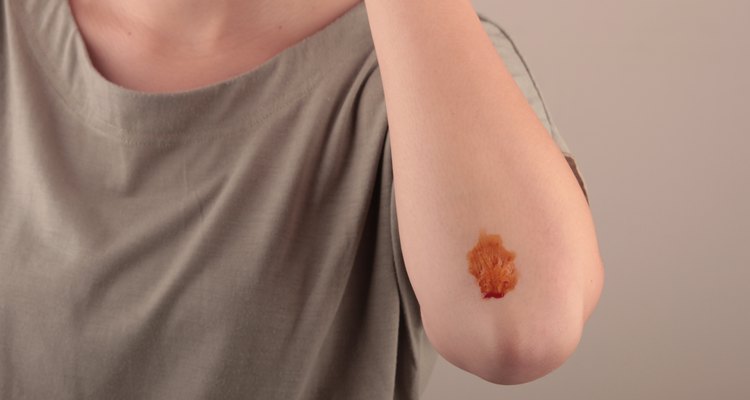
Betadine is a topical solution used to reduce bacteria on the skin. It’s commonly used before surgical procedures and to treat minor cuts, wounds and skin infections. Betadine contains iodine, which gives it the yellowish-brown color that’s clearly visible on the skin. Whether you’ve recently had a medical procedure that involved the use of Betadine or you’ve used it at home to treat your skin, it may leave a discoloration on your skin that can be difficult to remove. Cleaning your skin with the right products removes all the Betadine and any stains left behind.
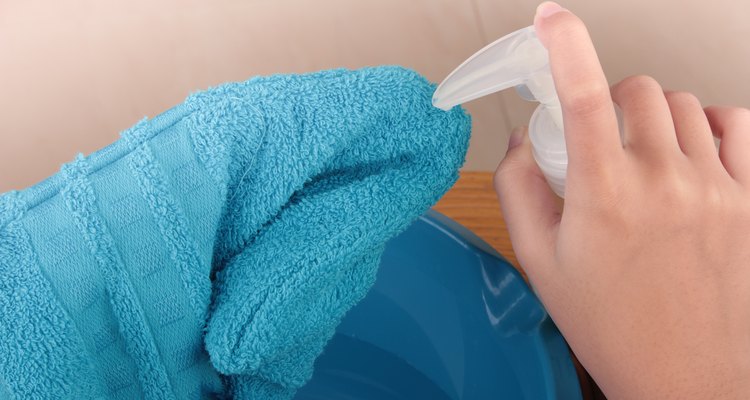
Moisten a washcloth with warm water. Lather up the washcloth with body wash or soap.
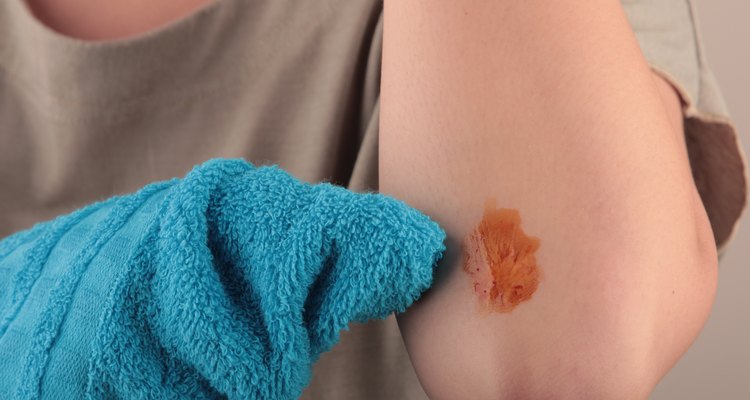
Scrub the stained area of the skin with the soapy washcloth until no more Betadine is coming off the skin onto the cloth. Rinse the area with clean water and pat dry with a towel.
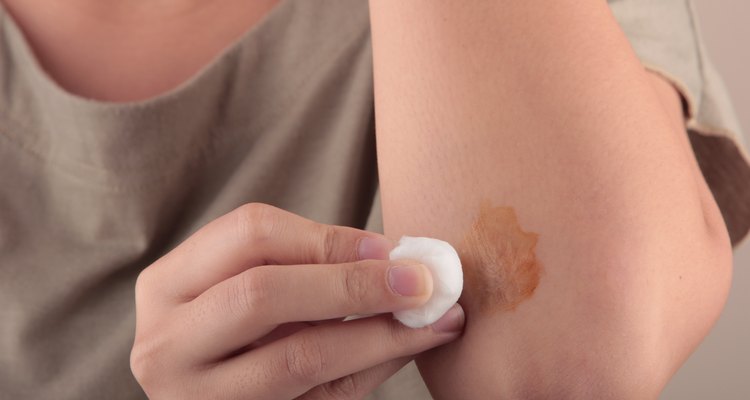
Soak a cotton ball with isopropyl alcohol. Swipe the cotton ball over the remaining Betadine stains on your skin. Use a fresh cotton ball soaked with alcohol when one becomes stained from Betadine. Rinse your skin with warm water and dry with a towel.
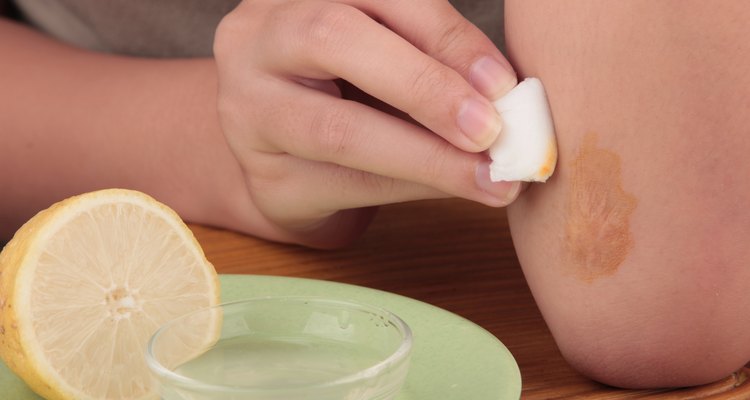
Scrub the skin with a cotton ball and lemon juice if any Betadine remains. After all the Betadine is off, rinse and dry the skin well.
Related Articles

How to Remove the Smell of Cologne From ...
How to Get Ink Off Fingers
How to Clean Tattoos With Rubbing ...

How to Clean Scuffed Up Rain Boots

How to Remove Eyebrow Wax Residue from ...
How to Get Pen Ink Off of Hands

Alternatives to Green Soap
Peeling the Spiny Chayote Squash

How to Take Out Scratches From Silver ...
Can You Clean Scuff Marks on Patent ...
How to Get Nail Glue Off of Your Skin

Calories in One Slice Provolone Cheese

How to Remove a Labret Piercing

How to Remove Crayola Paint From ...
How to Blanch Tomatillos

How Long Do You Cook Whole Deer ...

How to Remove Henna Tattoos Quickly
How to Get Rid of Skunk Smell With ...
How to Care for a Rook Piercing

How to Remove Blood Stains from Dark ...
References
Tips
- Apply lotion to the skin after all the Betadine is gone. Alcohol and lemon juice can dry out the skin.
- Hydrogen peroxide is also effective at removing Betadine stains.
Warnings
- Never use betadine if you are allergic to iodine. Notify your health-care provider of any allergies.
Writer Bio
Kimbry Parker has been writing since 1998 and has published content on various websites. Parker has experience writing on a variety of topics such as health, parenting, home improvement and decorating. She is a graduate of Purdue University with a Bachelor of Arts in organizational communication.
Photo Credits
Chris Zainal/Demand Media