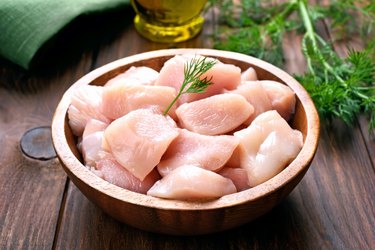
When you go to the grocery store poultry section, you are faced with an array of chicken choices. Choosing between free-range, cage-free, natural and organic can be confusing. You might also wonder if organic chicken is worth the elevated price tag.
Definition
Video of the Day
Organic foods are grown and processed differently than conventional agricultural products. Meats, like chicken, are fed organic feed and provided with access to the outdoors, reports Mayoclinic.com. Organic chickens receive a balanced diet and clean housing, which helps decrease the propensity of disease. The use of antibiotics and feed made from other animal parts cannot be used in organic chicken farming.
Video of the Day
Misconceptions
Some people believe that organic chicken is superior because farmers are not allowed to use growth hormones on the animals. While this is true, know that the use of growth hormones in chicken and pork is banned for all types of farms--conventional and organic--according to the United States Department of Agriculture website. Other chicken may have labels that read “all-natural,” “free-range” or “hormone-free,” but these do not mean the chickens have been fed organic feed or given access to the outdoors.
Benefits
While eating organic produce can help limit your exposure to pesticides and chemical-based fertilizers, the benefits of choosing organic chicken are less obvious, notes a “BusinessWeek” article from September 2004. Organic chicken farming is cleaner and may be more environmentally friendly. Choosing chicken or other meats that do not contain antibiotics can help prevent the development of resistant bacterial strains. You might choose organic chicken because it seems to imply that the chicken was treated in a more humane manner during its life. Some people find they prefer the flavor of organic chicken.
Cost and Appearance
Organic chicken costs almost twice as much as conventional chicken. Organic chicken may appear slightly different than conventional chickens. The chickens are often smaller and paler as they do not contain colorings or salt solutions for preservation.
Considerations
Remember there is no guarantee that the “organic” label means that the chicken was treated better than its conventional counterpart. Choosing organic chicken that has been trucked across the country may have more of an adverse environmental impact in terms of transport pollution than selecting a conventionally raised local chicken.
Is this an emergency? If you are experiencing serious medical symptoms, please see the National Library of Medicine’s list of signs you need emergency medical attention or call 911.