.shock/iStock/Getty Images
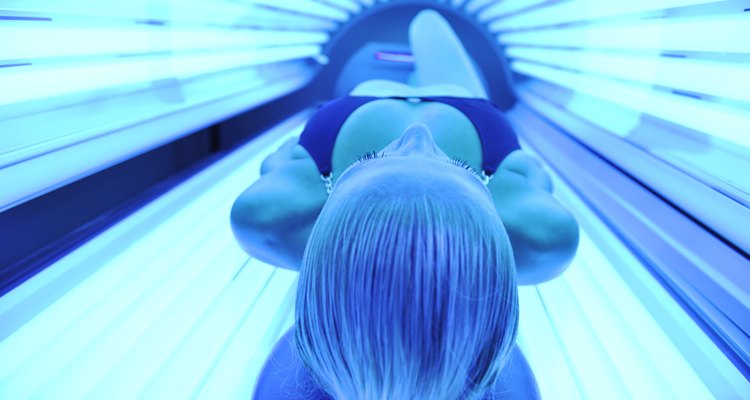
There is much talk about keeping your skin protected from harmful ultraviolet, or UV, rays, but the eyes can also be damaged from short- and long-term UV exposure, more specifically UVA rays and UVB rays. Eye damage is not limited to sun exposure. The UV rays emitted from tanning beds can also cause eye problems.
Misconceptions
Indoor tanners will often keep their eyes closed or place a towel over their face to protect their eyes while in a tanning bed. According to Dr. Susan Blakeney of the College of Optometrists, the skin of the eyelids is very delicate and thin, so closing your eyes does not protect them from UV damage. In addition, harmful UV rays are able to penetrate a towel.
Short-Term Exposure
Inadequate eye protection in a tanning bed can lead to sunburn of the eye, also known as photokeratitis. Similar to a sunburn of the skin, photokeratitis is painful and causes redness. According to the American Optometric Association, the symptoms also include excess tearing, light sensitivity and a feeling that a foreign object is in the eye. Short-term UV exposure can also temporarily blur your vision.
Long-Term Exposure
Cataracts, macular degeneration and choroidal melanoma are all problems associated with long-term UV exposure to the eyes. Cataracts are recognizable as a clouding of the eye’s lens, which causes blurred or frosted vision. According to MayoClinic.com, cataracts will develop slowly and do not usually affect vision until they are more advanced. Macular degeneration occurs when central vision is gradually destroyed, so activities such as reading become difficult. According to the National Eye Institute, macular degeneration is the leading cause of vision loss among Americans over 60. Choroidal melanoma is cancer of the eye and usually has no symptoms.
Prevention
The easiest way to prevent eye problems associated with indoor tanning is to stop using tanning beds. However, if you insist on continuing to use tanning beds regardless of the increased risks to your eyes, always wear goggles specifically designed for indoor tanning. Sunglasses do not fully protect your eyes in a tanning bed because even wrap-around sunglasses can't protect your eyes from above and below the rim. If you forget your goggles, tanning salons often have winkies, which are low-cost disposable alternatives to goggles.
Consideration
According to the American Optometric Association, see your optometrist or ophthalmologist at least every two years for an eye exam. If you experience changes in your vision, make an appointment as soon as possible because many eye disorders caught in their early stages are treatable.
Related Articles

How Do Tanning Beds Affect Eyes?

How Do Yellow Lenses in Ski Goggles ...

Sunbed Pros & Cons

Levels of Polarized Sunglasses

Do People With Blue Eyes Need to Wear ...

How Does Ultraviolet Light Affect ...

The Difference Between Polycarbonate & ...

How to Not to Get Smudges on Your ...
Polycarbonate Lenses Vs. Polarized

Swollen Lymph Nodes in Horses
The Effects of Red Lens Sunglasses

The Benefits of Yellow Lenses in ...
How to Troubleshoot a Citizen Skyhawk ...

Can Shining a Flash Light in Eyes ...

How Does Exposure to Ultraviolet Light ...

Difference Between Bronzing & Tanning ...

The Best Sunglasses for Kayaking

How to Sterilize Eyeglasses
Uva Vs. Uvb Tanning Beds

How Does a Tanning Bed Work?
References
Writer Bio
Melissa McNamara is a certified personal trainer who holds a Bachelor of Arts in journalism and communication studies from the University of Iowa. She writes for various health and fitness publications while working toward a Bachelor of Science in nursing.
Photo Credits
.shock/iStock/Getty Images