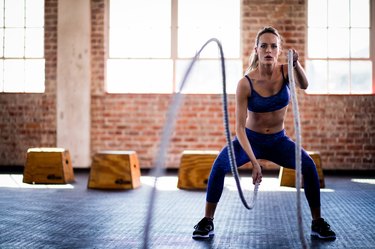
If you're an athlete, you know all too well how important feeling your best is to optimal training and performance. The foods you consume actually become you — as the building blocks for your muscles, connective tissue and bones.
What you eat gives you energy to practice and participate in competition, but the nutrients in food also help you recover from training, repair and build muscle, and fill depleted glycogen stores.
Video of the Day
Video of the Day
Meals when you're in training involve more than supplying enough calories to keep your energy up. You also must fuel your body with attention to nutrient quality. You need knowledge and planning to eat right and optimize your performance and overall well-being.
Nutrient Basics
The most important thing to remember when creating a diet plan is that no one diet is right for every person or athlete. Athletes can be highly successful on a number of different diet plans with varying macronutrient ratios. Macronutrients are carbohydrates, fats and protein.
The Right Carbohydrates
Most endurance athlete diets focus heavily on carbohydrates, which are the primary provider of energy for the body. Nutrition Today published an expert panel review in 2018, noting that carbohydrates, despite recent dietary trends away from them, are still indispensable as an energy source for high-intensity performance.
The Dietary Guidelines for Americans for 2015-2020 recommends that you get between 45 and 65 percent of your calories from carbohydrates. Athletes should aim for the higher end of this range.
Rice, potatoes and pasta, for example, are valuable parts of an athlete meal plan. Regularly select high-quality carbohydrates so that you not only get energy, but important nutrition and fiber. Whole grains, such as brown rice and quinoa, as well as vegetables, are good carbohydrate options for an athlete diet plan.
Read more: Good Sources of Carbohydrates for Athletes
Protein Pointers
Carbohydrates aren't the only important macronutrient in an athlete meal plan. The protein and fat needs of athletes are greater than once thought.
Active bodies need protein to help repair and grow muscle fibers stressed during activity. Protein foods include lean meats, poultry, fish, dairy, soy and nuts.
The expert panel in the Nutrition Today report notes that research consistently shows that 0.55 to 0.75 gram per pound of body weight (or 1.2 to 1.6 grams per kilogram) of daily protein intake is an essential part of a complete athlete meal plan.
This means if you weigh 150 pounds, you should aim for between 83 and 113 grams of protein daily. Spread your intake of protein out through the day, with an emphasis on a good dose of 20 to 30 grams post-exercise to support muscle repair and growth.
The journal Nutrients published research in 2018 that supports the post-workout recommendation of about 30 grams of protein. You can fulfill it with 4.5 ounces of beef, chicken, fish or shellfish or with five whole eggs, 2.5 cups of black beans or 1.5 cups of tofu.
Fats Are Necessary Too
Fats, especially monounsaturated fats, are an essential source of energy. They support healthy skin and hair, brain cell growth and absorption of essential nutrients. Be cautious with fat, however, as eating a lot of it — especially prior to practice or a game — can make you feel sluggish. Fat slows digestion. When you eat fats, choose avocado, nuts, olive oil or fatty fish.
Breakfast Foods for Athletes
You don't usually find doughnuts, white bagels or greasy hash browns on a quality diet plan for an athlete. Exactly what you eat for breakfast depends on personal preferences, when you plan to train and how many calories you need per day.
General recommendations usually include whole grains, such as whole-wheat breads and pancakes or oatmeal; eggs and lean meats for protein; low-fat dairy, such as milk or yogurt, for calcium; and fruit for important vitamins and antioxidants.
Breakfast doesn't have to consist of traditional "breakfast" foods, either. A turkey sandwich on whole-grain bread, leftover salmon and a sweet potato, or pasta with grilled chicken and roast vegetables are all good choices.
Lunch Foods for Athletes
Don't skip lunch, even if it's your time for training. Eat a small portion before you work out and the rest afterward to ensure you get the calories and nutrients you need.
Lunch can look traditional, with sandwiches, salads and soup, or be a combination of snack-like foods such as nuts, seeds, hard-boiled eggs, fresh fruit, cut-up vegetables and hummus.
Skip the fast-food burgers, hot dogs and fries. Even if you worked out earlier, these foods have too much salt and saturated fat to support healthy physical performance — no matter how many calories you burned. And if you plan to work out after lunch and before dinner, a fatty meal can impair later performance.
Dinner Foods for Athletes
A good, balanced dinner consists of 4 to 5 ounces of lean protein, a cup or two of green leafy vegetables and quality carbohydrates, such as white or sweet potatoes, rice, quinoa or pasta. Dinner is a good time to load up, but don't overstuff yourself or it might interfere with sleep.
Pre-Workout, Post-Workout and General Snacks
Snacks keep you fueled between meals and can be essential right before and/or right after you exercise. If it's been several hours since your last meal and you're heading to practice, have a light snack in the 30 to 60 minutes prior to working out. This could be something as simple as an energy bar, banana or toast with a light smattering of nut butter.
Between meals, the best snacks for athletes are quality foods that combine protein and carbohydrates. Go for items such as peanut butter and jelly on whole-wheat bread, yogurt and fresh fruit, or a smoothie made with protein powder, fruit and milk.
Meal Plans
How you arrange your meal plans should vary according to when you exercise, if you work out or practice more than once per day, your size and your preferences. You have many options for eating healthfully and getting the nutrients you need.
The exact quantity of food depends on your metabolism, your size and when you're in training — if it's game time or heavy competition season, you may need larger quantities than in the off-season.
Early Morning Workout
If you practice before the sun rises, you may not have time to eat a full breakfast before you exercise. But you've gone several hours without eating, so you need something before you hit practice. A possible meal plan for an early morning workout day includes:
- Pre-workout: Banana and a handful of plain almonds
- Post-workout/breakfast: Oatmeal, cottage cheese and blueberries
- Snack: Hard-boiled egg and whole-wheat crackers
- Lunch: Whole-grain roll, apple and salad of romaine, black beans, roast chicken, veggies, avocado and olive oil-based dressing
- Snack: Plain yogurt mixed with sliced peaches
- Dinner: Seared salmon, brown rice and steamed broccoli
Lunchtime Practice
If you have a lunchtime practice, you might be tempted to skip the meal altogether. You should load up at breakfast with a good 500 to 700 calories, but skip greasy fried foods so as not to sabotage your workout in a few hours. Split your lunch so you eat one-third to one-half of it before your workout and the rest afterward as a post-workout meal. For example:
- Breakfast: Whole-grain pancakes, nut butter and sliced banana
- Lunch before the workout: Half of a roast beef sandwich with lettuce
and tomatoes
- Lunch after workout: Other half of the sandwich, clear soup
(such as vegetable or chicken noodle), fruit salad and glass of milk
- Dinner: Grilled chicken, baked potato and green beans with dried
fruit (raisins, dried mango, dried cherries) for dessert
Late Afternoon Practice or Game
How you eat the day leading up to practice or your event matters. You need two to three hours to digest a full meal before an athletic event; small snacks of 150 to 300 calories can be eaten in the hour before game time, however. Eat plenty at meals, but avoid overeating. You may load up more in the morning and lighten up as practice or game time approaches:
- Breakfast: Scrambled
eggs, whole-wheat tortilla, chopped vegetables, salsa, sliced avocado and a
whole orange
- Snack: Banana and a small granola bar
- Lunch: Pasta with grilled chicken and zucchini
- Pre-workout/game: Energy bar or whole-grain crackers and a few
slices of deli turkey
- Dinner: Quinoa, shrimp, steamed vegetables and yogurt or small amount
of ice cream for dessert
Vegetarian and Vegan Athletes
Vegetarian and especially vegan athletes — who don't eat any animal products whatsoever — are at risk of nutritional deficiencies if they don't carefully plan their meals. They may be short in omega-3 fatty acids that help reduce inflammation, vitamin B12, iron, zinc, calcium, iodine and vitamin D, explains research published in a 2017 issue of the Journal of the International Society of Sports Nutrition.
A possible vegan nutrition plan for a day would entail:
- Breakfast: Smoothie made with pea or hemp protein, fruit and
almond milk
- Lunch: Large vegetable salad with chick peas, nut-based dressing
and avocado
- Snacks: Pita bread with nut butter and fresh fruit
- Dinner: Stir-fried vegetables with tofu and brown rice
The Role of Supplements
Athletes, especially during the competitive season, can benefit from a little dietary support in the form of supplements.
Warning
Always check with your doctor before adding supplements to your endurance athlete diet and make sure that the brand you choose is of the highest quality.
Certain supplements can assist in glycogen restoration, boosting immunity and muscle regeneration. Whey protein is one of the more well-known supplements that can be added to water, milk, juice or smoothies as a quick post-workout meal to help with muscle growth. Sports Medicine reported in a review published in 2017 that whey is rich in an amino acid known as leucine and can thus help boost muscle protein synthesis, fostering repair and growth.
The review also suggested that supplements of vitamin D, omega-3 polyunsaturated fatty acids, creatine, antioxidants and collagen/vitamin C can help encourage optimal recovery, especially when you have intense practices or competitions scheduled close together.
Curcumin and bromelain may be other beneficial supplements to aid in recovery, but more research is needed.
- Eatright.org: Timing Your Pre- and Post-Workout Nutrition
- The Endurance Edge: Macronutrient Needs for Athletes
- Sports Medicine: Selected In-Season Nutritional Strategies to Enhance Recovery for Team Sport Athletes: A Practical Overview
- Journal of the International Society of Sports Nutrition: Vegan Diets: Practical Advice for Athletes and Exercisers
- Nutrients: Achieving Optimal Post-Exercise Muscle Protein Remodeling in Physically Active Adults Through Whole Food Consumption
- Nutrition Today: High-Quality Carbohydrates and Physical Performance
- Dietary Guidelines for Americans: Eighth Edition