Access to clean drinking water is crucial for your health. That's why municipalities take steps to purify water and weed out any contaminants that can lead to disease.
Pathogens like Cryptosporidium, E. coli, hepatitis A and Giardia intestinalis can get into water. And if you drink these microorganisms, they can cause illness, according to the Centers for Disease Control and Prevention (CDC). Here are the processes involved in the purification of water to help provide you clean, safe fluid.
Video of the Day
Video of the Day
1. Screening
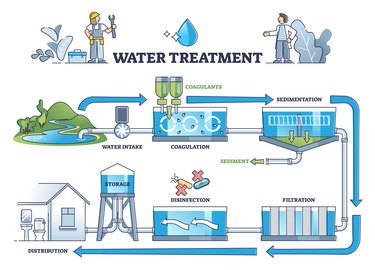
The first water treatment step is screening, which is when water from lakes, rivers or the ground passes through a screen to filter out waste as it enters a treatment facility, according to the U.S. Environmental Protection Agency (EPA).
Water often passes through multiple screens before proceeding through the rest of the filtration system at the water treatment plant. First, it may flow through a coarse screen, which filters out large debris like plants, trash and other solid items, per the EPA. After that, water may pass through a fine screen, which removes smaller solid objects in the water, like chunks of sediment.
2. Coagulation and Flocculation
The next step in the water purification process is coagulation and flocculation.
During this phase of the drinking water treatment process, plant workers add positively charged chemicals to the water, which causes negatively charged particles — like dirt and grit — to bind together into larger particles called floc, per the CDC.
3. Sedimentation
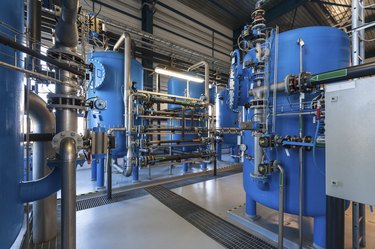
During the third stage of water treatment, floc gets big and heavy enough that it sinks to the bottom of the water tank, according to the CDC.
This is an important step in the treatment of water for a town's supply because it helps further clear out any unwelcome debris.
4. Filtration
Once the floc settles to the bottom of the tank, the water above it will pass through additional filters made of various materials like sand, gravel and charcoal to remove smaller particles like dust and chemicals, according to the CDC.
Filtration is also crucial for water treatment and purification because it helps eliminate potentially harmful pathogens — like parasites, bacteria and viruses — from the water supply, per the CDC.


5. Disinfection
After filtration is complete, disinfectants like chlorine are added to the water supply to kill any remaining microorganisms or bacteria and help keep the water clean until distribution, according to the CDC.
After it's disinfected, the purified water sits in a closed tank or reservoir until it flows through pipes to homes and businesses.
6. Corrosion and Scale Control
Pipes may contain lead and copper, and if they deteriorate, it can lead to potentially dangerous metal exposure, per the American Water Works Association. Corrosion and scale control is an important step in the water treatment process that helps avoid this deterioration.
During this phase, treatment plants adjust the pH of the water so that it neither corrodes nor deposits too much scale in pipes, which helps plumbing work its best and prevents damage and lead and copper poisoning.
Symptoms of Metal Poisoning
Proper water treatment helps prevent lead and copper poisoning. But per the Mayo Clinic and U.S. National Library of Medicine, drinking contaminated water can cause symptoms like:
- High blood pressure
- Joint and muscle pain
- Headache
- Abdominal pain
- Vomiting
- Diarrhea
7. Taste and Odor Control
One of the problems involved in water purification is that unpleasant tastes and odors may remain in the water, like those from algae. These typically don't pose any health hazards, but most people prefer to do without them.
That's why water purification plants often remove tastes and odors through additional chemical treatment, distillation or filtration methods, according to the Water Quality Association.
At this stage, treatment facilities can also add fluoride to the water, which helps safely and effectively prevent tooth decay throughout the community, according to the CDC.
- U.S. Environmental Protection Agency: "Wastewater Technology Fact Sheet"
- Centers for Disease Control and Prevention: "Water Treatment"
- American Water Works Association: "Managing Change and Unintended Consequences: Lead and Copper Rule Corrosion Control Treatment"
- Water Quality Association: "Taste & Odor"
- Mayo Clinic: "Lead poisoning"
- U.S. National Library of Medicine: "Copper poisoning"