Your driving, work and exercise routine may be interrupted after cataract surgery, but luckily about 90 percent of patients have improved vision after this quick and common procedure, according to the National Eye Institute. Allowing your eyes to recover will help ensure proper healing, so make sure you understand all follow-up directions before you head home after surgery. Exercise guidelines may vary slightly depending on who your doctor is and on the details of your individual case of cataracts.
Video of the Day
Video of the Day
Understand the Procedure
Cataracts produce a clouding of the eye's lens that can cause blurry vision or glares from lights. Cataract surgery involves the removal of the natural eye lens and the subsequent replacement of it with an artificial one. The surgery is not serious and ophthalmologists usually perform it on an out-patient basis.
After cataract removal, your eye will likely be covered for protection. This will affect your vision and can make it unsafe for you to immediately exercise after cataract surgery. Sweat can also irritate your eye after surgery, making it tempting to touch or rub your eye — a prohibited activity after this type of procedure.
Exercise After Cataract Surgery
The positive effects of cataract surgery include improved vision. Eye-swelling, stinging, burning and retinal detachment are possible challenging side effects of the surgery. Lifting heavy objects or exercising may increase eye swelling. Vision may be slightly impaired immediately following the surgery, so general movement without assistance — including exercise after cataract surgery — may be hazardous.
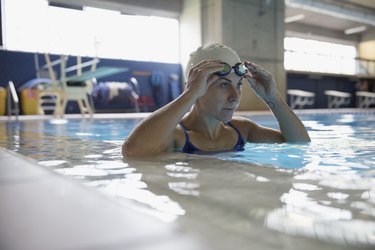
Cataract surgery is a routine procedure typically lasting between 15 and 30 minutes. Within 24 to 48 hours you should be able to do light walking. Avoid any heavy lifting or bending from the waist to get objects from the floor until you get approval to do so from your doctor. Swimming and water activities should be avoided for at least the first week after surgery because getting water in your eyes could increase the risk of infection. Most patients are completely back to their exercise routines within one month after surgery.
Read more: Foods That Reduce Eye Pressure
Proceed With Caution
It may be tempting to resume your regular exercise after cataract surgery once your vision clears, but it is important that your body rests properly so your eyes heal. Be sure to obtain information from your doctor about when you can resume physical activities after your surgery. You can do this at your follow-up appointment, which often occurs the next day. When in doubt about any physical activity following the surgery, call your doctor's office.
In addition to producing blurred vision, cataract surgery can have a short-term effect on how you see colors, according to the National Eye Institute. When you resume exercising, take things slowly since impaired vision may put you at higher risk for dropping objects or bumping into things. Alert your doctor if you experience post-operation vision loss, bleeding or unusual pressure in your eyes.