
What does fact checked mean?
At SportsRec, we strive to deliver objective content that is accurate and up-to-date. Our team periodically reviews articles in order to ensure content quality. The sources cited below consist of evidence from peer-reviewed journals, prominent medical organizations, academic associations, and government data.
The information contained on this site is for informational purposes only, and should not be used as a substitute for the advice of a professional health care provider. Please check with the appropriate physician regarding health questions and concerns. Although we strive to deliver accurate and up-to-date information, no guarantee to that effect is made.
Types of Splits
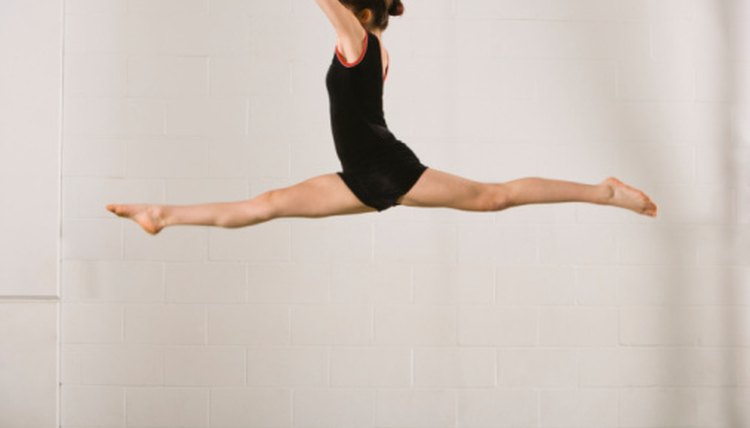
For many people, getting into a complete split is not an easy thing to do because it takes a lot of flexibility. Most people who can do splits are athletes such as gymnasts, martial artists and dancers. Other athletes can sometimes do splits as well. There are three types of splits, and these can be done with a lot of practice and stretching.
Half Split
A half split is the easiest to do because it only requires you to stretch one leg completely straight. Sit on the floor with your legs straight out in front of you. Fold your right leg under you and stretch your left leg out behind you. This stretches your hip flexor muscles as well as your gluteus muscles. Alternate legs to achieve even flexibility. It's also a good way to prepare yourself for a full split.
Front Split
A front split requires more flexibility of your hamstrings and is done by stretching one leg out completely straight in front of you and stretching the other leg out completely behind you. Your hips should be even with the floor. This stretches the hamstring of the leg in front and the hip flexor of the leg in back. To maintain even flexibility in both legs, you should switch leg positions every time you stretch.
Middle Split
A middle split, also known as a straddle, is a difficult split to do and can be done by sitting on the floor and stretching your legs out as far on either side as possible. To increase the stretch, bend over while keeping your back straight. Another way to do a middle split is by sliding down with your legs out to both sides, without letting your buttocks touch the floor. This stretches and strengthens your inner thighs. A complete middle split is getting your inner thighs to be flat on the floor.
Jumping Split
A jumping split is often seen while watching dancers or gymnasts. It's the act of jumping and doing a split at the same time. The challenge is to get your legs completely horizontal in the air. A jumping middle split can be done from a standing position, jumping up and lifting your legs out to the sides. A jumping front split is usually preceded by a few steps that lead into the jump. A jumping split takes strength in addition to flexibility.
References
Writer Bio
Cee Donohue started as a comedy writer in 2004. She has written for "One to One Magazine" and the "South Hollywood News." Before moving to Los Angeles, Donohue attended the University of the Arts.