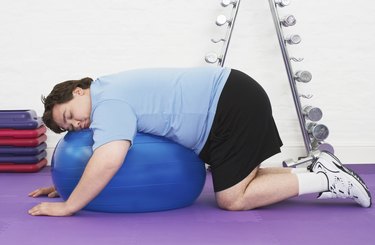
No matter how committed you are to your weight loss plan, sometimes life just gets in the way and you are forced to skip a workout. It's easy to picture all of your hard work going down the drain while you're sick in bed or working late. Don't worry, however -- missing one day of exercise won't cause all of your lost weight to come rushing back, nor will it completely derail your progress. As long as you get back into the swing of things tomorrow, you can take today off without feeling guilty.
Exercise and Weight Loss
Video of the Day
You lose weight when your body burns stored fat. Your fat cells shrink, and eventually, your body shrinks as well. The fat cells never go away though -- they stay where they are until your body needs to store extra fuel again, at which point they fill back up. This process happens throughout your entire body at the same time, which makes weight loss and weight gain a very gradual process. Exercise helps decrease weight by increasing the amount of fuel your body needs, but not exercising for one day won't make a huge difference when it comes to weight loss.
Video of the Day
Calorie Burning
One pound equals 3,500 calories, which is why a caloric deficit of 500 calories per day leads to a 1-pound-per-week loss. Depending on how hard you exercise, you might burn between 200 and 900 calories per session. Even if you work out toward the high end of that range, you'll need to exercise several times to lose a pound. Don't forget, the fuel that gets stored as fat is extra fuel, above and beyond what your body needs to function. By adding exercise to your daily routine, you burn hundreds more calories than your body would during normal everyday activities. Also, if you exercise regularly, your muscles will remain active and continue burning calories, even if you take a day off.
Possibilities
If you skip a workout, you might feel a little heavier or more sluggish, and your next workout might be a little harder -- but it's not because you're fatter. You might also gain a small amount of water weight, which is nothing to be concerned about. When you work out regularly, you sweat out much of the fluid you take in during the day. When you miss a workout, you also miss a sweat session. If you drink your usual amount but do not sweat it out, the fluid gets stored as water weight. This minimal amount of excess weight can make you feel heavier, and your muscles may not respond as well as they normally do because they've had an extra day off, but weight gain in the form of excess fat is still unlikely.
How to Compensate
Adjust your diet the day of your skipped workout to compensate for they extra calories you won't be burning. Drink plenty of water, because ironically, staying hydrated is the best way to reduce water weight gain. Even if a full-blown workout is out of the question, stay as active as possible. Park far away from your office, take the stairs and try to be as active as possible throughout the day. Stretching when you wake up and before you wind down before bed can keep your muscles soft and limber so they won't be as sluggish the next day.