
Can Walking Be Enough to Reduce Obesity?
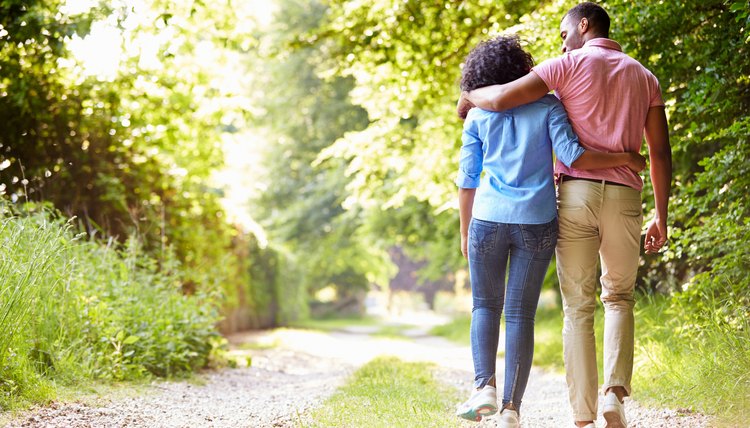
Walking is hands-down the easiest form of exercise. So easy, in fact, that you likely do it without even thinking about it. You can walk almost anywhere, and walking provides a broad range of benefits. Unfortunately, researchers and health experts agree that Americans need to be doing a lot more of it.
In a 2010 study published in “Medicine & Science in Sports & Exercise,” researchers used pedometers to track the steps of 1,136 American adults. The findings revealed that Americans take fewer steps than adults in Australia, Switzerland and Japan.
All three countries also have fewer instances of obesity and heart disease than the U.S. does -- unsurprising, considering how walking can affect your physiology. Learning more about these benefits might inspire you to take some important steps toward long-term fitness.
While power walking may burn more calories over the same period of time as regular walking, we still see the significant health benefits with regular walking.
John M. Martinez, M.D., sports and family medicine physician at Kaiser Permanente in San Diego
The Health Perks of Walking
For starters, walking is a low-impact activity, so it doesn’t place a ton of stress on your body the way running, jumping or even dancing can. That makes it ideal for aging adults, people prone to joint pain and anyone hoping to transition from a sedentary to a more active lifestyle. It also gets your heart beating faster and can help strengthen and tone your muscles.
“Walking works large muscle groups -- quadriceps, hamstrings, gluteal muscles -- as well as other muscles in the lower legs and feet,” says Joanne DiFrancisco-Donoghue, a registered clinical exercise physiologist with the New York Institute of Technology College of Osteopathic Medicine.
DiFrancisco-Donoghue says that working these muscles improves circulation, increases cardiovascular endurance, boosts bone health and reduces obesity and the risk of diabetes.
Routine walking can also lower your LDL, or “bad” cholesterol, and boost your HDL, or “good” cholesterol, while improving your weight, overall fitness and mood.
If you walk outdoors, you'll reap the added benefit of vitamin D, a nutrient Americans often lack that your body synthesizes in response to sun exposure. Recent studies have shown that vitamin D could provide protection from osteoporosis, high blood pressure and cancer.
Why Speed Matters
monkeybusinessimages/iStock/Getty Images
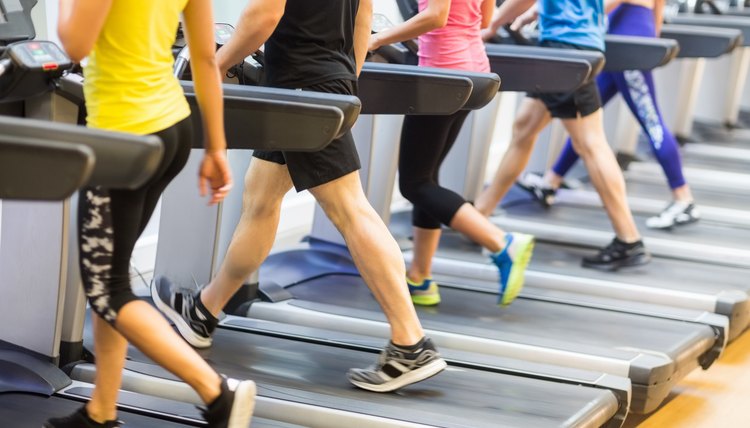
Adding a little pep to your step might also kick up walking's benefits. A 2012 study published in the journal “BMJ Open” showed that intense walking for two to four hours a week slashed participants’ risk of diabetes, heart disease and metabolic syndrome -- an obesity-related group of conditions -- by 50 percent.
The researchers, who analyzed the exercise habits and health of 10,000 adults in Denmark for a decade, found that exercise intensity matters more than total time of exercising. Brisk walking also curbed participants’ appetites, which is important for reaching and maintaining a healthy weight.
If you're daunted by imagining hip-swiveling racewalkers moving at near runners' speed, you can breathe easy. "While power walking may burn more calories over the same period of time as regular walking, we still see the significant health benefits with regular walking," John M. Martinez, M.D., sports and family medicine physician at Kaiser Permanente in San Diego.
The 2008 Physical Activity Guidelines for Americans, distributed by the Centers for Disease Control and Prevention, recommends that adults aim for 150 minutes of moderate intensity aerobic exercise, such as brisk walking, or 75 minutes of vigorous exercise, such as racewalking, every week for optimum health.
One way to determine whether you've reached moderate intensity is the "talk test." During moderately intense activity, you should be able to talk but not sing, the CDC says. During vigorous activity, you'll be able to say only a few words before breaking to breathe.
You can also assess intensity by time and distance. Brisk walking will take you three miles or more per hour. For more specific analyses, a personal trainer or physician can assist you in determining your ideal pace using a heart-rate monitor.
Let's Get Started!
Getting started can be the toughest part of exercise regimen, as it requires changes in your routine, the desire to get up and go and added use of your muscles and energy. Establishing a game plan can help ensure success.
"I have patients write down a specific time each day that is their exercise time and add it to their to-do list," Dr. Martinez says. He also recommends walking with a partner, tracking your activity and if you're older or previously sedentary, walking during TV commercial breaks.
DiFrancisco-Donoghue recommends starting out with a stopwatch and pedometer, which counts your steps and analyzes your distance by detecting motion. "Start with 10 to 15 minutes of walking each day," she says.
"Don't walk 30 minutes right away, because this will lead to overuse injuries and can also be discouraging if you are not able to complete the session.” She recommends adding five minutes each week until you've reached your goal.
So What's Next?
Walking might be all your body needs to reach and maintain physical fitness if you routinely walk far enough and at an effective pace. Once the exercise seems easy -- meaning you barely break a sweat or you stop noticing any physical improvement -- increasing your distance, frequency or intensity can help.
Even if walking seems sufficient, you may decide to branch out and try other forms of exercise. "Walking is an easy introduction into the world of exercise and fitness," Dr. Martinez says. "Patients that start off with a simple walking program, and then continue on to more intense exercise programs such as yoga, running half-marathons and even a few that have completed Ironman triathlons."
Attempting to reduce his 280 pounds of body weight, one of Martinez's former patients began taking short walks around his workplace. Once he gained stamina and shed excess pounds, he took up jogging, swimming and cycling. He's lost 100 pounds and is now an Ironman triathlete.
"Without taking those first few steps to walk none of the rest of his accomplishments would have been possible," Martinez says.
Bottom line: Walking alone might not be solution to the obesity epidemic in America, but it most certainly is a step in the right direction.
References
- More People Walk to Better Health. Centers for Disease Control and Prevention. August 6, 2013
- Walking Take the First Step. American Heart Association. Updated May 2020
- Murtagh EM, Murphy MH, Boone-Heinonen J. Walking: the first steps in cardiovascular disease prevention. Curr Opin Cardiol. 2010;25(5):490-496. doi:10.1097/HCO.0b013e32833ce972
- Regular Walking May Protect Against Heart Failure Post Menopause. American College of Cardiology. March 01, 2018
- Omura JD, Ussery EN, Loustalot F, Fulton JE, Carlson SA. Walking as an opportunity for cardiovascular disease prevention. Prev Chronic Dis. 2019;16:E66. Published 2019 May 30. doi:10.5888/pcd16.180690
- Garber CE, Blissmer B, Deschenes MR, et al. American College of Sports Medicine position stand. Quantity and quality of exercise for developing and maintaining cardiorespiratory, musculoskeletal, and neuromotor fitness in apparently healthy adults: guidance for prescribing exercise. Med Sci Sports Exerc. 2011;43(7):1334-59. doi:10.1249/MSS.0b013e318213fefb
- Exercise for Your Bone Health. National Institutes of Health Osteoporosis and Related Bone Diseases. Reviewed October 2018
- Benedetti MG, Furlini G, Zati A, Letizia Mauro G. The effectiveness of physical exercise on bone density in osteoporotic patients. Biomed Res Int. 2018;2018:4840531. Published 2018 Dec 23. doi:10.1155/2018/4840531
- 12 Benefits of Walking. Arthritis Foundation
- Know Your Risk for Heart Disease. Centers for Disease Control and Prevention. Updated December 9, 2019
- Soroush A, Der Ananian C, Ainsworth BE, et al. Effects of a 6-month walking study on blood pressure and cardiorespiratory fitness in U.S. and swedish adults: ASUKI step study. Asian J Sports Med. 2013;4(2):114-124. doi:10.5812/asjsm.34492
- Mandini S, Conconi F, Mori E, Myers J, Grazzi G, Mazzoni G. Walking and hypertension: greater reductions in subjects with higher baseline systolic blood pressure following six months of guided walking. PeerJ. 2018;6:e5471. Published 2018 Aug 30. doi:10.7717/peerj.5471
- Colberg SR, Sigal RJ, Fernhall B, et al. Exercise and type 2 diabetes: the American College of Sports Medicine and the American Diabetes Association: joint position statement. Diabetes Care. 2010;33(12):e147-e167. doi:10.2337/dc10-9990
- Hamasaki H. Daily physical activity and type 2 diabetes: A review. World J Diabetes. 2016;7(12):243-251. doi:10.4239/wjd.v7.i12.243
- Kleist B, Wahrburg U, Stehle P, et al. Moderate walking enhances the effects of an energy-restricted diet on fat mass loss and serum insulin in overweight and obese adults in a 12-week randomized controlled trial. J Nutr. 2017;147(10):1875-1884. doi:10.3945/jn.117.251744
- Baker EH, Milner AN, Campbell AD. A pilot study to promote walking among obese and overweight individuals: walking buses for adults. Public Health. 2015;129(6):822-824. doi:10.1016/j.puhe.2015.03.021
- Wang Y, Xu D. Effects of aerobic exercise on lipids and lipoproteins. Lipids Health Dis. 2017;16(1):132. Published 2017 Jul 5. doi:10.1186/s12944-017-0515-5
- Ruiz-Ramie JJ, Barber JL, Sarzynski MA. Effects of exercise on HDL functionality. Curr Opin Lipidol. 2019;30(1):16-23. doi:10.1097/MOL.0000000000000568
- Zhao W, Ukawa S, Kawamura T, et al. Health benefits of daily walking on mortality among younger-elderly men with or without major critical diseases in the new integrated suburban seniority investigation project: a prospective cohort study. J Epidemiol. 2015;25(10):609-616. doi:10.2188/jea.JE20140190
- Reimers CD, Knapp G, Reimers AK. Does physical activity increase life expectancy? A review of the literature. J Aging Res. 2012;2012:243958. doi:10.1155/2012/243958
- The Emotional Benefits of Exercise. NIH National Institute on Aging.
- Bailey DP, Locke CD. Breaking up prolonged sitting with light-intensity walking improves postprandial glycemia, but breaking up sitting with standing does not. J Sci Med Sport. 2015;18(3):294-8. doi:10.1016/j.jsams.2014.03.008
- Williams PT. Greater weight loss from running than walking during a 6.2-yr prospective follow-up. Med Sci Sports Exerc. 2013;45(4):706-713. doi:10.1249/MSS.0b013e31827b0d0a
- Williams PT, Thompson PD. Walking versus running for hypertension, cholesterol, and diabetes mellitus risk reduction. Arterioscler Thromb Vasc Biol. 2013;33(5):1085-91. doi:10.1161/ATVBAHA.112.300878
- Donnelly JE, Blair SN, Jakicic JM, et al. American College of Sports Medicine Position Stand. Appropriate physical activity intervention strategies for weight loss and prevention of weight regain for adults. Med Sci Sports Exerc. 2009;41(2):459-71. doi:10.1249/MSS.0b013e3181949333
- Tudor-Locke, C., Aguiar, E.J., Han, H. et al. Walking cadence (steps/min) and intensity in 21–40 year olds: CADENCE-adults. Int J Behav Nutr Phys Act 16, 8 (2019). doi:10.1186/s12966-019-0769-6
- Physical Activity Guidelines for Americans 2nd Edition. U.S. Department of Health and Human Services. 2018
Resources
- Medicine & Science in Sports & Exercise; Intensity Versus Duration of Physical Activity: Implications for the Metabolic Syndrome. A Prospective Cohort Study
- BMJ Open; Intensity Versus Duration of Physical Activity: Implications for the Metabolic Syndrome. A Prospective Cohort Study
- Mayo Clinic: Walking: Trim Your Waistline, Improve Your Health
- New York Times; What Do You Lack? Probably Vitamin D
- Centers for Disease Control and Prevention: How Much Physical Activity Do Adults Need?
- Centers for Disease Control and Prevention: Measuring Physical Activity Intensity
- Journal of Physical Activity and Health; The Impact of Dog Walking on Leisure-Time Physical Activity: Results From a Population-Based Survey of Michigan Adults
- ShareCare.com: What Are the Benefits of Listening to Music While Walking?
Writer Bio
August McLaughlin is a health and sexuality writer, media personality and author of "Girl Boner: The Good Girl's Guide to Sexual Empowerment." Her work appears in Cosmopolitan, The Washington Post, DAME Magazine and more. augustmclaughlin.com