
Maple Bats Versus Bamboo Bats
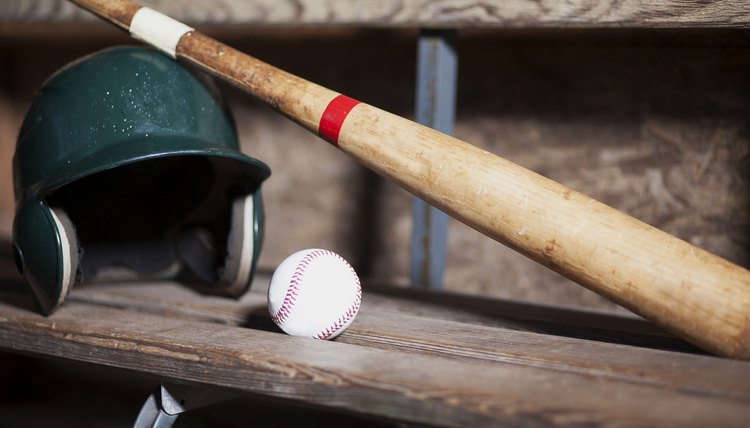
The wood baseball bat has not seen many radical changes since the first Louisville Slugger was produced in 1884. That Slugger was made from white ash, just like many of the wood bats produced today. But overproduction and the use of immature wood has caused a drop in the quality of ash bats, leading bat manufacturers to use materials such as maple and bamboo to produce high-quality baseball bats.
History
Maple was not a viable early option for baseball bats because it retains a lot of moisture, so it was too heavy to be used for baseball bats. In the 1990s, more advanced wood kilns were developed that could extract enough moisture from maple to allow the wood to be used for baseball bats. Bamboo came onto the scene in the 2000s, with the first bamboo bats produced by a company called BamBooBats.
Durability
According to the website Baseball Tips, maple bats last longer than other wood bats such as ash. The website claims that maple bats made from the rock and sugar maple trees are more durable than those from softer maple red and silver maple.
Bamboo bats are extremely durable because they are constructed by pressing strips of bamboo together. Bamboo already is a strong material, and when pressed together in this manner, it has a greater tensile strength than steel. Baseball Tips claims that bamboo bats can take a lot of mishits without breaking.
Performance
The website Baseball Tips claims that the ball comes off of a maple bat quicker than off other wood bats. The Smithsonian and Northern Woodlands both cite a University of Massachusetts-Lowell study concluding that there was no difference in batted ball speed with maple versus northern white ash, another popular bat material. A Chinese study found that batted ball speeds were slightly greater off of bamboo than other woods, and were closer to those produced by composite bats.
Popularity
The first player to use a maple bat in the major leagues is thought to be Joe Carter in the early 1990s. His World Series-winning home run in 1993 was hit with a maple bat. Barry Bonds used maple to hit his record-breaking 73 home runs in 2001, and since about the late 1990s, more major leaguers have been switching to maple. As of 2011, maple bats are still on the pricey end for wood bats, with some retailing for more than $100. Major League Baseball does not allow the use of bamboo bats because they are considered composite, not wooden. Other bat manufacturers are now producing bamboo bats for all levels of baseball and softball.
References
Writer Bio
Chris Kinsey works as an editor for a medical publisher and has experience dealing with many topics, ranging from athlete's foot to cancer and brain injury. Kinsey has a great deal of freelance experience writing for sports and parenting magazines as well. Kinsey holds a Bachelor of Arts in communications from California University of Pennsylvania.