Four Main Parts of a Skeletal System
Although there are four general categories that the bones in the human body fall under, the human skeleton is actually divided into two distinct parts. The axial skeleton includes the bones that form the axis of the body and provide protection and support for the organs located in the trunk, neck, and head, while the appendicular skeleton is made up of the bones that connect and anchor the appendages to the axial skeleton.
If you are experiencing serious medical symptoms, seek emergency treatment immediately.
Skeletal System Function
The human body is made up of approximately 206 bones that form a framework. These 206 bones work together and are responsible for four main functions. The skeletal system supports muscles and tissues, protects the vital organs from injury and trauma, allows for movement, and stores essential body minerals and immature blood cells 1.
The Axial Skeleton
How the Skeletal System Works With Other Body Systems
Learn More
The axial skeleton is important because it provides the body's vital organs with protection from trauma and injury. The axial skeleton is made up of the skull, which consists of the cranium and the facial skeleton. The cranium protects the brain by enclosing it. The facial skeleton includes the maxilla and mandible bones, which house the teeth. The mandible bone is also known as the jaw bone, and is the only freely movable bone on the skull. The axial skeleton is also comprised of the ribs, the sternum or breastbone, and the spine. These bones all protect the heart, lungs, and other vital organs.
- The axial skeleton is important because it provides the body's vital organs with protection from trauma and injury.
- The axial skeleton is made up of the skull, which consists of the cranium and the facial skeleton.
The Appendicular Section
In a human being, the appendicular skeleton consists of 126 bones. The appendicular skeleton is divided into two parts: the upper extremity, and the lower extremity skeletons. The upper extremity skeleton includes the bones that make up the shoulders, arms and hands. The lower extremity skeleton is made up of the pelvis, hips, legs and feet.
- In a human being, the appendicular skeleton consists of 126 bones.
- The lower extremity skeleton is made up of the pelvis, hips, legs and feet.
Bone Types
Types of Gliding Joints
Learn More
The human body consists of bones that fall into four very general categories. These four categories are short bones, long bones, flat bones, and irregular bones. Each bone has a purpose and a job that allows the human body to work freely. Long bones typically work as levers, and are the bones that make up the legs and arms. Flat bones serve as protection for organs, and allow for the attachment of muscles. The ribs and shoulder blades are good examples of flat bones. Irregular bones are those that don't fit into the other three categories. Several of the bones located in the spine and a few of the bones in the skull are irregular.
- The human body consists of bones that fall into four very general categories.
- Long bones typically work as levers, and are the bones that make up the legs and arms.
Related Articles

How the Skeletal System Works With Other Body Systems
Learn More
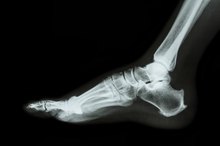
Types of Gliding Joints
Learn More
Types of Joints in the Skeletal System
Learn More

Rib Bone Growth in Children
Learn More
Male Vs. Female Skeleton
Learn More
How the Skeletal System Works With the Muscular
Learn More

How Does Exercise Improve Your Posture?
Learn More
Torn Tendons & Ligaments From Hyperextension
Learn More
The 4 Parts of the Cardiovascular System
Learn More
Muscles That Control the Human Hand
Learn More
References
- BrianMAC: Skeletal System
- Förster M, et al. Axial low back pain: one painful area – many perceptions and mechanisms. PLoS One. 2013;8(7):e68273.